Kitty Wells

Country
Contemporary Country
Americana/Alt Country
Folk Rock
 Viberate Rank: 67153
 Viberate Rank: 67153
 Monthly ListenersFollowers
 Subscribers
 Followers
 Followers
 FansTop Spotify Songs
| Track | 7-Day Streams | |
|---|---|---|
1 | 43.27K | |
2 | 8.55K | |
3 | 5.93K | |
4 | 5.14K | |
5 | 4.37K |
Top YouTube VideosMonthly ListenersFeatured in Playlists| Playlist | Followers | |
|---|---|---|
1 |  50s Country Spotify | 300.31K |
2 | Mat Young | 67.69K |
3 |  Old Country Classics Glenn Asbjørn B. Ovedal | 34.48K |
4 |  Country Roads 🌵 Kevin Sala | 31.55K |
5 |  You DO Like Country Derrick Gee | 26.61K |
Audience| City | Monthly Listeners | |
|---|---|---|
1 | | 1.99K |
2 | | 1.71K |
3 | | 1.57K |
4 | | 1.52K |
5 | | 1.51K |
See full performance history, audience data, playlist activity, rankings, comparisons, and more in Viberate music analytics. Start with a free trial, then continue with a paid plan.
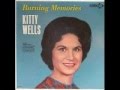
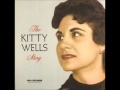
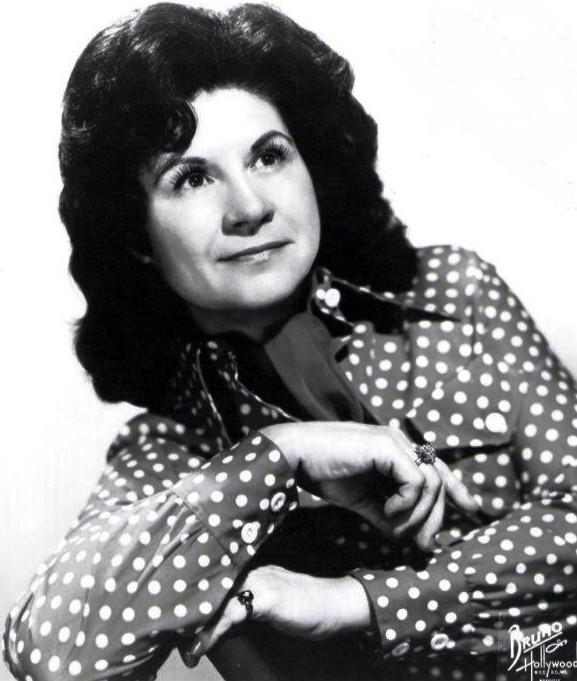
Kitty Wells’ Spotify BioOne of the few country stars born in Nashville, Kitty Wells (born Muriel Deason) had a string of hits from the '50s to the early '70s that earned her the title Queen of Country Music. She made her radio debut on Nashville's WSIX, where she met her future husband, Johnnie Wright of Johnnie & Jack. She began touring as part of Johnnie & Jack's show; Wright gave her the stage name, taken from an old folk ballad called "I'm A-Goin' to Marry Kitty Wells." Wells recorded unsuccessfully for RCA before switching to Decca, where she hit with 1952's "It Wasn't God Who Made Honky Tonk Angels," a response to Hank Thompson's "The Wild Side of Life." Its controversial pre-feminist lyrics, which blamed unfaithful men for creating unfaithful women, paved the way for Loretta Lynn and Tammy Wynette and established Wells as the first major female country star. Wells recorded a number of answer songs and remakes, but she has top-notch original material as well, including some of Harlan Howard's earliest… hits.
Wells began singing as a child, learning guitar from her father. As a teenager, she sang with her sisters, who performed under the name the Deason Sisters, on a local radio station. The group began singing on the station in 1936. The following year, she married Johnnie Wright. Shortly after their marriage, Wells and Wright began performing together along with his sister, Louise Wright; they called themselves Johnnie Wright & the Harmony Girls. Jack Anglin, Louise's husband, joined the group in 1939, and they renamed the band the Tennessee Hillbillies, which would eventually evolve into the Tennessee Mountain Boys.
Anglin was drafted into the Army in 1942. Following his departure, Wright and Wells performed as a duo; it was at this time that she adopted the Kitty Wells stage name. When Anglin returned from the Army, he and Wright formed the Johnnie & Jack duo. Wells would tour with the duo, occasionally performing backup vocals. In 1946 and 1947, the duo had a regular spot at the Grand Ole Opry, and Wells rarely performed with them. However, she did sing with the pair when they joined the Louisiana Hayride in 1948.
The Louisiana Hayride helped Johnnie & Jack land a record contract with RCA Records in 1949. That same year, Wells recorded some gospel tracks -- featuring Johnnie & Jack as instrumental support -- for RCA, but they were unsuccessful. Following those recordings, Wells was more or less retired for the next few years. In 1952, Paul Cohen, an executive at Decca Records, approached Wells to record "It Wasn't God Who Made Honky Tonk Angels." Wells recorded the song and it became a smash hit, reaching number one in the summer and staying in that position for six weeks. Later in 1952, she joined the Grand Ole Opry.
"It Wasn't God Who Made Honky Tonk Angels" was followed by "Paying for That Back Street Affair," a response to Webb Pierce's "Back Street Affair." The single reached number six in the spring of 1953, helping to establish a permanent place at the top of the charts for Wells. For the rest of the '50s, she hit the Top Ten with regularity, racking up a total of 23 Top Ten hits. In the early '60s, her career dipped slightly, but she continued to have Top Ten hits frequently. During the late '60s and '70s, Wells' streak of hits evaporated, but she managed to have a string of minor hits and remained a popular concert attraction.
In 1976, Wells was inducted into the Country Music Hall of Fame, and with good reason. Kitty Wells broke down the doors for female country singers, paving the way for artists like Patsy Cline, Tammy Wynette, and Loretta Lynn. During the '80s, her activity slowed -- in addition to running a museum outside of Nashville, she toured with her husband, Johnnie, and frequently appeared on the Grand Ole Opry. In 1991, she was given a Lifetime Achievement Award from the Grammys. In July 2012 she died at home in Madison, Tennessee, from complications of a stroke; Kitty Wells was 92 years old. ~ Brian Mansfield & Stephen Thomas Erlewine, Rovi
Viberate is a music analytics platform built for A&Rs, artist managers, labels, booking agents, marketers, and artists.
It helps music professionals track artist growth, analyze audience data, monitor playlist activity, compare artists, follow song performance, and identify opportunities across the music market.
Public artist pages provide a free preview of selected artist data. Paid plans provide access to deeper analytics, historical data, charts, comparisons, playlist tools, exports, alerts, reports, and additional professional features.
Yes. Public Viberate artist pages provide selected artist analytics and music data for free.
Viberate also offers a 7-day free trial of the full platform. A credit card is required to start the trial. The trial includes access to the complete product so users can test deeper artist analytics, historical views, playlist insights, comparisons, charts, exports, alerts, and reporting features before choosing a paid plan.
Viberate provides artist analytics across streaming, playlists, social media, video, radio airplay, songs, and audience markets.
Users can analyze Spotify performance, Spotify and Apple Music playlists, YouTube activity, TikTok and Instagram growth, radio spins, song performance, audience locations, demographics, rankings, and overall artist momentum.
Artist profiles also connect to music charts, similar artists, and comparison tools, helping users benchmark performance and evaluate artists in context.
Viberate updates key artist and track data daily.
For followed artists and tracks, selected data is refreshed multiple times per day. This helps teams monitor playlist changes, streaming movement, audience growth, releases, and campaign performance with more current data.
Update frequency can vary depending on the metric and data source.
Yes. Viberate lets users compare up to five artists side by side across streaming, social media, audience, and engagement metrics.
Users can compare fanbase growth, audience demographics, locations, Spotify performance, social metrics, and other artist data over selected time periods.
Artist comparison can be used for A&R scouting, benchmarking, booking decisions, campaign planning, and evaluating artists with similar audiences or market positions.