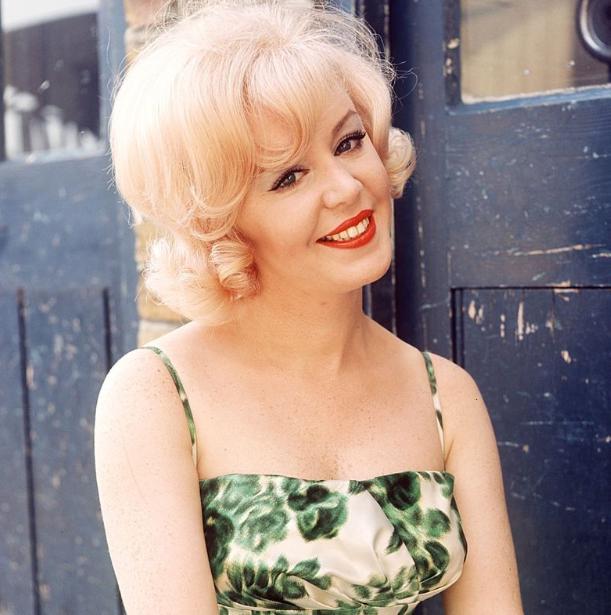
Kathy Kirby

Pop
Mainstream Pop
Garage Rock
 Viberate Rank: 214712
 Viberate Rank: 214712
 Monthly ListenersFollowers
 Subscribers
 Followers
 Followers
 FansTop Spotify Songs
| Track | 7-Day Streams | |
|---|---|---|
1 | 1.60K | |
2 | 984 | |
3 | 969 | |
4 | 448 | |
5 | 448 |
Top YouTube VideosMonthly ListenersFeatured in Playlists| Playlist | Followers | |
|---|---|---|
1 |  Essential Classics Essential Classics | 31.39K |
2 |  the L word Soundtrack (Season 1-6) val_toriello | 19.85K |
3 |  NOW 100 Hits Forgotten 60s NOW That’s What I Call Music! | 18.55K |
4 |  Dreamboats and Petticoats Selene Jones | 6.70K |
5 |  Dreamboats & Petticoats: The Complete Collection Dreamboats And Petticoats | 5.97K |
Audience| City | Monthly Listeners | |
|---|---|---|
1 |  | 376 |
2 | | 365 |
3 | | 346 |
4 | | 259 |
5 | | 238 |
See full performance history, audience data, playlist activity, rankings, comparisons, and more in Viberate music analytics. Start with a free trial, then continue with a paid plan.
Kathy Kirby’s Spotify BioKathy Kirby was born Kathleen O'Rourke in Ilford, Essex on the East London borders on October 20, 1940. She was dubbed "The Golden Girl of Pop" in the mid-'60s, although her fall from fame into obscurity was almost instantaneous, as the international singing star who had appeared at the Royal Variety Performance and was Britain's entrant to the Eurovision Song Contest, earning millions, was declared bankrupt and found her life in ruins, sleeping in a shop doorway. She was a child prodigy, winning her first talent contest at the age of just three. She had an operatic singing voice and was a member of the school choir, looking forward to a potential career in opera and she was recruited as the featured singer for Bert Ambrose & His Orchestra, one of Britain's leading wartime big bands. The link with Ambrose remained long after she had departed to sing with other bandleaders, and then as a solo singer, signing a contract with Decca Records. It was the medium of television that gave her… her big break, when she appeared in 1962 as a guest on the The Arthur Haynes Show and The Morecambe and Wise Show but it was the TV series, Stars & Garters, a variety show based in a traditional British pub setting, that made her a star. Appearing as a sort of Marilyn Monroe figure, blonde and youthful, she appealed to both teenagers and their fathers, and wore a glossy lipstick which earned her the nickname of "Wetlips." Kirby was a regular on the show throughout 1963 and 1964 and was undoubtedly billed as the star, releasing an album featuring songs that had been sung on the program called 16 Hits from Stars and Garters which just failed to reach the Top Ten early in 1964. 1963 was her peak year, just as teenagers were turning to the sounds of Merseybeat, she was voted the Top British Female Singer in the New Musical Express Poll and had several hit singles, beginning with a vocal version of the Shadows former instrumental number one hit "Dance On," followed by two bouncy cover versions of Top Ten singles, "Secret Love" and "Let Me Go Lover." Further TV appearances followed including Ready Steady Go, Thank Your Lucky Stars, and Sunday Night at the London Palladium. In 1965 she was chosen to represent Great Britain in the Eurovision Song Contest, singing "I Belong," which came in second. Although she also appeared that year at the Royal Command Variety Performance and even had her own BBC TV series, Kathy Kirby Sings, the hits had dried up by 1965. Kirby was completely swamped by the tide of Merseybeat and other new British pop music that dominated the mid-'60s. By 1967, she had left Decca for Columbia, but none of the singles, albums, or EPs released on that label were hits. Just as she was negotiating a change of direction and a role in the movies in 1971, her longterm friend and mentor Bert Ambrose died and the slow descent to bankruptcy and obscurity began. Having finally got her life back on track during the 1980s, she has lived at her home in Kensington, West London, effectively retired from show business but with the occasional TV appearance and even less frequent recording. ~ Sharon Mawer, Rovi
Viberate is a music analytics platform built for A&Rs, artist managers, labels, booking agents, marketers, and artists.
It helps music professionals track artist growth, analyze audience data, monitor playlist activity, compare artists, follow song performance, and identify opportunities across the music market.
Public artist pages provide a free preview of selected artist data. Paid plans provide access to deeper analytics, historical data, charts, comparisons, playlist tools, exports, alerts, reports, and additional professional features.
Yes. Public Viberate artist pages provide selected artist analytics and music data for free.
Viberate also offers a 7-day free trial of the full platform. A credit card is required to start the trial. The trial includes access to the complete product so users can test deeper artist analytics, historical views, playlist insights, comparisons, charts, exports, alerts, and reporting features before choosing a paid plan.
Viberate provides artist analytics across streaming, playlists, social media, video, radio airplay, songs, and audience markets.
Users can analyze Spotify performance, Spotify and Apple Music playlists, YouTube activity, TikTok and Instagram growth, radio spins, song performance, audience locations, demographics, rankings, and overall artist momentum.
Artist profiles also connect to music charts, similar artists, and comparison tools, helping users benchmark performance and evaluate artists in context.
Viberate updates key artist and track data daily.
For followed artists and tracks, selected data is refreshed multiple times per day. This helps teams monitor playlist changes, streaming movement, audience growth, releases, and campaign performance with more current data.
Update frequency can vary depending on the metric and data source.
Yes. Viberate lets users compare up to five artists side by side across streaming, social media, audience, and engagement metrics.
Users can compare fanbase growth, audience demographics, locations, Spotify performance, social metrics, and other artist data over selected time periods.
Artist comparison can be used for A&R scouting, benchmarking, booking decisions, campaign planning, and evaluating artists with similar audiences or market positions.