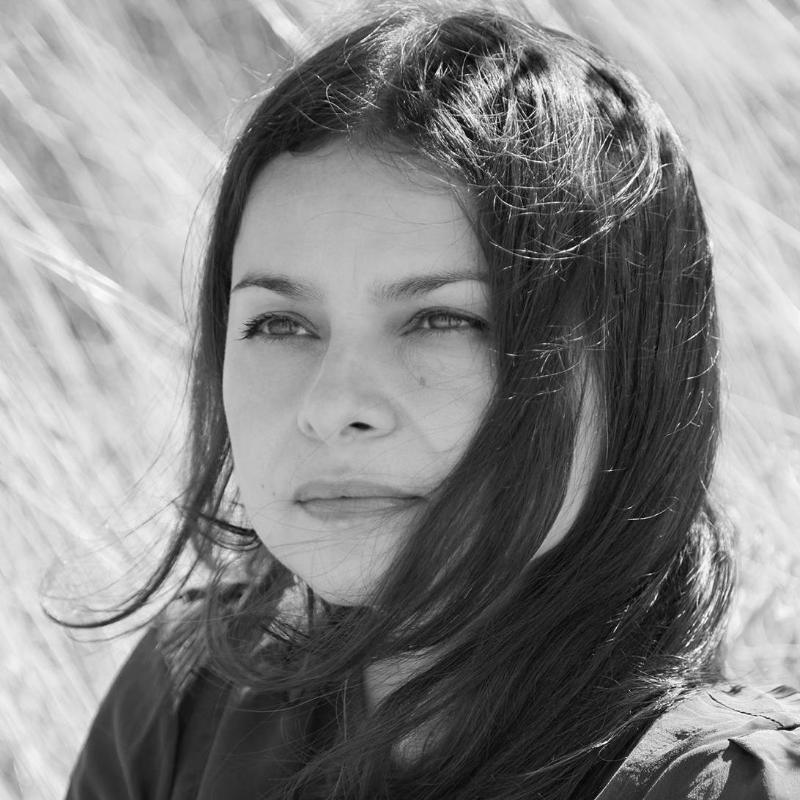
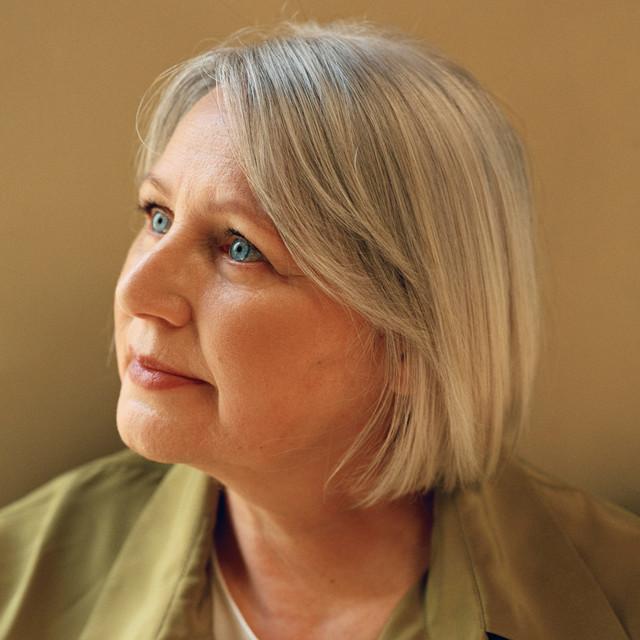
Julee Cruise

Pop
Indie Pop
Dream Pop
 Viberate Rank: 54027
 Viberate Rank: 54027
 Monthly ListenersFollowers
 Subscribers
 Followers
 Followers
 FansTop Spotify Songs
| Track | 7-Day Streams | |
|---|---|---|
1 | 105.83K | |
2 | 56.56K | |
3 | 37.57K | |
4 | 35.38K | |
5 | 28.47K |
Top YouTube Videos| Video | 7-Day Views | |
|---|---|---|
1 | 3.02K | |
2 | 1.49K | |
3 | 998 | |
4 | 236 | |
5 | 149 |
Monthly ListenersFeatured in Playlists| Playlist | Followers | |
|---|---|---|
1 |  Dark & Gothic Spotify | 976.19K |
2 |  Lava Lamp Spotify | 385.26K |
3 |  hauntology Spotify | 204.50K |
4 |  Solomun Boiler Room Tulum DJ Set Abstract | 112.62K |
5 |  atormentados Spotify | 109.17K |
Audience| City | Monthly Listeners | |
|---|---|---|
1 |  | 11.10K |
2 | | 9.29K |
3 | | 7.68K |
4 |  | 7.04K |
5 |  | 6.48K |
See full performance history, audience data, playlist activity, rankings, comparisons, and more in Viberate music analytics. Start with a free trial, then continue with a paid plan.
Julee Cruise’s Spotify BioWith her hauntingly beautiful voice, Julee Cruise gave the worlds director David Lynch and composer Angelo Badalamenti created with Blue Velvet and Twin Peaks their souls before making more personal and wider-ranging music. Cruise thought of herself as a Broadway belter, but the plaintive, unearthly performance she created for "Mysteries of Love" from Lynch's 1986 film Blue Velvet revealed entirely new dimensions to her voice. The song's alluring, mysterious mix of dream pop, jazz, and innocent romance of 1950s and early '60s pop led to the creation of 1989's Floating into the Night and 1993's The Voice of Love, albums that influenced dream pop for years to come while connecting Cruise to Lynch and Badalamenti's other projects -- most notably Twin Peaks, which transformed her single "Falling" into an international hit in 1990. However, Cruise spent much of her career developing the other sides of her music. She showed off her vocal chops as a touring member of the B-52's, collaborated… with Pharrell, and scored hits with Hybrid (1999's "If I Survive") and Khan (2002's "Say Goodbye"). Her later albums, 2002's The Art of Being a Girl and 2011's My Secret Life, blended dance and lounge with jazz-inflected vocals that emphasized the breadth of her artistry and her dedication to making music on her own terms.
Born in Creston, Iowa, Cruise's musical career began with childhood French horn lessons. As a teen, she also took flying lessons, ultimately obtaining her pilot's license. Though Cruise earned a degree in the French horn from Des Moines' Drake University, after graduation she decided she'd rather sing and act for a living. A move to Minneapolis led to a few years performing with the Children's Theater Company, and by the early '80s, Cruise was in New York City. She appeared in off-Broadway productions of Little Shop of Horrors, A Little Night Music, and Beehive, a revue in which she played Janis Joplin.
Cruise's time as a chorus girl in a country-and-western musical connected her with composer Angelo Badalamenti, and the pair became friends. In 1985, Badalamenti was working on David Lynch's film Blue Velvet; when the rights to use This Mortal Coil's version of "Song to the Siren" were too expensive for the movie's budget, the director and composer wrote a similarly haunting and romantic song, "Mysteries of Love." Badalamenti's search for the right vocalist ended when Cruise -- who was working as his talent scout at the time -- offered her skills. Using the delicacy and restraint of her French horn technique to guide her performance, her airy vocals were the perfect fit for "Mysteries of Love." The song's dreamy blend of synths, strings, and Cruise's voice made it a cult favorite and set the tone for her further collaborations with the composer and director. First up was Cruise's debut album, September 1989's Floating Into the Night. Including "Mysteries of Love" along with nine other songs featuring music by Badalamenti and lyrics by Lynch, the album's blend of dream pop and jazz didn't make much of an impression until Lynch and Mark Frost's cult classic TV series Twin Peaks -- which used an instrumental version of the Floating single "Falling" as its theme song -- premiered in April 1990. In the wake of the stylish mystery's success, Floating Into the Night reached number 74 on the Billboard 200 Albums chart in the U.S., and also charted in Canada, Australia, New Zealand, and Sweden; in the U.K., it was eventually certified silver by the British Phonographic Industry. Meanwhile, Cruise's version of "Falling" topped the Australian charts, became a Top Ten U.K. hit, and peaked at number 11 on the Billboard Alternative Airplay chart. Cruise also had a small recurring role in the series as a singer at the Roadhouse bar, and the Twin Peaks soundtrack, which featured three songs from Floating ("Falling," "Into the Night," and "The Nightingale") along with Badalamenti's moody score, went gold in the U.S. (additionally, the instrumental version of "Falling" won the Grammy Award for Best Pop Instrumental in 1991). Other songs from Floating Into the Night appeared in Lynch's 1990 avant-garde musical Industrial Symphony No. 1, in which Cruise portrayed the Dreamself of the Heartbroken Woman suspended 80 feet from the stage in a prom dress.
Twin Peaks' status as an early-'90s pop culture phenomenon provided further opportunities for Cruise. In May 1990, she performed on Saturday Night Live when original musical guest Sinead O'Connor dropped out in protest of the episode's host, controversial comedian Andrew Dice Clay (to appear on the show, Cruise had to "call in famous" to her regular gig as a waitress). In 1991, she reunited with Lynch and Badalamenti to record a cover of Elvis Presley's "Summer Kisses, Winter Tears" for the soundtrack to Wim Wenders' film Until the End of the World, and appeared in an off-Broadway production of Return to the Forbidden Planet. Her performance in the show caught the attention of the B-52's, who enlisted Cruise as a touring replacement for Cindy Wilson from 1992 to 1999 while Wilson spent time with her family. She remained a part of Twin Peaks, appearing in the 1992 feature film Twin Peaks: Fire Walk With Me and working with Lynch and Badalamenti on her second album, October 1993's The Voice of Love, which continued the hazy sound of her debut and included versions of songs that appeared in Fire Walk With Me, Industrial Symphony No. 1, and Wild at Heart. She also performed with Bobby McFerrin's vocal group Voicestra/CircleSong.
In 1996, Cruise worked with the Flow on "Artificial World (Interdimensional Mix)," a song that appeared on the soundtrack to the hit horror film Scream and signaled the electronic direction her music would take later in the decade and into the 2000s. In 1999, she collaborated with DJ Silver on a pair of tracks ("I'm Your Girl" and a cover of the Eurythmics' "Sweet Dreams") that appeared on the album Don't Panic!, contributed vocals and lyrics to songs on Hybrid's debut album Wide Angle, including the charting U.K. single "If I Survive," and appeared on Khan's album 1-900-Get-Khan, establishing a long-standing partnership and friendship with the producer. The following year, she teamed up with B(if)tek for a version of Sir Cliff Richard's "Wired for Sound" that charted in the group's homeland of Australia, and featured on two songs from former Deee-Lite member Supa DJ Dmitry's album Scream of Consciousness, including a cover of David Bowie's "Space Oddity." In 2001, Cruise created two tracks for the soundtrack to An American Nightmare and reunited with Khan for the album No Comprendo, which spawned the European hit "Say Goodbye." She remained busy in 2002, working on singles with Moodswings and Eric Kupper and releasing her third album, August 2002's The Art of Being a Girl. Featuring production by Khan, Mocean Worker, and J.J. McGeehan, the album's slinky mix of chill-out and exotica was inspired by the music Cruise heard touring with Khan, while its lyrics drew from her time with the B-52's and her experiences as a woman and female artist.
As the 2000s unfolded, Cruise's career remained eclectic. In 2003, she appeared in Radiant Baby, a musical about visual artist Keith Haring in which she played his mother, a nurse, a Susan Sontag-like critic, and Andy Warhol. That year, she also began a collaboration with Pluramon's Marcus Schmickler, appearing on several songs on the project's third album Dreams Top Rock. Cruise then worked with Pharrell on the 2004 Handsome Boy Modeling School song "Class System" and with Atmo. Brtschitsch on "Everyday" from the album Change Your Life. Two years later, she contributed vocals to the experimental group Time of Orchids' fourth album Sarcast White and Kenneth Bager's debut album Fragments from a Space Cadet, which won an award from the Danish Arts Foundation. In 2007, she sang on Ror-Shak's album Deep and worked with Schmickler once more on the Pluramon album Monstrous Surplus. Cruise resurfaced in 2010, singing the theme song to the USA Network comedy/mystery series Psych on "Dual Spires," an episode that affectionately parodied Twin Peaks. Her fourth album, My Secret Life, appeared in 2011 and featured production by DJ Dmitry as well as a cover of Donovan's "Season of the Witch." Following the album's release, she toured with Khan and Kid Congo Powers.
As Cruise's systemic lupus -- an autoimmune disorder that severely impacted her mobility and caused her chronic pain -- worsened in the 2010s, her projects slowed. However, in 2017, she appeared in the 17th part of Twin Peaks' third season, performing a rendition of "The World Spins" that appeared on Twin Peaks [Music From the Limited Event Series]. In 2018, Sacred Bones released Three Demos, which collected early versions of "Falling," "Floating," and "The World Spins." Cruise died on June 9, 2022 in Pittsfield, Massachusetts at age 65. ~ Heather Phares, Rovi
Viberate is a music analytics platform built for A&Rs, artist managers, labels, booking agents, marketers, and artists.
It helps music professionals track artist growth, analyze audience data, monitor playlist activity, compare artists, follow song performance, and identify opportunities across the music market.
Public artist pages provide a free preview of selected artist data. Paid plans provide access to deeper analytics, historical data, charts, comparisons, playlist tools, exports, alerts, reports, and additional professional features.
Yes. Public Viberate artist pages provide selected artist analytics and music data for free.
Viberate also offers a 7-day free trial of the full platform. A credit card is required to start the trial. The trial includes access to the complete product so users can test deeper artist analytics, historical views, playlist insights, comparisons, charts, exports, alerts, and reporting features before choosing a paid plan.
Viberate provides artist analytics across streaming, playlists, social media, video, radio airplay, songs, and audience markets.
Users can analyze Spotify performance, Spotify and Apple Music playlists, YouTube activity, TikTok and Instagram growth, radio spins, song performance, audience locations, demographics, rankings, and overall artist momentum.
Artist profiles also connect to music charts, similar artists, and comparison tools, helping users benchmark performance and evaluate artists in context.
Viberate updates key artist and track data daily.
For followed artists and tracks, selected data is refreshed multiple times per day. This helps teams monitor playlist changes, streaming movement, audience growth, releases, and campaign performance with more current data.
Update frequency can vary depending on the metric and data source.
Yes. Viberate lets users compare up to five artists side by side across streaming, social media, audience, and engagement metrics.
Users can compare fanbase growth, audience demographics, locations, Spotify performance, social metrics, and other artist data over selected time periods.
Artist comparison can be used for A&R scouting, benchmarking, booking decisions, campaign planning, and evaluating artists with similar audiences or market positions.