Johnny Horton

Country
Contemporary Country
Rockabilly
 Viberate Rank: 36177
 Viberate Rank: 36177
 Monthly ListenersFollowers
 Subscribers
 Followers
 Followers
 FansTop Spotify Songs
| Track | 7-Day Streams | |
|---|---|---|
1 | 134.38K | |
2 | 50.80K | |
3 | 48.71K | |
4 | 16.94K | |
5 | 15.24K |
Top YouTube VideosMonthly ListenersFeatured in Playlists| Playlist | Followers | |
|---|---|---|
1 |  1960s Hits 💥 Classics Filtr Sweden | 317.51K |
2 |  50s Country Spotify | 300.30K |
3 |  Weird songs that go hard bryagre20 | 262.13K |
4 | Trevor Johnston | 110.25K |
5 | 90s and 2000s Country Music LunaTheTuna331 | 104.49K |
Audience| City | Monthly Listeners | |
|---|---|---|
1 | | 8.63K |
2 |  | 8.52K |
3 | | 8.44K |
4 | | 7.29K |
5 | | 6.79K |
See full performance history, audience data, playlist activity, rankings, comparisons, and more in Viberate music analytics. Start with a free trial, then continue with a paid plan.
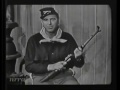
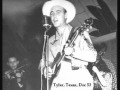
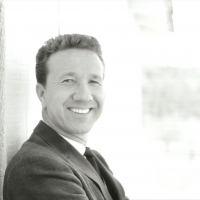
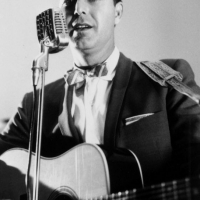
Johnny Horton’s Spotify BioAlthough he is better-remembered for his historical songs, Johnny Horton was one of the best and most popular honky tonk singers of the late 1950s. Horton managed to infuse honky tonk with an urgent rockabilly underpinning. Although his career was cut short by a fatal car crash in 1960, his music reverberated throughout the next three decades.
Horton was born in Los Angeles in 1925, the son of sharecropping parents. During his childhood, his family continually moved between California and Texas, in an attempt to find work. His mother taught him how to play guitar at the age of 11. Horton graduated from high school in 1944 and attended a Methodist seminary with the intent of joining a ministry. After a short while, he left the seminary and began traveling across the country, eventually moving to Alaska in 1949 to become a fisherman. While he was in Alaska, he began writing songs in earnest.
The following year, Horton moved back to east Texas, where he entered a talent contest hosted by Ji…m Reeves, who was then an unknown vocalist. He won the contest, which encouraged him to pursue a career as a performer. Horton started out by playing talent contests throughout Texas, which is where he gained the attention of Fabor Robison. In early 1951, Robison became Horton's manager and managed to secure him a recording contract with Corman Records. However, shortly after his signing, the label folded. Robison then founded his own label, Abbott Records, with the specific intent of recording Horton. None of these records found chart success. During 1951, Horton began performing on various Los Angeles TV shows and hosted a radio show in Pasadena, where he performed under the name "the Singing Fisherman."
At the end of 1951, Horton relocated from California to Shreveport, Louisiana, where he became a regular on the Louisiana Hayride. After moving Horton to Mercury Records in early 1952, Robison became Reeves' manager and severed all ties with Horton. That year, Hank Williams rejoined the cast of the Hayride and became a kind of mentor for Horton. After Williams died on New Year's Eve of 1952, Horton became close with his widow, Billie Jean; the couple married in September of 1953.
Although he had a regular job on the Hayride, Horton's recording career was going nowhere -- none of his Mercury records were selling, and rock & roll was beginning to overtake country's share of the market place. Horton's fortunes changed in the latter half of 1955, when he hired Webb Pierce's manager Tillman Franks as his own manager and quit Mercury Records. Franks had Pierce help him secure a contract for Horton with Columbia Records by the end of 1955. The change in record labels breathed life into Horton's career. At his first Columbia session, he cut "Honky Tonk Man," his first single for the label and one that would eventually become a honky tonk classic. By the spring of 1956, the song had reached the country Top Ten and Horton was well on his way to becoming a star.
"Honky Tonk Man" was edgy enough to have Horton grouped on the more country-oriented side of rockabilly. Wearing a large cowboy hat to hide his receding hairline, he became a popular concert attraction and racked up three more hit singles -- "I'm a One-Woman Man" (number seven), "I'm Coming Home" (number 11), and "The Woman I Need" (number nine) -- in the next year. However, the hits dried up just as quickly as they arrived; for the latter half of 1957 and 1958, he didn't hit the charts at all. Horton responded by cutting some rockabilly, which was beginning to fall out of favor by the time his singles were released.
In the fall of 1958, he bounced back with the Top Ten "All Grown Up," but it wasn't until the ballad "When It's Springtime in Alaska (It's Forty Below)" hit the charts in early 1959 that he achieved a comeback. The song fit neatly into the folk-based story songs that were becoming popular in the late '50s, and it climbed all the way to number one. Its success inspired his next single, "The Battle of New Orleans." Taken from a 1958 Jimmie Driftwood album, the song was a historical saga song like "When It's Springtime in Alaska," but it was far more humorous. It was also far more successful, topping the country charts for ten weeks and crossing over into the pop charts, where it was number one for six weeks. After the back-to-back number one successes of "When It's Spring Time in Alaska" and "The Battle of New Orleans," Horton concentrated solely on folky saga songs. "Johnny Reb" became a Top Ten hit in the later half of 1959, and "Sink the Bismarck" was a Top Ten hit in 1960, followed later in the year by the number one hit "North to Alaska."
Around the time of "North to Alaska"'s November release, Horton claimed that he was getting premonitions of an early death. Sadly, his premonitions came true. On November 4, 1960, he suffered a car crash driving home to Shreveport after a concert in Austin, Texas. Horton was still alive after the wreck, but he died on the way to the hospital; the other passengers in his car had severe injuries, but they survived. Although he died early in his career, Horton left behind a recorded legacy that proved to be quite influential. Artists like George Jones and Dwight Yoakam covered his songs, and echoes of Horton's music could still be heard in honky tonk and country-rock music well into the 1990s. ~ Stephen Thomas Erlewine, Rovi
Viberate is a music analytics platform built for A&Rs, artist managers, labels, booking agents, marketers, and artists.
It helps music professionals track artist growth, analyze audience data, monitor playlist activity, compare artists, follow song performance, and identify opportunities across the music market.
Public artist pages provide a free preview of selected artist data. Paid plans provide access to deeper analytics, historical data, charts, comparisons, playlist tools, exports, alerts, reports, and additional professional features.
Yes. Public Viberate artist pages provide selected artist analytics and music data for free.
Viberate also offers a 7-day free trial of the full platform. A credit card is required to start the trial. The trial includes access to the complete product so users can test deeper artist analytics, historical views, playlist insights, comparisons, charts, exports, alerts, and reporting features before choosing a paid plan.
Viberate provides artist analytics across streaming, playlists, social media, video, radio airplay, songs, and audience markets.
Users can analyze Spotify performance, Spotify and Apple Music playlists, YouTube activity, TikTok and Instagram growth, radio spins, song performance, audience locations, demographics, rankings, and overall artist momentum.
Artist profiles also connect to music charts, similar artists, and comparison tools, helping users benchmark performance and evaluate artists in context.
Viberate updates key artist and track data daily.
For followed artists and tracks, selected data is refreshed multiple times per day. This helps teams monitor playlist changes, streaming movement, audience growth, releases, and campaign performance with more current data.
Update frequency can vary depending on the metric and data source.
Yes. Viberate lets users compare up to five artists side by side across streaming, social media, audience, and engagement metrics.
Users can compare fanbase growth, audience demographics, locations, Spotify performance, social metrics, and other artist data over selected time periods.
Artist comparison can be used for A&R scouting, benchmarking, booking decisions, campaign planning, and evaluating artists with similar audiences or market positions.