Good Rats

Rock
Psychedelic Rock
Hard Rock
 Viberate Rank: 288088
 Viberate Rank: 288088
 Monthly ListenersFollowers
 Subscribers
 Followers
 Followers
 FansTop Spotify Songs
| Track | 7-Day Streams | |
|---|---|---|
1 | 495 | |
2 | 383 | |
3 | 328 | |
4 | 315 | |
5 | 229 |
Top YouTube VideosMonthly ListenersFeatured in Playlists| Playlist | Followers | |
|---|---|---|
1 |  Nuggets: Complete Original Artyfacts Kevin Nielsen | 11.03K |
2 |  Drunk Driving Playlist rat man | 7.14K |
3 |  Deep Cuts, Forgotten Gems & Classic Rock Gold Rick Kirby - music nerd | 5.63K |
4 | Classic Rock ryan_arranz | 3.49K |
5 |  Obscure 60s/70s/80s Prog Rock/Psych/Folk/Fusion Masterpieces Christian Feemster | 3.18K |
Audience| City | Monthly Listeners | |
|---|---|---|
1 | | 170 |
2 | | 153 |
3 | | 85 |
4 | | 64 |
5 | | 57 |
See full performance history, audience data, playlist activity, rankings, comparisons, and more in Viberate music analytics. Start with a free trial, then continue with a paid plan.
Good Rats’ Spotify BioWhile countless rockers started their careers in the New York suburb of Long Island before going on to worldwide success (Billy Joel, Twisted Sister, Steve Vai, Brian Setzer, Blue Öyster Cult, etc.), there have been countless acts that appeared poised for a breakthrough, but for whatever reason, fell short. Many longtime followers of Long Island-based rock would probably agree that tops on the "woulda/coulda/shoulda" list were the Good Rats, a group who played at some of the East Coast's best-known/biggest venues (Madison Square Garden, Nassau Coliseum, the Philadelphia Spectrum) during the '70s, while opening for such big names as Aerosmith, Ozzy Osbourne, the Grateful Dead, Bruce Springsteen, Kiss, Journey, Heart, Styx, Meat Loaf, and Rush, among others. Specializing in a tough form of bar band/hard rock (comparable to Led Zeppelin early on, before getting more commercial), quite a few bandmembers waltzed through the Good Rats' ranks after their formation during the late '60s, but… through it all, lead vocalist Peppi Marchello was present.
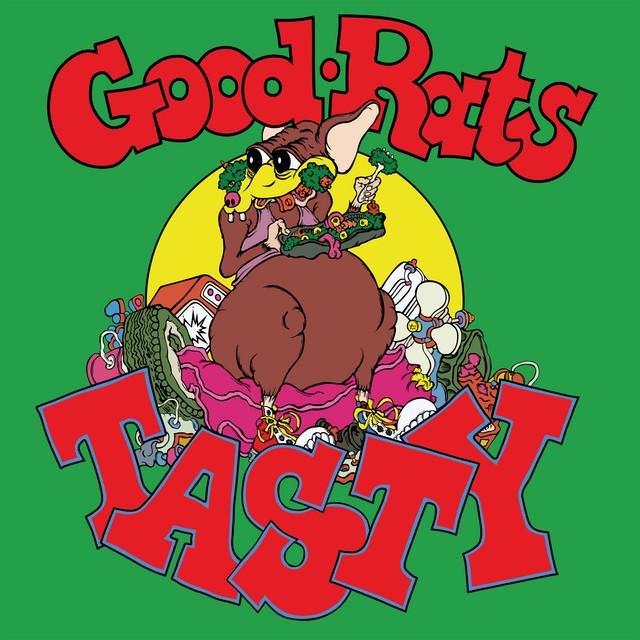
Originally consisting of Marchello, drummer Joe Franco (later briefly a member of Twisted Sister), bassist/vocalist Lenny Kotke, plus a pair of guitarists/singers, John "The Cat" Gatto and Mickey Marchello, the band debuted in 1969 with The Good Rats. A frustrating trend would soon follow for the group -- their albums would be well received by their large, local fan base and regional radio, but would fail to connect to other parts of the continent. It was the group's sophomore effort, 1974's Tasty, that would spawn one of the Good Rats' best-known songs: the jazzy title track, which remains a staple on Long Island-based classic rock radio. It was also around this time that the Good Rats caught the attention of guitarist Tommy Bolin (through a mutual friend), who was earning raves at the time due to his flashy guitar work for the likes of Billy Cobham and Deep Purple. Bolin was so impressed with the group that he had the management of one of his favorite clubs, Denver's Ebbets Field, hire the group, which resulted in a jam session with Bolin and drummer Carmine Appice on a rousing cover of Cobham's "Stratus," which would appear years later on the Bolin compilation Bottom Shelf (Bolin sadly died from a heroin overdose two years later).
Although some groups would have quickly given up because of all the turbulence the Good Rats experienced, Marchello and company admirably continued to soldier ahead -- continuing to issue strong yet overlooked albums (1978's Rats to Riches and Birth Comes to Us All, 1979's Rat City in Blue, and 1981's Great American Music, the latter of which featured future Kiss guitarist Bruce Kulick). After laying low for a few years, Peppi put together a whole new version of the Good Rats in the early '90s, featuring his son, guitarist Gene Marchello, who was a member of the short-lived-'80s pop-metal outfit Marchello. After their rebirth, the Good Rats began issuing all-new studio albums, including 1996's Tasty Seconds and 2002's Play Dum. The original lineup of the Good Rats was also known to sporadically reunite for gigs, such as a pair of shows in Rochester, New York, in October of 1998, which saw the "new" Good Rats open for the original Good Rats. However, after experiencing heart problems, Peppi Marchello underwent open-heart surgery in June 2013, and although the singer appeared to be recovering, he died from cardiac arrest the following month at the age of 68. ~ Greg Prato, Rovi
Viberate is a music analytics platform built for A&Rs, artist managers, labels, booking agents, marketers, and artists.
It helps music professionals track artist growth, analyze audience data, monitor playlist activity, compare artists, follow song performance, and identify opportunities across the music market.
Public artist pages provide a free preview of selected artist data. Paid plans provide access to deeper analytics, historical data, charts, comparisons, playlist tools, exports, alerts, reports, and additional professional features.
Yes. Public Viberate artist pages provide selected artist analytics and music data for free.
Viberate also offers a 7-day free trial of the full platform. A credit card is required to start the trial. The trial includes access to the complete product so users can test deeper artist analytics, historical views, playlist insights, comparisons, charts, exports, alerts, and reporting features before choosing a paid plan.
Viberate provides artist analytics across streaming, playlists, social media, video, radio airplay, songs, and audience markets.
Users can analyze Spotify performance, Spotify and Apple Music playlists, YouTube activity, TikTok and Instagram growth, radio spins, song performance, audience locations, demographics, rankings, and overall artist momentum.
Artist profiles also connect to music charts, similar artists, and comparison tools, helping users benchmark performance and evaluate artists in context.
Viberate updates key artist and track data daily.
For followed artists and tracks, selected data is refreshed multiple times per day. This helps teams monitor playlist changes, streaming movement, audience growth, releases, and campaign performance with more current data.
Update frequency can vary depending on the metric and data source.
Yes. Viberate lets users compare up to five artists side by side across streaming, social media, audience, and engagement metrics.
Users can compare fanbase growth, audience demographics, locations, Spotify performance, social metrics, and other artist data over selected time periods.
Artist comparison can be used for A&R scouting, benchmarking, booking decisions, campaign planning, and evaluating artists with similar audiences or market positions.