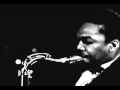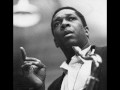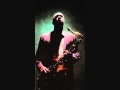
John Coltrane

Jazz
Avant-garde Jazz
Free Jazz
 Viberate Rank: 4462
 Viberate Rank: 4462
 Monthly ListenersFollowers
 Subscribers
 Followers
 Followers
 FansTop Spotify Songs
| Track | 7-Day Streams | |
|---|---|---|
1 | 864.21K | |
2 | 760.31K | |
3 | 550.16K | |
4 | 513.52K | |
5 | 483.46K |
Top YouTube VideosMonthly ListenersFeatured in Playlists| Playlist | Followers | |
|---|---|---|
1 |  Jazz Classics Spotify | 5.08M |
2 |  Coffee Table Jazz Spotify | 2.67M |
3 |  Jazz Classics Blue Note Edition Spotify | 549.30K |
4 |  jazz bar in nyc🎷 mishelle | 454.31K |
5 |  66 GREENE _BY.ALEXANDER | 395.13K |
Audience| City | Monthly Listeners | |
|---|---|---|
1 |  | 53.61K |
2 | | 51.20K |
3 | | 43.44K |
4 |  | 42.62K |
5 |  | 38.34K |
See full performance history, audience data, playlist activity, rankings, comparisons, and more in Viberate music analytics. Start with a free trial, then continue with a paid plan.
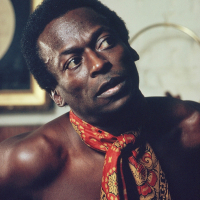
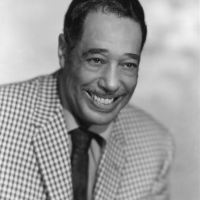
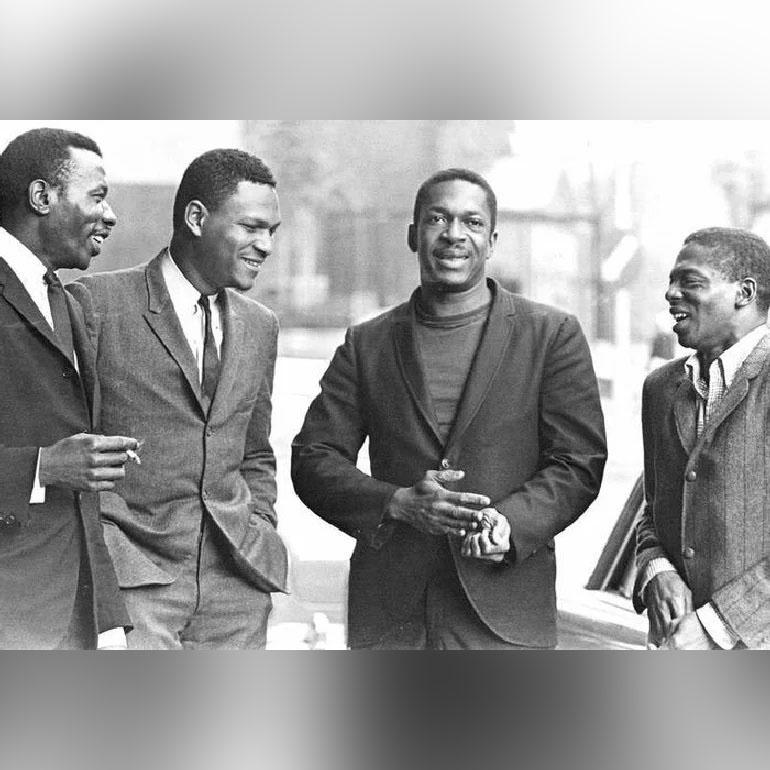
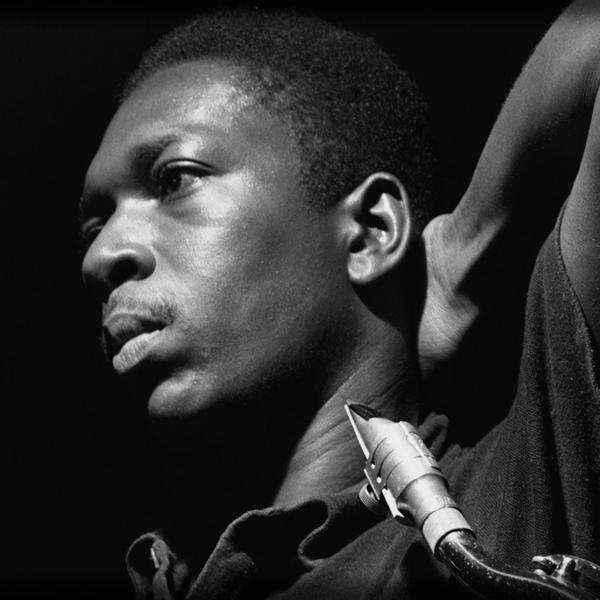
John Coltrane’s Spotify BioA towering musical figure of the 20th century, saxophonist John Coltrane reset the parameters of jazz during his decade as a leader. At the outset, he was a vigorous practitioner of hard bop, gaining prominence as a sideman for Miles Davis before setting out as a leader in 1957, when he released Coltrane on Prestige and Blue Train on Blue Note. Coltrane quickly expanded his horizons, pioneering a technique critic Ira Gitler dubbed "sheets of sound," consisting of the saxophonist playing a flurry of notes on his tenor within the confines of a few chords. During his last days with Davis, along with his earliest records for Atlantic, Coltrane leaned into this technique, but as he developed his career as a leader in the early '60s, he also turned lyrical. His sweet, fluid soprano sax distinguished My Favorite Things, which helped turn the album into a standard upon its release in 1961, but Coltrane soon backed away from mainstream acceptance. Working with pianist McCoy Tyner, drummer Elvin… Jones, and bassist Jimmy Garrison -- a band that would be labeled the "Classic Quartet" -- Coltrane entered a fearless exploratory phase, explicitly incorporating his spiritual quest into his experimental music. A Love Supreme, an album released on Impulse! in 1965, marked the popular height of this period, but Coltrane continued to voyage to the outer edges of jazz in his final years, collaborating with Archie Shepp and Pharoah Sanders. Liver cancer ended his life prematurely: he died at the age of 40 in 1967, just ten years after his first LP as a leader -- but Coltrane's legacy was so varied and rich, he remained the touchstone for creativity in jazz for decades after his passing.
Coltrane was the son of John R. Coltrane, a tailor and amateur musician, and Alice (Blair) Coltrane. Two months after his birth, his maternal grandfather, the Reverend William Blair, was promoted to presiding elder in the A.M.E. Zion Church and moved his family, including his infant grandson, to High Point, North Carolina, where Coltrane grew up. Shortly after he graduated from grammar school in 1939, his father, his grandparents, and his uncle died, leaving him to be raised in a family consisting of his mother, his aunt, and his cousin. His mother worked as a domestic to support the family. The same year, he joined a community band in which he played clarinet and E flat alto horn; he took up the alto saxophone in his high school band. During World War II, Coltrane's mother, aunt, and cousin moved north to New Jersey to seek work, leaving him with family friends; in 1943, when he graduated from high school, he too headed north, settling in Philadelphia. Eventually, the family was reunited there.
While taking jobs outside music, Coltrane briefly attended the Ornstein School of Music and studied at Granoff Studios. He also began playing in local clubs. In 1945, he was drafted into the navy and stationed in Hawaii. He never saw combat, but he continued to play music and, in fact, made his first recording with a quartet of other sailors on July 13, 1946. A performance of Tadd Dameron's "Hot House," it was released in 1993 on the Rhino Records anthology The Last Giant. Coltrane was discharged in the summer of 1946 and returned to Philadelphia. That fall, he began playing in the Joe Webb Band. In early 1947, he switched to the King Kolax Band. During the year, he switched from alto to tenor saxophone. One account claims that this was as the result of encountering alto saxophonist Charlie Parker and feeling the better-known musician had exhausted the possibilities on the instrument; another says that the switch occurred simply because Coltrane next joined a band led by Eddie "Cleanhead" Vinson, who was an alto player, forcing Coltrane to play tenor. He moved on to Jimmy Heath's group in mid-1948, staying with the band, which evolved into the Howard McGhee All Stars until early 1949, when he returned to Philadelphia. That fall, he joined a big band led by Dizzy Gillespie, remaining until the spring of 1951, by which time the band had been trimmed to a septet. On March 1, 1951, he took his first solo on record during a performance of "We Love to Boogie" with Gillespie.
At some point during this period, Coltrane became a heroin addict, which made him more difficult to employ. He played with various bands, mostly around Philadelphia, during the early '50s, his next important job coming in the spring of 1954, when Johnny Hodges, temporarily out of the Duke Ellington band, hired him. But he was fired because of his addiction in September 1954. He returned to Philadelphia, where he was playing when he was hired by Miles Davis a year later. His association with Davis was the big break that finally established him as an important jazz musician. Davis, a former drug addict himself, had kicked his habit and gained recognition at the Newport Jazz Festival in July 1955, resulting in a contract with Columbia Records and the opportunity to organize a permanent band, which, in addition to him and Coltrane, consisted of pianist Red Garland, bassist Paul Chambers, and drummer "Philly" Joe Jones. This unit immediately began to record extensively, not only because of the Columbia contract, but also because Davis had signed with the major label before fulfilling a deal with jazz independent Prestige Records that still had five albums to run. The trumpeter's Columbia debut, 'Round About Midnight, which he immediately commenced recording, did not appear until March 1957. The first fruits of his association with Coltrane came in April 1956 with the release of The New Miles Davis Quintet (aka Miles), recorded for Prestige on November 16, 1955. During 1956, in addition to his recordings for Columbia, Davis held two marathon sessions for Prestige to fulfill his obligation to the label, which released the material over a period of time under the titles Cookin' (1957), Relaxin' (1957), Workin' (1958), and Steamin' (1961).
Coltrane's association with Davis inaugurated a period when he began to frequently record as a sideman. Davis may have been trying to end his association with Prestige, but Coltrane began appearing on many of the label's sessions. After he became better known in the '60s, Prestige and other labels began to repackage this work under his name, as if he had been the leader, a process that has continued to the present day. (Prestige was acquired by Fantasy Records in 1972, and many of the recordings in which Coltrane participated have been reissued on Fantasy's Original Jazz Classics [OJC] imprint.)
Coltrane tried and failed to kick heroin in the summer of 1956, and in October, Davis fired him, though the trumpeter had relented and taken him back by the end of November. Early in 1957, Coltrane formally signed with Prestige as a solo artist, though he remained in the Davis band and also continued to record as a sideman for other labels. In April, Davis fired him again. This may have given him the impetus to finally kick his drug habit, and freed of the necessity of playing gigs with Davis, he began to record even more frequently. On May 31, 1957, he finally made his recording debut as a leader, putting together a pickup band consisting of trumpeter Johnny Splawn, baritone saxophonist Sahib Shihab, pianists Mal Waldron and Red Garland (on different tracks), bassist Paul Chambers, and drummer Al "Tootie" Heath. They cut an album Prestige simply titled Coltrane upon release in September 1957. (It has since been reissued under the title First Trane.)
In June 1957, Coltrane joined the Thelonious Monk Quartet, consisting of Monk on piano, Wilbur Ware on bass, and Shadow Wilson on drums. During this period, he developed a technique of playing several notes at once, and his solos began to go on longer. In August, he recorded material belatedly released on the Prestige albums Lush Life (1960) and The Last Trane (1965), as well as the material for John Coltrane with the Red Garland Trio, released later in the year. (It was later reissued under the title Traneing In.) But Coltrane's second album to be recorded and released contemporaneously under his name alone was cut in September for Blue Note Records. This was Blue Train, featuring trumpeter Lee Morgan, trombonist Curtis Fuller, pianist Kenny Drew, and the Miles Davis rhythm section of Chambers and "Philly" Joe Jones; it was released in December 1957. That month, Coltrane rejoined Davis, playing in what was now a sextet that also featured Cannonball Adderley. In January 1958, he led a recording session for Prestige that produced tracks later released on Lush Life, The Last Trane, and The Believer (1964). In February and March, he recorded Davis' album Milestones, released later in 1958. In between the sessions, he cut his third album to be released under his name alone, Soultrane, issued in September by Prestige. Also in March 1958, he cut tracks as a leader that would be released later on the Prestige collection Settin' the Pace (1961). In May, he again recorded for Prestige as a leader, though the results would not be heard until the release of Black Pearls in 1964.
Coltrane appeared as part of the Miles Davis group at the Newport Jazz Festival in July 1958. The band's set was recorded and released in 1964 on an LP also featuring a performance by Thelonious Monk as Miles & Monk at Newport. In 1988, Columbia reissued the material on an album called Miles & Coltrane. The performance inspired a review in Down Beat, the leading jazz magazine, that was an early indication of the differing opinions on Coltrane that would be expressed throughout the rest of his career and long after his death. The review referred to his "angry tenor," which, it said, hampered the solidarity of the Davis band. The review led directly to an article published in the magazine on October 16, 1958, in which critic Ira Gitler defended the saxophonist and coined the much-repeated phrase "sheets of sound" to describe his playing.
Coltrane's next Prestige session as a leader occurred in July 1958 and resulted in tracks later released on the albums Standard Coltrane (1962), Stardust (1963), and Bahia (1965). All of these tracks were later compiled on a reissue called The Stardust Session. He did a final session for Prestige in December 1958, recording tracks later released on The Believer, Stardust, and Bahia. This completed his commitment to the label, and he signed to Atlantic Records, making his first recording for his new employers on January 15, 1959 with a session on which he was co-billed with vibes player Milt Jackson, though it did not appear until 1961 with the LP Bags and Trane. In March and April 1959, Coltrane participated with the Davis group on the album Kind of Blue. Released on August 17, 1959, this landmark album known for its "modal" playing (improvisations based on scales or "modes," rather than chords) became one of the best-selling and most-acclaimed recordings in the history of jazz.
By the end of 1959, Coltrane had recorded what would be his Atlantic debut, Giant Steps, released in early 1960. The album, consisting entirely of Coltrane compositions, in a sense marked his real debut as a leading jazz performer, even though the 33-year-old musician had released three previous solo albums and made numerous other recordings. His next Atlantic album, Coltrane Jazz, was mostly recorded in November and December 1959 and released in February 1961. In April 1960, he finally left the Davis band and formally launched his solo career, beginning an engagement at the Jazz Gallery in New York, accompanied by pianist Steve Kuhn (soon replaced by McCoy Tyner), bassist Steve Davis, and drummer Pete La Roca (later replaced by Billy Higgins and then Elvin Jones). During this period, he increasingly played soprano saxophone as well as tenor.
In October 1960, Coltrane recorded a series of sessions for Atlantic that would produce material for several albums, including a final track used on Coltrane Jazz and tunes used on My Favorite Things (March 1961), Coltrane Plays the Blues (July 1962), and Coltrane's Sound (June 1964). His soprano version of "My Favorite Things," from the Richard Rodgers/Oscar Hammerstein II musical The Sound of Music, would become a signature song for him. During the winter of 1960-1961, bassist Reggie Workman replaced Steve Davis in his band, and saxophone and flute player Eric Dolphy gradually became a member of the group.
In the wake of the commercial success of "My Favorite Things," Coltrane's star rose, and he was signed away from Atlantic as the flagship artist of the newly formed Impulse! Records label, an imprint of ABC-Paramount, though in May he cut a final album for Atlantic, Olé (February 1962). The following month, he completed his Impulse! debut, Africa/Brass. By this time, his playing was frequently in a style alternately dubbed "avant-garde," "free," or "The New Thing." Like Ornette Coleman, he played seemingly formless, extended solos that some listeners found tremendously impressive, and others decried as noise. In November 1961, John Tynan, writing in Down Beat, referred to Coltrane's playing as "anti-jazz." That month, however, Coltrane recorded one of his most celebrated albums, Live at the Village Vanguard, an LP paced by the 16-minute improvisation "Chasin' the Trane."
Between April and June 1962, Coltrane cut his next Impulse! studio album, another release called simply Coltrane when it appeared later in the year. Working with producer Bob Thiele, he began to do extensive studio sessions, far more than Impulse! could profitably release at the time, especially with Prestige and Atlantic still putting out their own archival albums. But the material would serve the label well after the saxophonist's untimely death. Thiele acknowledged that Coltrane's next three Impulse! albums to be released, Ballads, Duke Ellington and John Coltrane, and John Coltrane with Johnny Hartman (all 1963), were recorded at his behest to quiet the critics of Coltrane's more extreme playing. Impressions (1963), drawn from live and studio recordings made in 1962 and 1963, was a more representative effort, as was 1964's Live at Birdland, also a combination of live and studio tracks, despite its title. But Crescent, also released in 1964, seemed to find a middle ground between traditional and free playing, and was welcomed by critics. This trend was continued with 1965's A Love Supreme, one of Coltrane's best-loved albums, which earned him two Grammy nominations, for Jazz Composition and Performance, and became his biggest-selling record. Also during the year, Impulse! released the standards collection The John Coltrane Quartet Plays... and another album of "free" playing, Ascension, as well as New Thing at Newport, a live album consisting of one side by Coltrane and the other by Archie Shepp.
The year 1966 saw the release of the albums Kulu Se Mama and Meditations, Coltrane's last recordings to appear during his lifetime, though he had finished and approved release for his next album, Expression, the Friday before his death in July 1967. He died suddenly of liver cancer, entering the hospital on a Sunday and expiring in the early morning hours of the next day. He had left behind a considerable body of unreleased work that came out in subsequent years, including "Live" at the Village Vanguard Again! (1967), Om (1967), Cosmic Music (1968), Selflessness (1969), Transition (1969), Sun Ship (1971), Africa/Brass, Vol. 2 (1974), Interstellar Space (1974), and First Meditations (For Quartet) (1977), all on Impulse!
Compilations and releases of archival live recordings brought him a series of Grammy nominations, including Best Jazz Performance for the Atlantic album The Coltrane Legacy in 1970; Best Jazz Performance, Group, and Best Jazz Performance, Soloist, for "Giant Steps" from the Atlantic album Alternate Takes in 1974; and Best Jazz Performance, Group, and Best Jazz Performance, Soloist, for Afro Blue Impressions in 1977. He won the 1981 Grammy for Best Jazz Performance, Soloist, for Bye Bye Blackbird, an album of recordings made live in Europe in 1962, and he was given the Grammy Lifetime Achievement Award in 1992, 25 years after his death.
Even more previously unreleased material has surfaced since then, including the discovery of the Monk and Coltrane live concert At Carnegie Hall and a complete version of his 1966 Seattle concert, Offering: Live at Temple University. The saxophonist was also the subject of director John Scheinfeld's acclaimed 2017 film Chasing Trane: The John Coltrane Documentary. In 2018, Impulse! released Both Directions at Once: The Lost Album, an archival release documenting a previously unheard session from 1963. The next year brought another unreleased album, Blue World, which dated from a June 1964 session recorded in between the sessions for Crescent and A Love Supreme.
John Coltrane is sometimes described as one of jazz's most influential musicians, and certainly there are other artists whose playing is heavily indebted to him. Perhaps more to the point, Coltrane is influential by example, inspiring musicians to experiment, take chances, and devote themselves to their craft. The controversy about his work has never died down, but partially as a result, his name lives on and his recordings continue to remain available and to be reissued frequently. ~ William Ruhlmann, Rovi
Viberate is a music analytics platform built for A&Rs, artist managers, labels, booking agents, marketers, and artists.
It helps music professionals track artist growth, analyze audience data, monitor playlist activity, compare artists, follow song performance, and identify opportunities across the music market.
Public artist pages provide a free preview of selected artist data. Paid plans provide access to deeper analytics, historical data, charts, comparisons, playlist tools, exports, alerts, reports, and additional professional features.
Yes. Public Viberate artist pages provide selected artist analytics and music data for free.
Viberate also offers a 7-day free trial of the full platform. A credit card is required to start the trial. The trial includes access to the complete product so users can test deeper artist analytics, historical views, playlist insights, comparisons, charts, exports, alerts, and reporting features before choosing a paid plan.
Viberate provides artist analytics across streaming, playlists, social media, video, radio airplay, songs, and audience markets.
Users can analyze Spotify performance, Spotify and Apple Music playlists, YouTube activity, TikTok and Instagram growth, radio spins, song performance, audience locations, demographics, rankings, and overall artist momentum.
Artist profiles also connect to music charts, similar artists, and comparison tools, helping users benchmark performance and evaluate artists in context.
Viberate updates key artist and track data daily.
For followed artists and tracks, selected data is refreshed multiple times per day. This helps teams monitor playlist changes, streaming movement, audience growth, releases, and campaign performance with more current data.
Update frequency can vary depending on the metric and data source.
Yes. Viberate lets users compare up to five artists side by side across streaming, social media, audience, and engagement metrics.
Users can compare fanbase growth, audience demographics, locations, Spotify performance, social metrics, and other artist data over selected time periods.
Artist comparison can be used for A&R scouting, benchmarking, booking decisions, campaign planning, and evaluating artists with similar audiences or market positions.