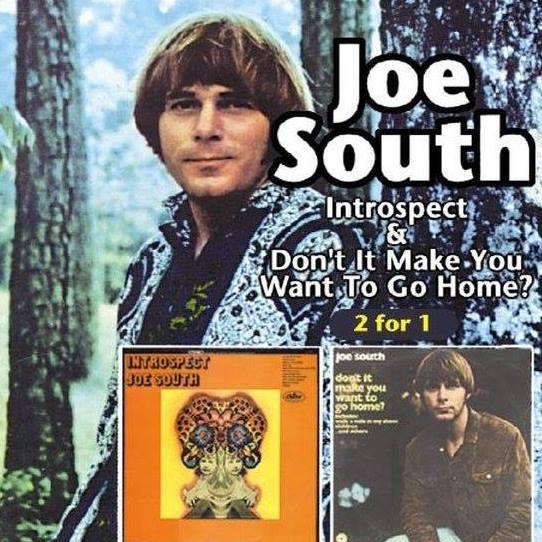
Joe South

Country
Contemporary Country
Mainstream Pop
 Viberate Rank: 102145
 Viberate Rank: 102145
 Monthly ListenersFollowers
 Subscribers
 Followers
 Followers
 FansTop Spotify Songs
| Track | 7-Day Streams | |
|---|---|---|
1 | 25.28K | |
2 | 2.61K | |
3 | 2.36K | |
4 | 2.36K | |
5 | 2.35K |
Top YouTube VideosMonthly ListenersFeatured in Playlists| Playlist | Followers | |
|---|---|---|
1 |  60s 70s 80s 90s 00s Greatest Hits and Songs Diestro Music | 51.95K |
2 | Unofficial Reverb Radio Jeff Ferruzzo | 21.82K |
3 |  NOW 100 Hits Forgotten 60s NOW That’s What I Call Music! | 18.56K |
4 | Jaren 60 en 70 teuntje60 | 17.65K |
5 |  Country Soul Spotify | 15.15K |
Audience| City | Monthly Listeners | |
|---|---|---|
1 |  | 1.91K |
2 | | 1.65K |
3 | | 1.62K |
4 |  | 1.27K |
5 | | 1.08K |
See full performance history, audience data, playlist activity, rankings, comparisons, and more in Viberate music analytics. Start with a free trial, then continue with a paid plan.
Joe South’s Spotify BioSinger/songwriter Joe South (born Joe Souter) began his career as a country musician, performing on an Atlanta radio station and joining Pete Drake's band in 1957. The following year, he recorded a novelty single, "The Purple People Eater Meets the Witch Doctor," and became a session musician in Nashville and at Muscle Shoals. South appeared on records by Marty Robbins, Eddy Arnold, Aretha Franklin, Wilson Pickett, Bob Dylan (Blonde on Blonde), and Simon & Garfunkel ("The Sounds of Silence"). During the '60s, South began working on his songwriting, crafting hits for Deep Purple ("Hush") and several for Billy Joe Royal, including "Down in the Boondocks." South began recording his own material in 1968, scoring a hit with the Grammy-winning "Games People Play" (Song of the Year) the following year. While South produced hits like "Don't It Make You Want to Go Home" and "Walk a Mile in My Shoes," Lynn Anderson had a smash country and pop hit in 1971 with South's "(I Never Promised You A)… Rose Garden."
South took several years off after his brother's suicide in 1971, moving to Maui and living in the jungles. He had proven a rather prickly character, recording a song entitled "I'm a Star"; he was also busted for drugs and, never entirely comfortable performing, was known for an antagonistic stance in concert (he once suggested that audience members start dancing around the concert hall and kiss his ass as they approached the stage). South briefly returned in 1975 with the Midnight Rainbows LP but retired from recording and performing soon afterwards. South returned in 1994 in a London concert showcasing American Southern performers and later re-entered the music publishing industry. He died from a heart attack at his home in Georgia in September of 2012; Joe South was 72 years old. ~ Steve Huey, Rovi
Viberate is a music analytics platform built for A&Rs, artist managers, labels, booking agents, marketers, and artists.
It helps music professionals track artist growth, analyze audience data, monitor playlist activity, compare artists, follow song performance, and identify opportunities across the music market.
Public artist pages provide a free preview of selected artist data. Paid plans provide access to deeper analytics, historical data, charts, comparisons, playlist tools, exports, alerts, reports, and additional professional features.
Yes. Public Viberate artist pages provide selected artist analytics and music data for free.
Viberate also offers a 7-day free trial of the full platform. A credit card is required to start the trial. The trial includes access to the complete product so users can test deeper artist analytics, historical views, playlist insights, comparisons, charts, exports, alerts, and reporting features before choosing a paid plan.
Viberate provides artist analytics across streaming, playlists, social media, video, radio airplay, songs, and audience markets.
Users can analyze Spotify performance, Spotify and Apple Music playlists, YouTube activity, TikTok and Instagram growth, radio spins, song performance, audience locations, demographics, rankings, and overall artist momentum.
Artist profiles also connect to music charts, similar artists, and comparison tools, helping users benchmark performance and evaluate artists in context.
Viberate updates key artist and track data daily.
For followed artists and tracks, selected data is refreshed multiple times per day. This helps teams monitor playlist changes, streaming movement, audience growth, releases, and campaign performance with more current data.
Update frequency can vary depending on the metric and data source.
Yes. Viberate lets users compare up to five artists side by side across streaming, social media, audience, and engagement metrics.
Users can compare fanbase growth, audience demographics, locations, Spotify performance, social metrics, and other artist data over selected time periods.
Artist comparison can be used for A&R scouting, benchmarking, booking decisions, campaign planning, and evaluating artists with similar audiences or market positions.