Joanna Connor

Blues
Blues Rock
Contemporary Blues
 Viberate Rank: 133724
 Viberate Rank: 133724
 Monthly ListenersFollowers
 Subscribers
 Followers
 Followers
 FansTop Spotify Songs
| Track | 7-Day Streams | |
|---|---|---|
1 | 979 | |
2 | 565 | |
3 | 440 | |
4 | 384 | |
5 | 330 |
Top YouTube Videos| Video | 7-Day Views | |
|---|---|---|
1 | 7 | |
2 | 6 | |
3 | 6 |
Monthly ListenersFeatured in Playlists| Playlist | Followers | |
|---|---|---|
1 |  Women of Blues Spotify | 273.74K |
2 |  Dad Rock Hits Sound Atlas | 23.14K |
3 | The Blues Rock Hits bobberforever | 16.49K |
4 |  Bonamassa's Blues Joe Bonamassa | 14.73K |
5 |  Keeping The Blues Alive Joe Bonamassa | 10.34K |
Audience| City | Monthly Listeners | |
|---|---|---|
1 |  | 128 |
2 | | 114 |
3 | | 113 |
4 |  | 111 |
5 | | 101 |
See full performance history, audience data, playlist activity, rankings, comparisons, and more in Viberate music analytics. Start with a free trial, then continue with a paid plan.
Joanna Connor’s Spotify BioSince releasing the aptly titled Believe It! for Blind Pig in 1989, Chicago-based guitarist and singer/songwriter Joanna Connor has revealed herself as a virtuoso stylist in modern electric blues, R&B, and blues-rock. Her take-no-prisoners playing style joins fiery single-string runs to dazzling, rough-and-ready slide guitar pyrotechnics in an approach at once incendiary and deeply soulful. Connor is also an accomplished vocalist and songwriter. 1996's Big Girl Blues drew accolades for its raw, house-rocking approach. Despite situating her blues approach firmly in the Chicago tradition, Connor is well-versed in the genre's long history, amply revealed on 1998's Slidetime. 2002's Joanna Connor Band moved toward soulful blues-funk. After 2003's Mercury Blues, she took a 12-year break from studio recording to raise children. In 2016 Connor returned with the globally acclaimed Six String Stories. The funky, horn-drenched soul-blues of Rise followed in 2019. In early 2021 she issued the Joe… Bonamassa-produced 4801 South Indiana Avenue and followed with Best of Me two years later.
Connor was born in Brooklyn, New York, but at age four her mother moved to Worcester, Massachusetts. She benefitted from her mother's huge collection of blues and jazz recordings, and was taken to see musicians like Taj Mahal, Bonnie Raitt, Ry Cooder, and Buddy Guy in concert. She got her first guitar at age seven and devoted herself to blues and roots rock. At 16, she began singing in Worcester-area bands and formed the Pino/Connor Band with guitarist Ken Pino; they performed at clubs and colleges across New England. In 1984, at age 22, she boarded a Greyhound bus with a one-way ticket to Chicago. She spent her first three weeks in the Windy City haunting clubs and sitting in wherever she could. She approached Lonnie Brooks one evening, and he referred her to his rhythm guitarist Dion Payton. He invited her up to play and she left quite an impression; she was asked to replace Payton after he left. After joining the combo of slide guitar great Johnny Littlejohn a bit later, Payton invited Connor to join his popular 43rd Street Blues Band. Payton, a big draw locally, showcased her talents in prime city clubs such as Kingston Mines, B.L.U.E.S., and the Checkerboard Lounge. Connor set the town's hallowed blues bars on fire with her slashing lead guitar work, her passionate slide solos, and soul-drenched vocals. With Payton, Connor was regularly featured alongside Chicago legends including James Cotton, Junior Wells, Buddy Guy, and A.C. Reed. She performed with Payton at the 1987 Chicago Blues Festival. Later that year, she was ready to put her own band together.
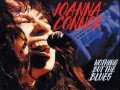
Her 1989 debut for the Blind Pig label, Believe It! got her out of Chicago clubs and into clubs and festivals around the U.S., Canada, and Europe. From the beginning, Connor proved herself a road warrior, touring on her own, in package revues, and as a hired gun with other artists. 1992's Fight registered on the blues charts in several countries. 1993's Living on the Road and Rock and Roll Gypsy (1995) were cross-licensed by Germany's Ruf Records label; they cemented her reputation as a headliner and radio staple across the continent. 1996's Big Girl Blues charted in Europe and established her as a formidable singer as well as a guitarist. 1998's Slidetime showcased her love of R&B and early blues. Nothing But the Blues, was a live recording of a 1999 show in Germany that appeared to rave reviews on the German In-Akustik label in 2001.
After playing in Deborah Coleman's bands for I Can't Lose and Where Blue Begins, Connor left Blind Pig and signed to small indie label M.C. Records in 2002. Her debut, The Joanna Connor Band, found Connor expanding her sound to reflect her many musical interests that included funk, jazz, and soul. She issued Mercury Blues in 2003, a collaborative covers outing with Europe's Mercury Ensemble, a cross-disciplinary chamber orchestra. Among its most notable selections were readings of Blind Faith's Can't Find My Way Home," Jimi Hendrix's "Manic Depression," Aretha Franklin's "I Never Loved a Man," and the Beatles, "Within You, Without You."
Connor played locally while raising her children. She issued the live Unplugged at Carterco with Lance Lewis and appeared with mentor Luther Allison & Friends on Pay It Forward. Other than the self-released Live 24 cut at a Kingston Mines gig (when off the road, she continued to perform there three nights a week), she remained close to home, playing locally and on the summer festival circuit. In 2014, a fan's live video captured an incendiary portion of her performance at the North Atlantic Blues Festival; it went viral on YouTube. Based on its success, M.C. Records coaxed her back into the studio for 2016's Six String Stories. The set contained sophisticated originals co-written with longtime bandmate Lance Lewis as well as covers of Jill Scott's "Golden" and Elmore James' "The Sky Is Crying." Connor even ventured into soul-gospel with "Heaven," featuring the Lewis Family on backing vocals.
With her daughter at Indiana University on a basketball scholarship and her son making his way as a musician in the world, Connor hit the road, playing in Asia, Europe, Canada, and the U.S. She returned to M.C. Records for 2019's Rise. Showcasing a new band, she embraced the stylistic restlessness of Joanna Connor Band and Six String Stories in a program of funky jazz, hard rock, modern blues, and R&B, with a couple of acoustic tracks added for good measure. Among its highlights were "Bad Hand" with Mike Zito, an instrumental cover of Sly Stone's If You Want Me to Stay," and the swinging jump jazz of "Joanna in A." In 2020, Connor signed to Joe Bonamassa's Keeping the Blues Alive (KTBA) label. With guitarists Bonamassa and Josh Smith co-producing, Connor entered the Ocean's Way Studio in Nashville as part of a three-guitar front line with an all-star cast of players who also included keyboardist Reese Wynans and bassist Calvin Turner, and a horn section. The goal was to cut a personal homage to the school of Chicago blues that nurtured her. To that end, she titled the set 4801 South Indiana Avenue -- the address of legendary blues club Theresa's Lounge that existed from 1951 to 1987 on the City's South Side and was home to the city's founding blues fathers. The set was announced in January with the issue of the single and video "I Feel So Good." The ten-song full-length was released in February of 2021. The album debuted at number one on the blues charts.
Following successful tours of the U.S. and Europe, Connor took a short break. Mike Zito of Gulf Coast Records approached her to cut an album for him, offering free rein in the studio. She enlisted bassist Shaun Calloway (also her songwriting partner) and drummer Jason "J Roc" Edwards from her touring group as co-producers and brought in the rest of the crew as well. In addition, she secured guest spots from guitarists Bonamassa, Josh Smith, Gary Hoey and Zito, the Grooveline Horns, and others. The 11-song set included eight tunes written or co-written by Connor, two by Calloway, and a cover of K.C. Douglas' and Robert Geddins' 1948 classic "Mercury Blues" ~ Thom Jurek & Richard Skelly
Viberate is a music analytics platform built for A&Rs, artist managers, labels, booking agents, marketers, and artists.
It helps music professionals track artist growth, analyze audience data, monitor playlist activity, compare artists, follow song performance, and identify opportunities across the music market.
Public artist pages provide a free preview of selected artist data. Paid plans provide access to deeper analytics, historical data, charts, comparisons, playlist tools, exports, alerts, reports, and additional professional features.
Yes. Public Viberate artist pages provide selected artist analytics and music data for free.
Viberate also offers a 7-day free trial of the full platform. A credit card is required to start the trial. The trial includes access to the complete product so users can test deeper artist analytics, historical views, playlist insights, comparisons, charts, exports, alerts, and reporting features before choosing a paid plan.
Viberate provides artist analytics across streaming, playlists, social media, video, radio airplay, songs, and audience markets.
Users can analyze Spotify performance, Spotify and Apple Music playlists, YouTube activity, TikTok and Instagram growth, radio spins, song performance, audience locations, demographics, rankings, and overall artist momentum.
Artist profiles also connect to music charts, similar artists, and comparison tools, helping users benchmark performance and evaluate artists in context.
Viberate updates key artist and track data daily.
For followed artists and tracks, selected data is refreshed multiple times per day. This helps teams monitor playlist changes, streaming movement, audience growth, releases, and campaign performance with more current data.
Update frequency can vary depending on the metric and data source.
Yes. Viberate lets users compare up to five artists side by side across streaming, social media, audience, and engagement metrics.
Users can compare fanbase growth, audience demographics, locations, Spotify performance, social metrics, and other artist data over selected time periods.
Artist comparison can be used for A&R scouting, benchmarking, booking decisions, campaign planning, and evaluating artists with similar audiences or market positions.