Ivor Bolton

Classical
Orchestral
Opera
 Viberate Rank: 219358
 Viberate Rank: 219358
 Monthly ListenersFollowers
 Subscribers
 Followers
 Followers
 FansTop Spotify Songs
| Track | 7-Day Streams | |
|---|---|---|
1 | 9.57K | |
2 | 3.74K | |
3 | 2.79K | |
4 | 814 | |
5 | 508 |
Top YouTube VideosMonthly ListenersFeatured in Playlists| Playlist | Followers | |
|---|---|---|
1 |  Klassik zum Entspannen Filtr Germany | 42.04K |
2 |  This Is Fauré Spotify | 37.79K |
3 |  Classical 432 Hz oliwoodson74 | 37.72K |
4 |  Better call Saul Season 1 & 2 & 3 & 4 & 5 & 6 jo_flick | 28.05K |
5 |  This is Boccherini Spotify | 22.53K |
Audience| City | Monthly Listeners | |
|---|---|---|
1 |  | 1.25K |
2 |  | 1.10K |
3 | | 1.02K |
4 |  | 873 |
5 |  | 645 |
See full performance history, audience data, playlist activity, rankings, comparisons, and more in Viberate music analytics. Start with a free trial, then continue with a paid plan.
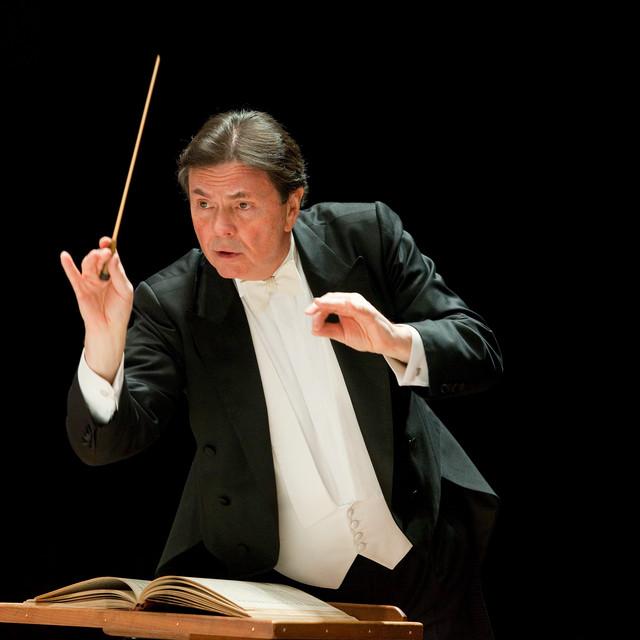
Ivor Bolton’s Spotify BioLike so many conductors today, Ivor Bolton has established a parallel career as a soloist, in his case, as a harpsichordist. On the podium, he is better known in the opera house, particularly for his incisive interpretations of Baroque operas by Handel, Purcell, and others, as well as later operas by Mozart, Bellini, and Rossini. His orchestral repertory, though also divulging a bias for early music, extends into the Romantic and modern periods, encompassing works by Mendelssohn, Franz Berwald, and James MacMillan. As a harpsichordist, Bolton has garnered acclaim, particularly for his performances (and recordings) of J.S. Bach's harpsichord concertos. In 2024, he led the Mozarteum Orchestra on the recording Bruckner: Symphonie in D-moll 'Nullte', WAB 100.
Bolton was born in Blackrod, Lancashire, England, on May 17, 1958. He studied music at Cambridge University (Clare College) and the Royal College of Music in London. After graduation, he added a further year of study at the National… Opera Studio in London. During that year, he earned his first important post as the conductor of the chamber choir Schola Cantorum of Oxford University. In 1984, Bolton founded an instrumental ensemble, the St. James Baroque Players. Under his leadership, the group grew in stature and produced a number of popular recordings, including the 1996 Charpentier Te Deum on Teldec. Bolton stepped down as the music director in 2005 and was succeeded by James O'Donnell. He served as the music director of the English Touring Opera for one season (1991-1992).
In 1982, Bolton began a long association with the Glyndebourne Festival, eventually becoming the music director of the company's touring opera for five seasons beginning in 1992. During his tenure with the Glyndebourne Touring Opera, Bolton made several important operatic debuts, including at the Bavarian State Opera (1994) and Covent Garden (1995). He was also busy in the strictly instrumental world, serving as the principal conductor of the Scottish Chamber Orchestra (1994-1996). In the new century, Bolton has been just as active. From 2004 to 2016, he was the conductor of the Mozarteum Orchestra of Salzburg, serving as conductor laureate since 2016. He has been busy at the major operatic venues, including the 2004 Salzburg Festival (with Anna Netrebko singing Giulietta in Bellini's I Capuleti e i Montecchi). Bolton also expanded his opera repertoire by conducting Britten's Billy Budd during the 2010-2011 season at De Nederlandse Opera. He has been the chief conductor of the Dresden Festival Orchestra since 2012. In 2015, he became the artistic director of the Teatro Real in Madrid and was named the next chief conductor of the Basel Symphony Orchestra, beginning with the 2016-2017 season. Bolton's contracts with both of those latter organizations were extended through the 2024-2025 season, with Teatro Real announcing that Bolton's tenure will come to an end at that time.
Bolton has amassed a sizable discography spread over several labels, including Deutsche Grammophon, RCA, and ASV, among others. His recording catalog encompasses symphonic and operatic repertory, among which is a complete cycle of Bruckner symphonies, with the Mozarteum Orchestra on Oehms Classics, and operas such as Antonio Cesti's L'Orontea and Handel's Giulio Cesare in Egitto. In 2020, he was heard on Secret Fauré III, with Benjamin Appl and Katja Stuber, and Joseph Haydn: Il Ritorno di Tobia, once again leading the Mozarteum Orchestra. In 2023, at the King's Birthday Honours, Bolton was named a Commander of the Order of the British Empire. The following year, he led the Mozarteum Orchestra on a recording of Bruckner's Symphony in D minor. ~ Robert Cummings & Keith Finke, Rovi
Viberate is a music analytics platform built for A&Rs, artist managers, labels, booking agents, marketers, and artists.
It helps music professionals track artist growth, analyze audience data, monitor playlist activity, compare artists, follow song performance, and identify opportunities across the music market.
Public artist pages provide a free preview of selected artist data. Paid plans provide access to deeper analytics, historical data, charts, comparisons, playlist tools, exports, alerts, reports, and additional professional features.
Yes. Public Viberate artist pages provide selected artist analytics and music data for free.
Viberate also offers a 7-day free trial of the full platform. A credit card is required to start the trial. The trial includes access to the complete product so users can test deeper artist analytics, historical views, playlist insights, comparisons, charts, exports, alerts, and reporting features before choosing a paid plan.
Viberate provides artist analytics across streaming, playlists, social media, video, radio airplay, songs, and audience markets.
Users can analyze Spotify performance, Spotify and Apple Music playlists, YouTube activity, TikTok and Instagram growth, radio spins, song performance, audience locations, demographics, rankings, and overall artist momentum.
Artist profiles also connect to music charts, similar artists, and comparison tools, helping users benchmark performance and evaluate artists in context.
Viberate updates key artist and track data daily.
For followed artists and tracks, selected data is refreshed multiple times per day. This helps teams monitor playlist changes, streaming movement, audience growth, releases, and campaign performance with more current data.
Update frequency can vary depending on the metric and data source.
Yes. Viberate lets users compare up to five artists side by side across streaming, social media, audience, and engagement metrics.
Users can compare fanbase growth, audience demographics, locations, Spotify performance, social metrics, and other artist data over selected time periods.
Artist comparison can be used for A&R scouting, benchmarking, booking decisions, campaign planning, and evaluating artists with similar audiences or market positions.