Roger Norrington

Classical
Orchestral
Chamber Music
 Viberate Rank: 131495
 Viberate Rank: 131495
 Monthly ListenersFollowers
 Subscribers
 Followers
 Followers
 FansTop Spotify SongsTop YouTube VideosMonthly ListenersFeatured in Playlists
| Playlist | Followers | |
|---|---|---|
1 |  Classical Essentials Spotify | 3.82M |
2 |  This Is Mozart Spotify | 1.16M |
3 |  Música Clásica Que Sí Es Clásica José Gonzales | 339.69K |
4 |  Violin Greatest Sony Classical & Jazz Benelux | 97.58K |
5 |  1000 Recordings to Hear Before You Die (Tom Moon): Album Index Ulysses' Classical | 94.29K |
Audience| City | Monthly Listeners | |
|---|---|---|
1 | | 6.72K |
2 |  | 3.15K |
3 |  | 2.90K |
4 |  | 2.07K |
5 | | 2.02K |
See full performance history, audience data, playlist activity, rankings, comparisons, and more in Viberate music analytics. Start with a free trial, then continue with a paid plan.
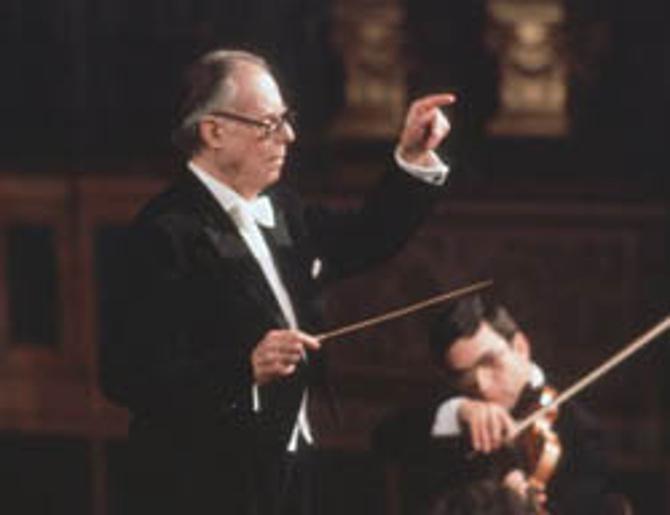
Roger Norrington’s Spotify BioRoger Norrington is among both the most controversial and the most durably successful conductors of the historical performance movement, having influenced the scene in his native Britain since the early 1960s. Over a distinguished career, he has extended historical performance principles forward to the music of Mahler and even beyond, forging unconventional interpretations that often use fast tempos and strictly avoid vibrato.
Norrington was born on March 16, 1934, in Oxford. His father, Sir Arthur Norrington, was a famous professor and publisher. Norrington studied conducting and singing at various schools, including Clare College, Cambridge, the Royal Conservatory of Music in Toronto, and the Royal College of Music in London, where he worked with Adrian Boult. Through the 1960s, he was active as a tenor and also played the violin, but he was most interested in conducting. In London in 1962, he founded the Schütz Choir, one of the first groups to specialize in the music of the early… Baroque, and he also created a group devoted to performing music of Monteverdi. In 1968, he became the principal conductor and music director of Kent Opera in Britain, remaining in that post until 1984. His groundbreaking experiments with historical performance accelerated in 1978 when he became conductor of two related groups, the London Baroque Players and the London Classical Players; he stayed on until 1998.
The hallmarks of Norrington's innovative style were threefold. First, he was a great advocate of going back to the source, analyzing scores intensively so that he could devise readings that, he felt, were close to the composer's intentions, using period instruments (he made no claims of authenticity, however). In performing Beethoven's symphonies, he observed the composer's very fast metronome markings, although most other conductors have ignored those, often in the belief that Beethoven miscalculated them. Second, he stripped out what he considered accumulations of orchestral style from 19th century tradition, most prominently the use of vibrato; the most striking detail to listeners new to Norrington's style is the flat string sound he cultivates. Third, unlike most other conductors of the historical performance movements, he did not restrict himself to Baroque or even Classical-era works. He conducted historical performances of works as far forward in time as those of Mahler, and he has also led premieres of contemporary works.
As Norrington's fame grew, partly due to the controversy his performances and recordings engendered, he found himself in demand as a conductor and worked with a variety of ensembles, both historically oriented and traditional. These included the Bournemouth Sinfonietta (1985-1989), the Camerata Academica of Salzburg (1997-2006), and the Stuttgart Radio Symphony Orchestra, whose final concert he conducted (at the 2016 London Proms) before it merged with the SWR Sinfonieorchester Baden-Baden und Freiburg. From 2011 to 2016, he was the principal conductor of the Zurich Chamber Orchestra in Switzerland. Norrington also served as the music director of St. Luke's Church in New York from 1990 to 1994 and was the artistic advisor of Boston's venerable Handel and Haydn Society from 2006 to 2009. He held principal guest conductorships with the Orchestre de Chambre de Paris and the Deutsche Kammerphilharmonie Bremen and appeared as guest conductor with the Berlin Philharmonic, the Vienna Philharmonic, and other major orchestras of the world.
Norrington's recording catalog is exceptionally deep and wide, containing at least 150 items covering nearly every kind of orchestral and choral repertory. It began in 1968 with A Baroque Christmas, on which he led the Schütz Choir. His output included multiple complete cycles of Beethoven's symphonies as well as Brahms symphony and Beethoven piano concerto cycles. The year 2006 alone saw a dozen separate Norrington releases. Norrington remained active into old age, releasing a recording of Ralph Vaughan Williams' London Symphony (Symphony No. 2) with the London Philharmonic in 2015. Several of his recordings with the Radio Symphony Orchestra of Stuttgart were reissued on the SWR Recordings label in the late 2010s and early 2020s.
Viberate is a music analytics platform built for A&Rs, artist managers, labels, booking agents, marketers, and artists.
It helps music professionals track artist growth, analyze audience data, monitor playlist activity, compare artists, follow song performance, and identify opportunities across the music market.
Public artist pages provide a free preview of selected artist data. Paid plans provide access to deeper analytics, historical data, charts, comparisons, playlist tools, exports, alerts, reports, and additional professional features.
Yes. Public Viberate artist pages provide selected artist analytics and music data for free.
Viberate also offers a 7-day free trial of the full platform. A credit card is required to start the trial. The trial includes access to the complete product so users can test deeper artist analytics, historical views, playlist insights, comparisons, charts, exports, alerts, and reporting features before choosing a paid plan.
Viberate provides artist analytics across streaming, playlists, social media, video, radio airplay, songs, and audience markets.
Users can analyze Spotify performance, Spotify and Apple Music playlists, YouTube activity, TikTok and Instagram growth, radio spins, song performance, audience locations, demographics, rankings, and overall artist momentum.
Artist profiles also connect to music charts, similar artists, and comparison tools, helping users benchmark performance and evaluate artists in context.
Viberate updates key artist and track data daily.
For followed artists and tracks, selected data is refreshed multiple times per day. This helps teams monitor playlist changes, streaming movement, audience growth, releases, and campaign performance with more current data.
Update frequency can vary depending on the metric and data source.
Yes. Viberate lets users compare up to five artists side by side across streaming, social media, audience, and engagement metrics.
Users can compare fanbase growth, audience demographics, locations, Spotify performance, social metrics, and other artist data over selected time periods.
Artist comparison can be used for A&R scouting, benchmarking, booking decisions, campaign planning, and evaluating artists with similar audiences or market positions.