Isaac Stern

Classical
Chamber Music
 Viberate Rank: 73653
 Viberate Rank: 73653
 Monthly ListenersFollowers
 Subscribers
 Followers
 Followers
 FansTop Spotify SongsTop YouTube VideosMonthly ListenersFeatured in Playlists
| Playlist | Followers | |
|---|---|---|
1 |  Easy Classical Spotify | 471.86K |
2 |  Baroque Classics Sony Classical & Jazz Sweden | 131.09K |
3 |  This Is Yo-Yo Ma Spotify | 104.33K |
4 |  Easy Listening Classical For Study, Work, Relaxing, Chillout, Anything But Serious Listening Ulysses' Classical | 99.24K |
5 |  Violin Greatest Sony Classical & Jazz Benelux | 97.58K |
Audience| City | Monthly Listeners | |
|---|---|---|
1 |  | 7.37K |
2 |  | 7.17K |
3 |  | 5.74K |
4 | | 5.71K |
5 |  | 5.54K |
See full performance history, audience data, playlist activity, rankings, comparisons, and more in Viberate music analytics. Start with a free trial, then continue with a paid plan.
Isaac Stern’s Spotify BioIsaac Stern was among the most distinguished of the world's violinists. He achieved a strong rapport with his audience through his own personality and his visible love for the music, with an unerring command of the proper style for each work in his exceptionally wide repertoire. His technique was impeccable, his tone strong and warm, though not rich. He performed and recorded virtually the entire standard violin repertoire, including most of the many great violin concertos of the 1930s: those of Hindemith, Berg, Prokofiev (No. 2), Walton, Bartok (No. 2) and other works, some quite contemporary. His repertoire extended at least from Vivaldi to Dutilleux. Stern also dubbed on-screen appearances by actors impersonating violinists; his films include Humoresque, Tonight We Sing, and Fiddler on the Roof.
Stern's family moved to the United States and settled in San Francisco when he was one year old. His mother, a professional singer, gave him his first music lessons. He began studying the… violin at the San Francisco Conservatory in 1928. In 1932 he became the third immensely talented San Francisco-area boy to train with the San Francisco Symphony concertmaster Louis Persinger (the others were Menuhin and Ruggiero Ricci). However, he considered Naoum Blinder, with whom he studied until the age of 15, his only true teacher. Stern made his debut with the San Francisco Symphony on February 18, 1936, with Pierre Monteux conducting the Third Concerto by Saint-Saëns. After his New York debut in 1937, he returned to San Francisco for further study. He re-entered concert life on February 18, 1939, again giving a recital in New York. Soon he was one of the leading American violinists, particularly noticed for his young age, and his January 8, 1943, recital at Carnegie Hall (his first solo performance there) was a smash hit.
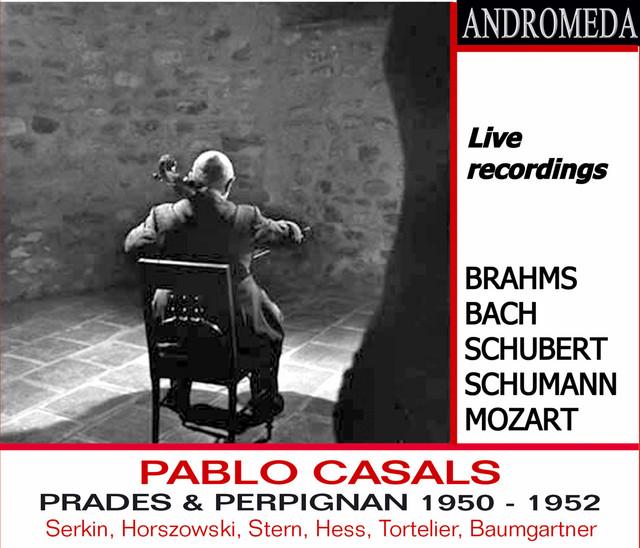
In 1943 and 1944 Stern entertained American troops in Iceland, Greenland, and the South Pacific. After the war he toured Australia in 1947, and made his first trip to Europe in 1948. He played at Pablo Casals' Prades Festival from 1950-1952, and the Edinburgh Festival in 1953. His tour of the U.S.S.R. in 1956 was an early sign of one of the recurrent thaws in the Cold War. In 1960 he formed a durable trio with pianist Eugene Istomin and cellist Leonard Rose; the group played the complete trio literature by Beethoven in bicentennial celebrations of the composer's birth. He recorded mostly for Columbia (which subsequently became CBS, then Sony Classics), with major orchestras and conductors, with the Stern-Rose-Istomin Trio, and in sonata and other duet repertory with his regular partner, Alexander Zakin. He made several appearances at the White House.
In the late 1950s, when the City of New York planned the construction of the Lincoln Center complex, it became clear that the plans as they stood would entail the destruction of the old Metropolitan Opera house and of Carnegie Hall. The latter, one of the finest concert halls in the world acoustically, was saved for posterity by the actions of a group Stern formed in 1960. Stern was chosen president of the Carnegie Hall Corporation, formed to supervise the artistic program of the great concert hall. He also was involved in the formation of the U.S. National Endowment of the Arts, and was appointed to its initial advisory board. He served as chairman of the board of the American-Israel Cultural Foundation, which aids the careers of young musicians. Stern, among other honors, was named Officer of the Légion d'honneur of France.
Viberate is a music analytics platform built for A&Rs, artist managers, labels, booking agents, marketers, and artists.
It helps music professionals track artist growth, analyze audience data, monitor playlist activity, compare artists, follow song performance, and identify opportunities across the music market.
Public artist pages provide a free preview of selected artist data. Paid plans provide access to deeper analytics, historical data, charts, comparisons, playlist tools, exports, alerts, reports, and additional professional features.
Yes. Public Viberate artist pages provide selected artist analytics and music data for free.
Viberate also offers a 7-day free trial of the full platform. A credit card is required to start the trial. The trial includes access to the complete product so users can test deeper artist analytics, historical views, playlist insights, comparisons, charts, exports, alerts, and reporting features before choosing a paid plan.
Viberate provides artist analytics across streaming, playlists, social media, video, radio airplay, songs, and audience markets.
Users can analyze Spotify performance, Spotify and Apple Music playlists, YouTube activity, TikTok and Instagram growth, radio spins, song performance, audience locations, demographics, rankings, and overall artist momentum.
Artist profiles also connect to music charts, similar artists, and comparison tools, helping users benchmark performance and evaluate artists in context.
Viberate updates key artist and track data daily.
For followed artists and tracks, selected data is refreshed multiple times per day. This helps teams monitor playlist changes, streaming movement, audience growth, releases, and campaign performance with more current data.
Update frequency can vary depending on the metric and data source.
Yes. Viberate lets users compare up to five artists side by side across streaming, social media, audience, and engagement metrics.
Users can compare fanbase growth, audience demographics, locations, Spotify performance, social metrics, and other artist data over selected time periods.
Artist comparison can be used for A&R scouting, benchmarking, booking decisions, campaign planning, and evaluating artists with similar audiences or market positions.