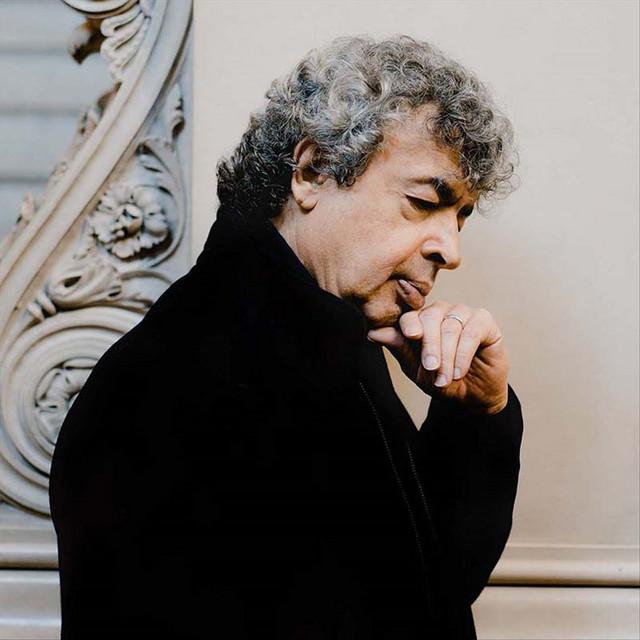
Semyon Bychkov

Classical
Orchestral
Chamber Music
 Viberate Rank: 119977
 Viberate Rank: 119977
 Monthly ListenersFollowers
 Subscribers
 Followers
 Followers
 FansTop Spotify Songs
| Track | 7-Day Streams | |
|---|---|---|
1 | 75.10K | |
2 | 12.64K | |
3 | 11.04K | |
4 | 8.02K | |
5 | 5.42K |
Top YouTube Videos| Video | 7-Day Views | |
|---|---|---|
1 | 736 | |
2 | 26 | |
3 | 17 | |
4 | 11 | |
5 | 9 |
Monthly ListenersFeatured in Playlists| Playlist | Followers | |
|---|---|---|
1 |  Classical Essentials Spotify | 3.82M |
2 |  Opera Classics Spotify | 605.55K |
3 |  This Is Tchaikovsky Spotify | 371.41K |
4 |  100 of the most famous classical music pieces 🎻 🎹 🎺 ILKER SATUR | 320.61K |
5 |  Movie Soundtracks & Cinematic Music (Classical & Instrumental) Tobias Schneider | 217.42K |
Audience| City | Monthly Listeners | |
|---|---|---|
1 |  | 10.57K |
2 |  | 8.58K |
3 |  | 6.27K |
4 |  | 5.48K |
5 |  | 5.15K |
See full performance history, audience data, playlist activity, rankings, comparisons, and more in Viberate music analytics. Start with a free trial, then continue with a paid plan.
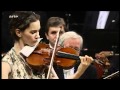
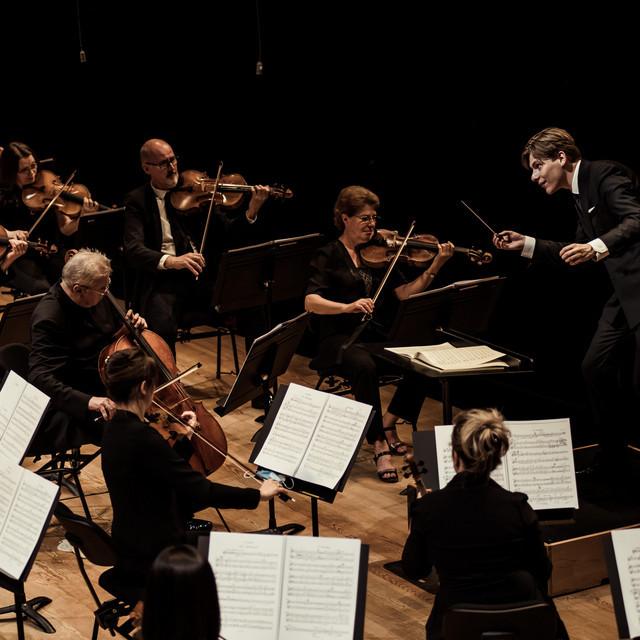
Semyon Bychkov’s Spotify BioSemyon Bychkov's conducting is admired for its clarity, unexaggerated expression, and frankness in conveying the intent of the music, regardless of what he is conducting. He has led orchestras and opera companies across the globe and has had a successful recording career.
Bychkov was born on November 30, 1952, in Leningrad, U.S.S.R. (now St. Petersburg, Russia). His first studies were of the piano, but he spent ten years (from the age of seven) at the Glinka Choir School in St. Petersburg, singing in the choir and learning conducting. Bychkov then studied with Ilya Musin at the Leningrad Conservatory, earning such respect for his skills that he won the 1973 Rachmaninov Conducting Competition and was invited to conduct the Leningrad Philharmonic before his graduation. However, the concert and his graduation never happened. Bychkov had not been discreet about his views of Soviet policies, and due to this, the concert was canceled. In 1974, the KGB handed him an exit visa. After a few… months in Vienna and Italy, he found himself in New York, studying conducting at the Mannes College of Music. He then became the conductor of the Grand Rapids Symphony in Michigan from 1980 until 1984 and took American citizenship in 1983. At the same time, he was the principal guest conductor of the Buffalo Philharmonic in New York, eventually becoming its music director in 1985. However, it was a series of guest conducting jobs -- including with the Berlin Philharmonic and filling in for Bernard Haitink with the Concertgebouw and Rafael Kubelik with the New York Philharmonic -- in 1984 that brought him international attention. Around the same time, his first recording, Rossini's Stabat Mater on Philips, met with great success.
Leaving the Buffalo position, Bychkov was named music director of the Orchestre de Paris in 1989, principal guest conductor of the St. Petersburg Philharmonic in 1990, principal guest conductor of Florence's Maggio Musicale in 1992, and chief conductor of the Dresden Semperoper in 1997. In addition to the operas conducted in Dresden, Bychkov has also conducted Elektra at the Wiener Staatsoper, Tristan und Isolde at the Chicago Lyric Opera, and Jenufa in Florence. Bychkov's debut at New York's Metropolitan Opera occurred in June 2004, with Mussorgsky's Boris Godunov. He stepped down from his Paris position in 1998 after being appointed conductor of the WDR Symphony Orchestra in Cologne. He remained in Cologne until 2010. With that ensemble, he began a recording series of Shostakovich's symphonies, expanded its touring schedule, and premiered many new works by composers such as Magnus Lindberg and Nicholas Maw. In 2012, he was appointed the position of Günter Wand Conducting Chair for the BBC Symphony Orchestra. Bychkov began guest conducting the Czech Philharmonic Orchestra in 2013 and led the group in concerts and recordings. In 2017, the Czech Philharmonic announced Bychkov's appointment as its chief conductor and music director beginning in 2018.
Bychkov has had a very successful recording career, including a ten-year contract with the Philips label. He's also recorded for Decca, Avie, and Profil, among others. In 2019, Decca released the box set for The Tchaikovsky Project, an exploration into the composer's music by Bychkov and the Czech Philharmonic that began in 2015. Focusing on Mahler's symphonic works on tour and in recordings in the early 2020s, Bychkov and the Czech Philharmonic kicked off a new cycle on the PentaTone Classics label with a recording of Mahler's Symphony No. 4 in 2022.
Bychkov is married to pianist Marielle Labèque. ~ Patsy Morita & Keith Finke, Rovi
Viberate is a music analytics platform built for A&Rs, artist managers, labels, booking agents, marketers, and artists.
It helps music professionals track artist growth, analyze audience data, monitor playlist activity, compare artists, follow song performance, and identify opportunities across the music market.
Public artist pages provide a free preview of selected artist data. Paid plans provide access to deeper analytics, historical data, charts, comparisons, playlist tools, exports, alerts, reports, and additional professional features.
Yes. Public Viberate artist pages provide selected artist analytics and music data for free.
Viberate also offers a 7-day free trial of the full platform. A credit card is required to start the trial. The trial includes access to the complete product so users can test deeper artist analytics, historical views, playlist insights, comparisons, charts, exports, alerts, and reporting features before choosing a paid plan.
Viberate provides artist analytics across streaming, playlists, social media, video, radio airplay, songs, and audience markets.
Users can analyze Spotify performance, Spotify and Apple Music playlists, YouTube activity, TikTok and Instagram growth, radio spins, song performance, audience locations, demographics, rankings, and overall artist momentum.
Artist profiles also connect to music charts, similar artists, and comparison tools, helping users benchmark performance and evaluate artists in context.
Viberate updates key artist and track data daily.
For followed artists and tracks, selected data is refreshed multiple times per day. This helps teams monitor playlist changes, streaming movement, audience growth, releases, and campaign performance with more current data.
Update frequency can vary depending on the metric and data source.
Yes. Viberate lets users compare up to five artists side by side across streaming, social media, audience, and engagement metrics.
Users can compare fanbase growth, audience demographics, locations, Spotify performance, social metrics, and other artist data over selected time periods.
Artist comparison can be used for A&R scouting, benchmarking, booking decisions, campaign planning, and evaluating artists with similar audiences or market positions.