Harold Budd

Classical
Classical Crossover
Ambient
 Viberate Rank: 25827
 Viberate Rank: 25827
 Monthly ListenersFollowers
 Subscribers
 Followers
 Followers
 FansTop Spotify Songs
| Track | 7-Day Streams | |
|---|---|---|
1 | 732.60K | |
2 | 60.98K | |
3 | 48.75K | |
4 | 48.08K | |
5 | 33.00K |
Top YouTube VideosMonthly ListenersFeatured in Playlists| Playlist | Followers | |
|---|---|---|
1 |  Alternative 80s Spotify | 2.11M |
2 |  sad girl starter pack Spotify | 1.60M |
3 |  Ethereal Spotify | 1.60M |
4 |  Spooky Spotify | 463.46K |
5 |  *ೃ༄ autumn🍂☕️🕯️ Eve ★ | 435.58K |
Audience| City | Monthly Listeners | |
|---|---|---|
1 | | 29.39K |
2 |  | 25.77K |
3 | | 21.51K |
4 | | 20.34K |
5 |  | 16.45K |
See full performance history, audience data, playlist activity, rankings, comparisons, and more in Viberate music analytics. Start with a free trial, then continue with a paid plan.
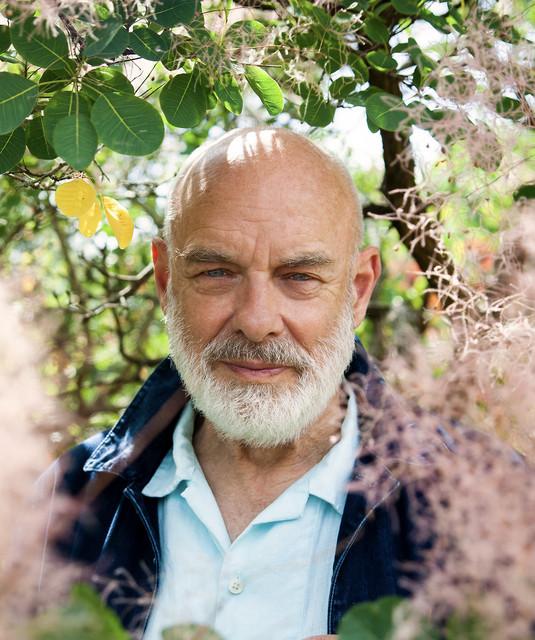
Harold Budd’s Spotify BioThe American ambient/neo-classical composer who has most closely allied himself with the increasingly sympathetic independent-rock underground -- through his collaborations with the Cocteau Twins' Robin Guthrie -- Harold Budd is also one of the very few who can very rightly be called an ambient composer. His music, a sparse and tonal wash of keyboard treatments, was inspired by a boyhood spent listening to the buzz of telephone wires near his home in the Mojave Desert town of Victorville, California (though he was born in nearby Los Angeles). Though interested in music from an early age, Budd was 36, already married and with children of his own, by the time he graduated from the University of Southern California with a degree in Musical Composition in 1966. He became a respected name in the circle of minimalist and avant-garde composers based in Southern California during the late '60s, premiering his works The Candy-Apple Revision and Unspecified D-Flat Major Chord and Lirio around… the area. In 1970, he began a teaching career at the California Institute of Arts, but continued to compose while there, writing Madrigals of the Rose Angel in 1972. After leaving the Institute in 1976, Budd gained a recording contract with the Brian Eno-affiliated EG Records, and released his debut album The Pavilion of Dreams in 1978. Two years later, he collaborated with Eno on one of the landmark albums of the ambient style, Ambient 2: The Plateaux of Mirrors. After recording two albums for Cantil in 1981 (The Serpent [In Quicksilver]) and 1984 (Abandoned Cities), Harold Budd again worked with Eno on 1984's The Pearl. A contract with Eno's Opal Records resulted in one of Budd's most glorious albums, The White Arcades, recorded in Edinburgh with Robin Guthrie of the Cocteau Twins. Budd left Opal after 1991's By the Dawn's Early Light, and recorded two albums for Gyroscope: Music for Three Pianos (with Ruben Garcia and Daniel Lentz) and the lauded Through the Hill, a collaboration with Andy Partridge of XTC. In the mid-'90s, he recorded albums for New Albion and All Saints before signing to Atlantic for the release of The Room in mid-2000.
Viberate is a music analytics platform built for A&Rs, artist managers, labels, booking agents, marketers, and artists.
It helps music professionals track artist growth, analyze audience data, monitor playlist activity, compare artists, follow song performance, and identify opportunities across the music market.
Public artist pages provide a free preview of selected artist data. Paid plans provide access to deeper analytics, historical data, charts, comparisons, playlist tools, exports, alerts, reports, and additional professional features.
Yes. Public Viberate artist pages provide selected artist analytics and music data for free.
Viberate also offers a 7-day free trial of the full platform. A credit card is required to start the trial. The trial includes access to the complete product so users can test deeper artist analytics, historical views, playlist insights, comparisons, charts, exports, alerts, and reporting features before choosing a paid plan.
Viberate provides artist analytics across streaming, playlists, social media, video, radio airplay, songs, and audience markets.
Users can analyze Spotify performance, Spotify and Apple Music playlists, YouTube activity, TikTok and Instagram growth, radio spins, song performance, audience locations, demographics, rankings, and overall artist momentum.
Artist profiles also connect to music charts, similar artists, and comparison tools, helping users benchmark performance and evaluate artists in context.
Viberate updates key artist and track data daily.
For followed artists and tracks, selected data is refreshed multiple times per day. This helps teams monitor playlist changes, streaming movement, audience growth, releases, and campaign performance with more current data.
Update frequency can vary depending on the metric and data source.
Yes. Viberate lets users compare up to five artists side by side across streaming, social media, audience, and engagement metrics.
Users can compare fanbase growth, audience demographics, locations, Spotify performance, social metrics, and other artist data over selected time periods.
Artist comparison can be used for A&R scouting, benchmarking, booking decisions, campaign planning, and evaluating artists with similar audiences or market positions.