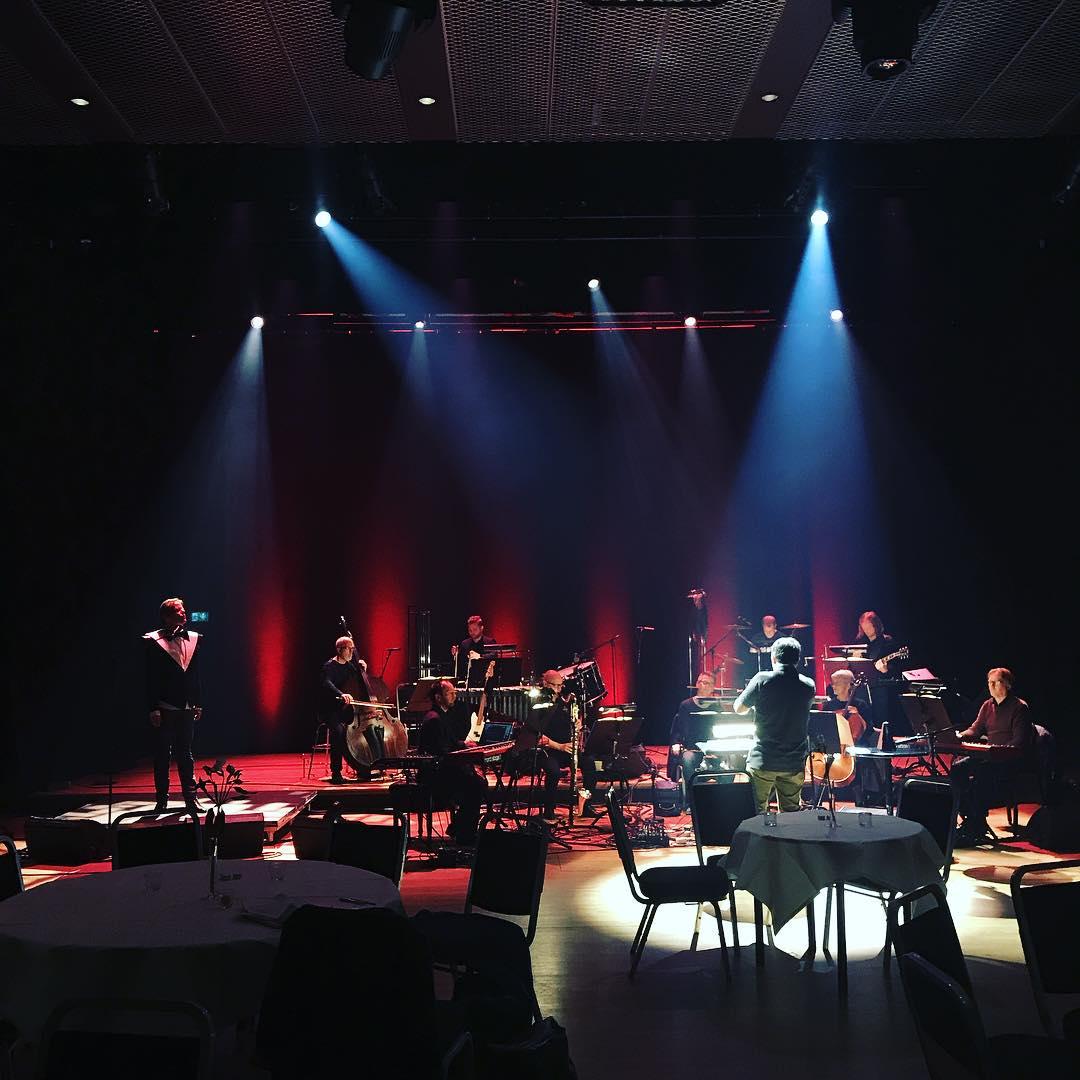
Hans Abrahamsen

Classical
Classical Crossover
 Viberate Rank: 485104
 Viberate Rank: 485104
 Monthly ListenersFollowers
 Subscribers
 Followers
 Followers
 FansTop Spotify Songs
| Track | 7-Day Streams | |
|---|---|---|
1 | 146 | |
2 | 131 | |
3 | 82 | |
4 | 82 | |
5 | 79 |
Top YouTube VideosMonthly ListenersFeatured in Playlists| Playlist | Followers | |
|---|---|---|
1 |  The Sound of Everything The Sounds of Spotify | 53.81K |
2 |  SKMT picks Ryuichi Sakamoto | 18.31K |
3 |  NPR Classical NPR Music | 14.43K |
4 |  Danny L Harle's HUGE PLAYLIST Danny L Harle | 13.97K |
5 |  Minimal Moods with Bryce Dessner of The National The National | 8.12K |
Audience| City | Monthly Listeners | |
|---|---|---|
1 |  | 50 |
2 |  | 30 |
3 | | 26 |
4 |  | 24 |
5 | | 24 |
See full performance history, audience data, playlist activity, rankings, comparisons, and more in Viberate music analytics. Start with a free trial, then continue with a paid plan.
Hans Abrahamsen’s Spotify BioHans Abrahamsen is one of the younger representatives of the Danish movement toward "new simplicity" (ny enkelhed), which developed in the 1960s and '70s. His pieces, mostly quite short, are marked by very light, finely orchestrated textures, a lack of harsh dissonance, and the use of collage and pastiche.
Abrahamsen was born on December 23, 1952, in Kongens Lyngby, Denmark. He studied music history, theory, and French horn at the Royal Danish Conservatory in Copenhagen while studying composition privately with Per Nørgård and Pelle Gudmundsen-Holmgreen, two of the founders of the "new simplicity" movement. In the 1970s, Abrahamsen's music was known for a simple, almost naïve, use of contrasting blocks of material, often built of three-note cells, as in Skum for chamber orchestra (1970) or the Ten Preludes for string quartet (1973). Abrahamsen subsequently developed a more complex and dramatic style, as exemplified by the Second String Quartet (1981) and Nacht und Trompeten for… orchestra (1981), probably his most popular orchestral work to that point. In 1990, Abrahamsen with Søren Hansen, among others, created the Århus Sinfonietta, which has been an important outlet for new music in Denmark. During the '90s, Abrahamsen wrote very few new works, doing arrangements and orchestrations of older music while he reevaluated his own style of composition. His first major work after this period was his Piano Concerto (2000), which combined his earlier economy of material with evocative expression.
Abrahamsen's new style and rejuvenated commitment to writing has led to several major works in the 21st century. Dedicated to soprano Barbara Hannigan, his 2013 song cycle let me tell you, based on the Paul Griffiths short novel of the same name, was premiered by Hannigan that year in a performance with the Berlin Philharmonic under Andris Nelsons. Abrahamsen was awarded the 2016 Grawemeyer Award for Musical Composition for let me tell you; he also earned the Nordic Council Music Prize that year. Abrahamsen's first opera, Snedronningen ("The Snow Queen"), was commissioned by the Danish Opera House and premiered there in October 2019. In all his music, Abrahamsen has strived to make the instrumentation clear and delicate (he is an influential teacher of orchestration at the Royal Danish Conservatory). His other works include chamber ensemble arrangements of music by Satie, Nielsen, and Ravel. ~ David McCarthy & Keith Finke, Rovi
Viberate is a music analytics platform built for A&Rs, artist managers, labels, booking agents, marketers, and artists.
It helps music professionals track artist growth, analyze audience data, monitor playlist activity, compare artists, follow song performance, and identify opportunities across the music market.
Public artist pages provide a free preview of selected artist data. Paid plans provide access to deeper analytics, historical data, charts, comparisons, playlist tools, exports, alerts, reports, and additional professional features.
Yes. Public Viberate artist pages provide selected artist analytics and music data for free.
Viberate also offers a 7-day free trial of the full platform. A credit card is required to start the trial. The trial includes access to the complete product so users can test deeper artist analytics, historical views, playlist insights, comparisons, charts, exports, alerts, and reporting features before choosing a paid plan.
Viberate provides artist analytics across streaming, playlists, social media, video, radio airplay, songs, and audience markets.
Users can analyze Spotify performance, Spotify and Apple Music playlists, YouTube activity, TikTok and Instagram growth, radio spins, song performance, audience locations, demographics, rankings, and overall artist momentum.
Artist profiles also connect to music charts, similar artists, and comparison tools, helping users benchmark performance and evaluate artists in context.
Viberate updates key artist and track data daily.
For followed artists and tracks, selected data is refreshed multiple times per day. This helps teams monitor playlist changes, streaming movement, audience growth, releases, and campaign performance with more current data.
Update frequency can vary depending on the metric and data source.
Yes. Viberate lets users compare up to five artists side by side across streaming, social media, audience, and engagement metrics.
Users can compare fanbase growth, audience demographics, locations, Spotify performance, social metrics, and other artist data over selected time periods.
Artist comparison can be used for A&R scouting, benchmarking, booking decisions, campaign planning, and evaluating artists with similar audiences or market positions.