Guitar Shorty

Blues
Blues Rock
Contemporary Blues
 Viberate Rank: 109706
 Viberate Rank: 109706
 Monthly ListenersFollowers
 Subscribers
 Followers
 Followers
 FansTop Spotify Songs
| Track | 7-Day Streams | |
|---|---|---|
1 | 18.49K | |
2 | 15.85K | |
3 | 7.45K | |
4 | 5.38K | |
5 | 5.26K |
Top YouTube VideosMonthly ListenersFeatured in Playlists| Playlist | Followers | |
|---|---|---|
1 |  Lone Star Blues Spotify | 184.34K |
2 |  Greatest Blues Jared Kerkhof | 56.21K |
3 |  Bon Iver Essentials Bon Iver | 34.01K |
4 |  Buongiorno così Mecna | 14.86K |
5 |  Slow Guitar Blues Hakon Stefansson | 11.43K |
Audience| City | Monthly Listeners | |
|---|---|---|
1 |  | 1.25K |
2 | | 1.19K |
3 |  | 1.04K |
4 | | 1.01K |
5 | | 895 |
See full performance history, audience data, playlist activity, rankings, comparisons, and more in Viberate music analytics. Start with a free trial, then continue with a paid plan.
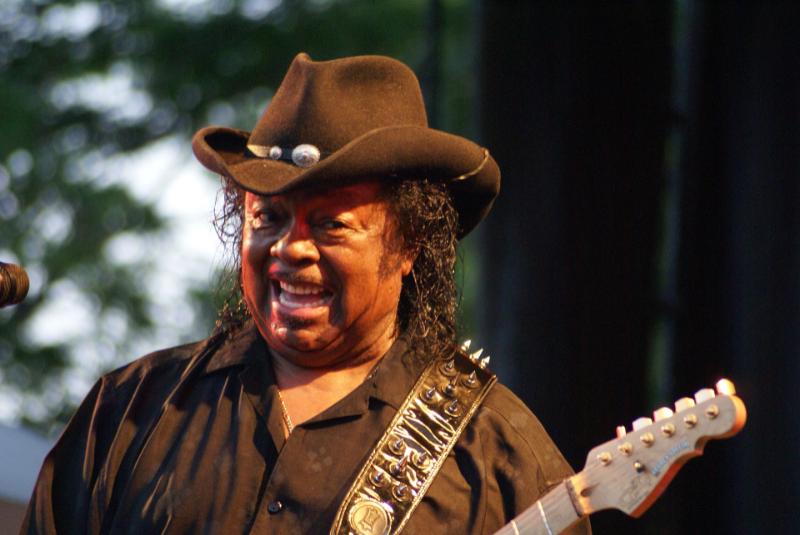
Guitar Shorty’s Spotify BioWhen he wasn't turning somersaults, doing backward flips, and standing on his head -- all while playing, of course -- Guitar Shorty was known to cut loose with savagely slashing licks on his instrument. After some lean years, his latter-day albums for Black Top, Evidence, and Alligator proved that all that energy translated vividly onto tape.
Born David Kearney on September 8, 1939, in Houston, Texas, he started playing guitar at an early age. His early influences included fellow blues guitar slingers B.B. King, Guitar Slim, T-Bone Walker, and Earl Hooker. By the time he was 17, Kearney was already gigging steadily in Tampa, Florida. One night, he was perched on the bandstand when he learned that the mysterious "Guitar Shorty" advertised on the club's marquee was none other than him! His penchant for stage gymnastics was inspired by the flamboyant Guitar Slim, whose wild antics were legendary. In 1957, Shorty cut his debut single, "You Don't Treat Me Right," for Chicago's Cobra Records …under Willie Dixon's astute direction. Three superb 45s in 1959 for tiny Pull Records in Los Angeles (notably "Hard Life") rounded out Shorty's discography for quite a while. During the '60s, he married Jimi Hendrix's stepsister and lived in Seattle, where the rock guitar god caught Shorty's act (and presumably learned a thing or two about inciting a throng) whenever he came off the road. Shorty's career had its share of ups and downs -- at one point, he was reduced to competing on Chuck Barris' zany Gong Show, where he copped first prize for delivering "They Call Me Guitar Shorty" while balanced on his noggin.
Los Angeles had reclaimed Shorty by the time things started to blossom anew with the 1991 album My Way or the Highway for the British JSP logo (with guitarist Otis Grand in support). From there, Black Top signed Shorty; 1993's dazzling Topsy Turvy, 1995's Get Wise to Yourself, and 1998's Roll Over, Baby were the head-over-heels results. In 2001, the appropriately titled I Go Wild was released on the Evidence label, proving that Guitar Shorty had no intentions of slowing down, as he clearly remained a master showman and lively blues guitarist. Watch Your Back appeared in spring 2004. A single-disc overview of his career, The Best of Guitar Shorty, appeared from Shout! Factory in 2006, as well as a new studio album, We the People, from Alligator Records. A second Alligator release, Bare Knuckle, appeared early in 2010. Guitar Shorty died on April 20, 2022 in Los Angeles at the age of 87. ~ Bill Dahl & Al Campbell, Rovi
Viberate is a music analytics platform built for A&Rs, artist managers, labels, booking agents, marketers, and artists.
It helps music professionals track artist growth, analyze audience data, monitor playlist activity, compare artists, follow song performance, and identify opportunities across the music market.
Public artist pages provide a free preview of selected artist data. Paid plans provide access to deeper analytics, historical data, charts, comparisons, playlist tools, exports, alerts, reports, and additional professional features.
Yes. Public Viberate artist pages provide selected artist analytics and music data for free.
Viberate also offers a 7-day free trial of the full platform. A credit card is required to start the trial. The trial includes access to the complete product so users can test deeper artist analytics, historical views, playlist insights, comparisons, charts, exports, alerts, and reporting features before choosing a paid plan.
Viberate provides artist analytics across streaming, playlists, social media, video, radio airplay, songs, and audience markets.
Users can analyze Spotify performance, Spotify and Apple Music playlists, YouTube activity, TikTok and Instagram growth, radio spins, song performance, audience locations, demographics, rankings, and overall artist momentum.
Artist profiles also connect to music charts, similar artists, and comparison tools, helping users benchmark performance and evaluate artists in context.
Viberate updates key artist and track data daily.
For followed artists and tracks, selected data is refreshed multiple times per day. This helps teams monitor playlist changes, streaming movement, audience growth, releases, and campaign performance with more current data.
Update frequency can vary depending on the metric and data source.
Yes. Viberate lets users compare up to five artists side by side across streaming, social media, audience, and engagement metrics.
Users can compare fanbase growth, audience demographics, locations, Spotify performance, social metrics, and other artist data over selected time periods.
Artist comparison can be used for A&R scouting, benchmarking, booking decisions, campaign planning, and evaluating artists with similar audiences or market positions.