Graham Ross

Classical
Choral
 Viberate Rank: 215124
 Viberate Rank: 215124
 Monthly ListenersFollowers
 Subscribers
 Followers
 Followers
 FansTop Spotify SongsTop YouTube VideosMonthly ListenersFeatured in Playlists
| Playlist | Followers | |
|---|---|---|
1 |  Traditional Catholic Latin Chants zekeezke | 193.61K |
2 |  Christmas Choir Spotify | 86.88K |
3 |  Gregorian Chants & Hymns for Sleep, Study & Solitude Joseph Santiago | 82.69K |
4 |  This Is Shostakovich Spotify | 68.79K |
5 |  Классическая музыка ANAFE | 35.26K |
Audience| City | Monthly Listeners | |
|---|---|---|
1 | | 1.49K |
2 |  | 445 |
3 |  | 412 |
4 |  | 393 |
5 | | 387 |
See full performance history, audience data, playlist activity, rankings, comparisons, and more in Viberate music analytics. Start with a free trial, then continue with a paid plan.
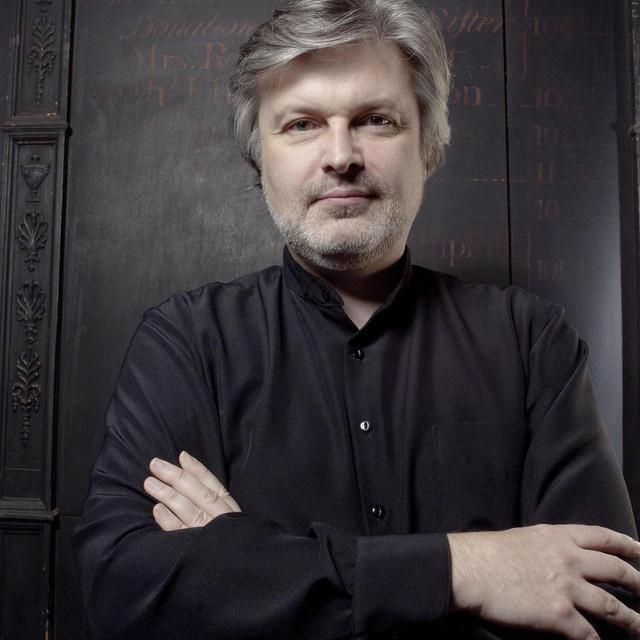
Graham Ross’ Spotify BioGraham Ross is a conductor, best known as the leader of the Choir of Clare College, Cambridge, but also with wide experience leading a variety of modern orchestras and early music groups. Ross is also a composer who has written more than 100 works. As a conductor, he has premiered works by some of Britain's most popular composers.
Ross was born in Farnham, in England's Surrey County, on April 29, 1985. He studied violin, piano, organ, and treble vocals as a youth. Ross attended Clare College, Cambridge, studying composition with Giles Swayne. In 2004, still a student at Cambridge, he formed his own group, the Dmitri Ensemble, and served as its conductor. Ross went on to the Royal College of Music in London, studying conducting with Peter Stark and Robin O'Neill. He landed a conducting scholarship with the London Symphony Chorus in 2008 and 2009 and was also the music director of the Concordia Chamber Choir and Kingston Choral Society during this period. In 2010, he became the conductor… of the Choir of Clare College, Cambridge, and he has held the position ever since, leading the group on tours of Europe, the U.S., Asia, and Australia. Ross has also undertaken a wide variety of conducting activities, leading operatic performances in Britain, France, and Israel as well as conducting ensembles as varied as the Orchestra of the Age of Enlightenment, the Aalborg Symphony Orchestra, and the Australian Chamber Orchestra. His compositions have been performed by the BBC Concert Orchestra, the City of London Sinfonia, and choirs across the UK. As a conductor, he has championed new music. Ross has given the world premieres of works by composers John Rutter, Gabriel Jackson, and Cecilia McDowall, among others. On recordings, he has programmed works by the likes of James MacMillan, Judith Bingham, and Nico Muhly.
Ross has a large catalog of recordings, some of them predating his time as the conductor of the Choir of Clare College. In 2009, with the Dmitri Ensemble, he issued a recording of MacMillan's Seven Last Words from the Cross. He remains the director of the Dmitri Ensemble, which has accompanied the Choir of Clare College on recordings. With the Choir, he has recorded exclusively for Harmonia Mundi, often releasing several albums a year. The year 2020 saw an album devoted to the choral music of MacMillan, Arvo Pärt, and Peteris Vasks, and another of Benjamin Britten's Ceremony of Carols.
Viberate is a music analytics platform built for A&Rs, artist managers, labels, booking agents, marketers, and artists.
It helps music professionals track artist growth, analyze audience data, monitor playlist activity, compare artists, follow song performance, and identify opportunities across the music market.
Public artist pages provide a free preview of selected artist data. Paid plans provide access to deeper analytics, historical data, charts, comparisons, playlist tools, exports, alerts, reports, and additional professional features.
Yes. Public Viberate artist pages provide selected artist analytics and music data for free.
Viberate also offers a 7-day free trial of the full platform. A credit card is required to start the trial. The trial includes access to the complete product so users can test deeper artist analytics, historical views, playlist insights, comparisons, charts, exports, alerts, and reporting features before choosing a paid plan.
Viberate provides artist analytics across streaming, playlists, social media, video, radio airplay, songs, and audience markets.
Users can analyze Spotify performance, Spotify and Apple Music playlists, YouTube activity, TikTok and Instagram growth, radio spins, song performance, audience locations, demographics, rankings, and overall artist momentum.
Artist profiles also connect to music charts, similar artists, and comparison tools, helping users benchmark performance and evaluate artists in context.
Viberate updates key artist and track data daily.
For followed artists and tracks, selected data is refreshed multiple times per day. This helps teams monitor playlist changes, streaming movement, audience growth, releases, and campaign performance with more current data.
Update frequency can vary depending on the metric and data source.
Yes. Viberate lets users compare up to five artists side by side across streaming, social media, audience, and engagement metrics.
Users can compare fanbase growth, audience demographics, locations, Spotify performance, social metrics, and other artist data over selected time periods.
Artist comparison can be used for A&R scouting, benchmarking, booking decisions, campaign planning, and evaluating artists with similar audiences or market positions.