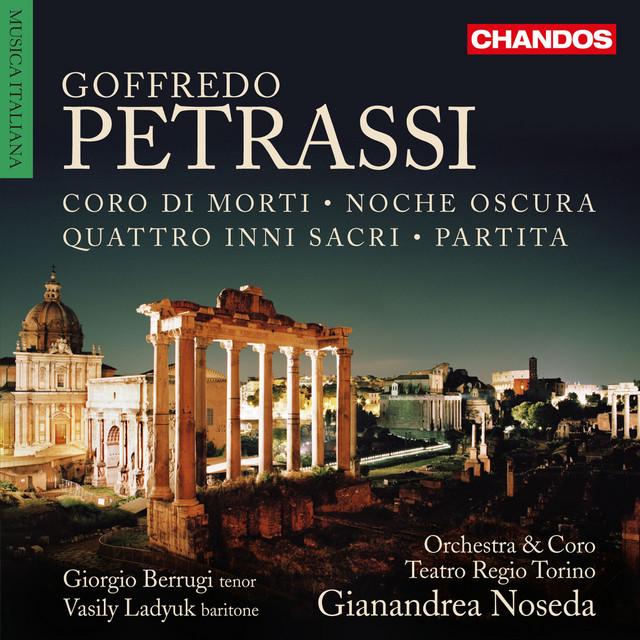
Goffredo Petrassi

Classical
Classical Crossover
 Viberate Rank: 715882
 Viberate Rank: 715882
 Monthly ListenersFollowers
 Subscribers
 Followers
 Followers
 FansTop Spotify SongsTop YouTube VideosMonthly ListenersFeatured in Playlists
| Playlist | Followers | |
|---|---|---|
1 |  The Best 400 Piano Concertos 21xruzehzsnqcdihtcpniyaby | 1.17K |
2 |  The Sound of Serialism The Sounds of Spotify | 647 |
3 | Chorus YOSHIHARA | 11 |
Audience| City | Monthly Listeners | |
|---|---|---|
1 | | 113 |
2 |  | 8 |
3 | | 8 |
4 | | 7 |
5 | | 6 |
See full performance history, audience data, playlist activity, rankings, comparisons, and more in Viberate music analytics. Start with a free trial, then continue with a paid plan.
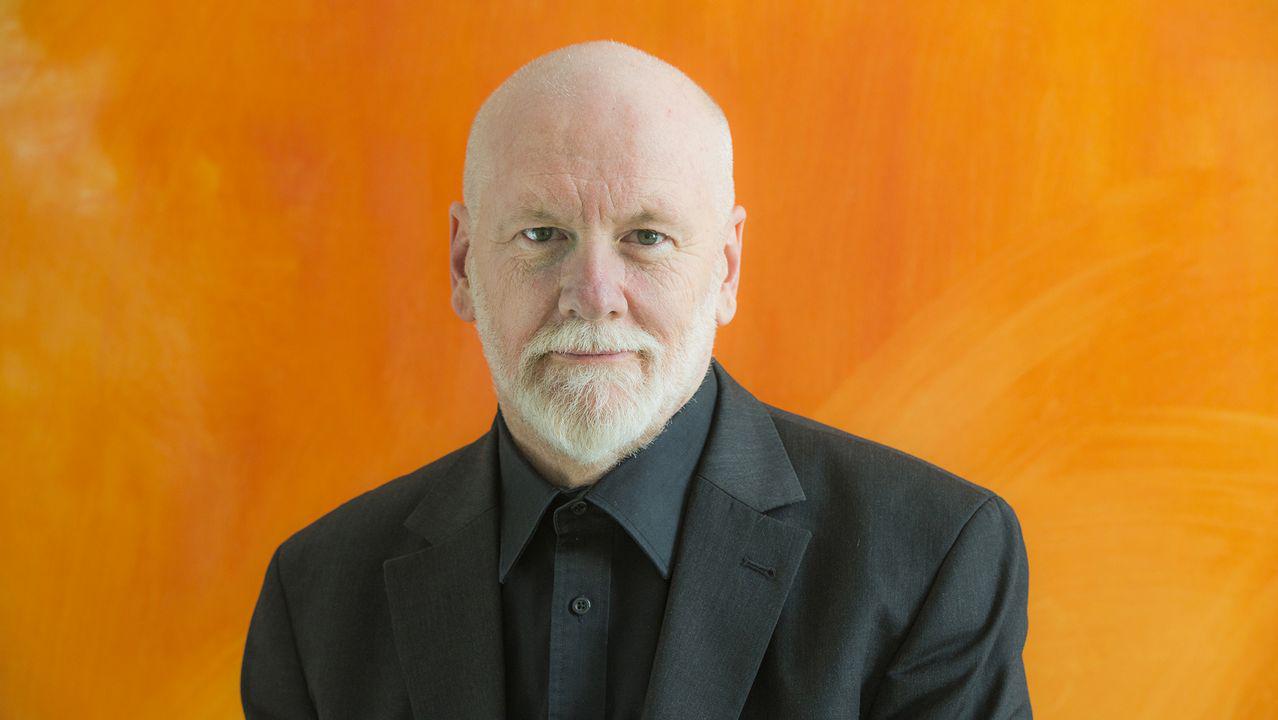
Goffredo Petrassi’s Spotify BioAlthough a late bloomer, Goffredo Petrassi developed into one of Italy's most significant composers of the mid- to late twentieth century. Launching his career in the 1930s with music on par with contemporary works by Hindemith and Stravinsky, Petrassi eventually became interested in certain twelve-tone techniques without casting his lot with the serialists. His music is dynamic and colorful, although emotionally reserved by the standards of his countrymen.
Petrassi enrolled in choir school once his family moved to Rome in 1911. There, his studies revolved almost entirely around Renaissance polyphony. He quit school at 15, though, to take a job in a music shop, where he was heard practicing piano by an important teacher named Alessandro Bustini, who took the young Petrassi under his wing and tutored him until he was able to enter the Santa Cecilia Conservatory in 1928. Petrassi obtained diplomas there in composition (1932) and organ (1933). He first gained notice as a composer in 1932… with his prize-winning Partita for orchestra. He focused on orchestral music through most of the 1930s, in 1934 completing the first of his signature works, the eight Concertos for Orchestra. This first essay in the form drew on Petrassi's early study of polyphony while borrowing the rhythmic vigor and polytonal tensions of Stravinsky and Casella. Concerto for Orchestra No. 1 also displayed Petrassi's brilliant mastery of orchestration, something equaled then only by Respighi.
Around this time, Petrassi also turned his attention to choral music, melding polyphony with modern harmony in such works as Salmo IX (1936) and his 1940 Magnificat. He slid from sacred subjects to philosophy in 1941 with his "dramatic madrigal" Coro dei morti, a setting of part of Leopardi's Operette morali. Here, Petrassi began to contrast tonal passages with less-tonal contrapuntal sections, generating a fairly austere sort of drama rather than indulging in the lavish, emotional effects of Respighi.
Unlike most Italian composers up to that time, Petrassi had little interest in theater music. Aside from four minor incidental scores and nine film scores, he produced only four significant dramatic works, heavy with irony: the ballets La follia di Orlando (1943) and Ritratto di Don Chisciotte (1945), and the operas Il cordovano (1948/1958) and Morte dell'aria (1950). From the 1950s on Petrassi flirted with twelve-tone techniques, but used dodecaphonic patterns only to organize and vary either small motifs or longer thematic rows that broke the twelve-tone rules by repeating notes. This can be heard as early as his Concerto for Orchestra No. 3 "Récréation concertante" (1953), and in his No. 4 through No. 6 concertos (1954 - 19957), which strongly evoke the hedonistic dodecaphony of Alban Berg. After that point, perhaps beginning with his Serenata and String Quartet (both from 1958), Petrassi's music became increasingly athematic, concentrating on timbral effects using short patterns of intervals, particularly in a series of solo and chamber works from 1969 through 1981. Petrassi also spent much of his time teaching composition, first at the Accademia di Santa Cecilia 1934 - 1936, which he left to serve as director general of Venice's Teatro La Fenice (1937 - 1940). This gave way to long stints at the Santa Cecilia Conservatory (1939 - 1959), then back at the Accademia di Santa Cecilia (1959 - 1974).
Viberate is a music analytics platform built for A&Rs, artist managers, labels, booking agents, marketers, and artists.
It helps music professionals track artist growth, analyze audience data, monitor playlist activity, compare artists, follow song performance, and identify opportunities across the music market.
Public artist pages provide a free preview of selected artist data. Paid plans provide access to deeper analytics, historical data, charts, comparisons, playlist tools, exports, alerts, reports, and additional professional features.
Yes. Public Viberate artist pages provide selected artist analytics and music data for free.
Viberate also offers a 7-day free trial of the full platform. A credit card is required to start the trial. The trial includes access to the complete product so users can test deeper artist analytics, historical views, playlist insights, comparisons, charts, exports, alerts, and reporting features before choosing a paid plan.
Viberate provides artist analytics across streaming, playlists, social media, video, radio airplay, songs, and audience markets.
Users can analyze Spotify performance, Spotify and Apple Music playlists, YouTube activity, TikTok and Instagram growth, radio spins, song performance, audience locations, demographics, rankings, and overall artist momentum.
Artist profiles also connect to music charts, similar artists, and comparison tools, helping users benchmark performance and evaluate artists in context.
Viberate updates key artist and track data daily.
For followed artists and tracks, selected data is refreshed multiple times per day. This helps teams monitor playlist changes, streaming movement, audience growth, releases, and campaign performance with more current data.
Update frequency can vary depending on the metric and data source.
Yes. Viberate lets users compare up to five artists side by side across streaming, social media, audience, and engagement metrics.
Users can compare fanbase growth, audience demographics, locations, Spotify performance, social metrics, and other artist data over selected time periods.
Artist comparison can be used for A&R scouting, benchmarking, booking decisions, campaign planning, and evaluating artists with similar audiences or market positions.