Sarah Vaughan

Jazz
Smooth Jazz
Vocal jazz
 Viberate Rank: 13212
 Viberate Rank: 13212
 Monthly ListenersFollowers
 Subscribers
 Followers
 Followers
 FansTop Spotify Songs
| Track | 7-Day Streams | |
|---|---|---|
1 | 260.48K | |
2 | 90.17K | |
3 | 90.03K | |
4 | 80.58K | |
5 | 80.58K |
Top YouTube VideosMonthly ListenersFeatured in Playlists| Playlist | Followers | |
|---|---|---|
1 |  Jazz Classics Spotify | 5.08M |
2 |  All Out 50s Spotify | 1.89M |
3 |  An Elegant Affair Spotify | 1.22M |
4 |  Women of Jazz Spotify | 865.68K |
5 |  Feel Good Jazz Spotify | 549.41K |
Audience| City | Monthly Listeners | |
|---|---|---|
1 |  | 21.14K |
2 |  | 18.29K |
3 | | 17.56K |
4 | | 14.79K |
5 |  | 12.71K |
See full performance history, audience data, playlist activity, rankings, comparisons, and more in Viberate music analytics. Start with a free trial, then continue with a paid plan.
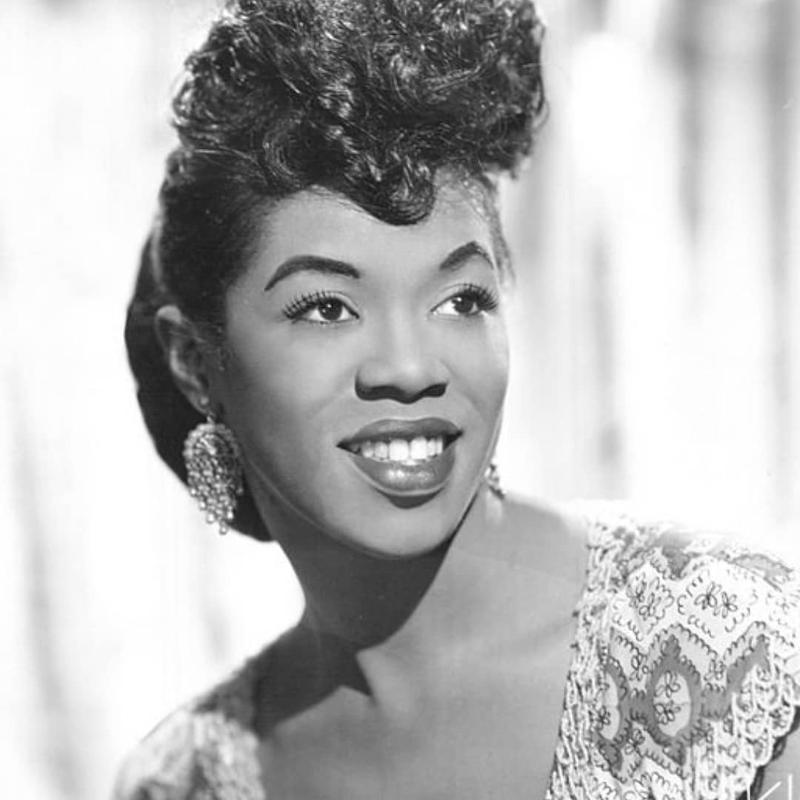
Sarah Vaughan’s Spotify BioPossessor of one of the most wondrous voices of the 20th century, Sarah Vaughan ranked with Ella Fitzgerald and Billie Holiday in the very top echelon of female jazz singers. She often gave the impression that with her wide range, perfectly controlled vibrato, and wide expressive abilities, she could do anything she wanted with her voice. Although not all of her many recordings are essential (give Vaughan a weak song and she might strangle it to death), Sarah Vaughan's legacy as a performer and a recording artist will be very difficult to match in the future.
Vaughan sang in church as a child and had extensive piano lessons from 1931-39; she developed into a capable keyboardist. After she won an amateur contest at the Apollo Theater, she was hired for the Earl Hines big band as a singer and second vocalist. Unfortunately, the musicians' recording strike kept her off record during this period (1943-44). When lifelong friend Billy Eckstine broke away to form his own orchestra, Vaughan… joined him, making her recording debut. She loved being with Eckstine's orchestra, where she became influenced by a couple of his sidemen, Charlie Parker and Dizzy Gillespie, both of whom had also been with Hines during her stint. Vaughan was one of the first singers to fully incorporate bop phrasing in her singing, and to have the vocal chops to pull it off on the level of a Parker and Gillespie.
Other than a few months with John Kirby from 1945-46, Sarah Vaughan spent the remainder of her career as a solo star. Although she looked a bit awkward in 1945 (her first husband George Treadwell would greatly assist her with her appearance), there was no denying her incredible voice. She made several early sessions for Continental: a December 31, 1944 date highlighted by her vocal version of "A Night in Tunisia," which was called "Interlude," and a May 25, 1945 session for that label that had Gillespie and Parker as sidemen. However, it was her 1946-48 selections for Musicraft (which included "If You Could See Me Now," "Tenderly" and "It's Magic") that found her rapidly gaining maturity and adding bop-oriented phrasing to popular songs. Signed to Columbia where she recorded during 1949-53, "Sassy" continued to build on her popularity. Although some of those sessions were quite commercial, eight classic selections cut with Jimmy Jones' band during May 18-19, 1950 (an octet including Miles Davis) showed that she could sing jazz with the best.
During the 1950s, Vaughan recorded middle-of-the-road pop material with orchestras for Mercury, and jazz dates (including Sarah Vaughan, a memorable collaboration with Clifford Brown) for the label's subsidiary, EmArcy. Later record label associations included Roulette (1960-64), back with Mercury (1963-67), and after a surprising four years off records, Mainstream (1971-74). Through the years, Vaughan's voice deepened a bit, but never lost its power, flexibility or range. She was a masterful scat singer and was able to out-swing nearly everyone (except for Ella). Vaughan was with Norman Granz's Pablo label from 1977-82, and only during her last few years did her recording career falter a bit, with only two forgettable efforts after 1982. However, up until near the end, Vaughan remained a world traveler, singing and partying into all hours of the night with her miraculous voice staying in prime form. The majority of her recordings are currently available, including complete sets of the Mercury/Emarcy years, and Sarah Vaughan is as famous today as she was during her most active years. ~ Scott Yanow, Rovi
Viberate is a music analytics platform built for A&Rs, artist managers, labels, booking agents, marketers, and artists.
It helps music professionals track artist growth, analyze audience data, monitor playlist activity, compare artists, follow song performance, and identify opportunities across the music market.
Public artist pages provide a free preview of selected artist data. Paid plans provide access to deeper analytics, historical data, charts, comparisons, playlist tools, exports, alerts, reports, and additional professional features.
Yes. Public Viberate artist pages provide selected artist analytics and music data for free.
Viberate also offers a 7-day free trial of the full platform. A credit card is required to start the trial. The trial includes access to the complete product so users can test deeper artist analytics, historical views, playlist insights, comparisons, charts, exports, alerts, and reporting features before choosing a paid plan.
Viberate provides artist analytics across streaming, playlists, social media, video, radio airplay, songs, and audience markets.
Users can analyze Spotify performance, Spotify and Apple Music playlists, YouTube activity, TikTok and Instagram growth, radio spins, song performance, audience locations, demographics, rankings, and overall artist momentum.
Artist profiles also connect to music charts, similar artists, and comparison tools, helping users benchmark performance and evaluate artists in context.
Viberate updates key artist and track data daily.
For followed artists and tracks, selected data is refreshed multiple times per day. This helps teams monitor playlist changes, streaming movement, audience growth, releases, and campaign performance with more current data.
Update frequency can vary depending on the metric and data source.
Yes. Viberate lets users compare up to five artists side by side across streaming, social media, audience, and engagement metrics.
Users can compare fanbase growth, audience demographics, locations, Spotify performance, social metrics, and other artist data over selected time periods.
Artist comparison can be used for A&R scouting, benchmarking, booking decisions, campaign planning, and evaluating artists with similar audiences or market positions.