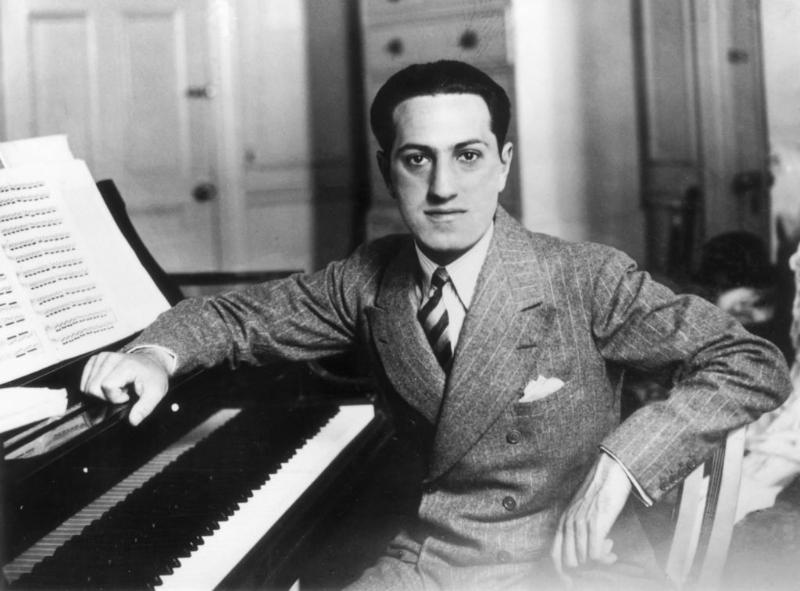
George Gershwin

Classical
Chamber Music
Classical Crossover
 Viberate Rank: 29610
 Viberate Rank: 29610
 Monthly ListenersFollowers
 Subscribers
 Followers
 Followers
 FansTop Spotify Songs
| Track | 7-Day Streams | |
|---|---|---|
1 | 109.42K | |
2 | 81.24K | |
3 | 81.24K | |
4 | 80.20K | |
5 | 39.47K |
Top YouTube VideosMonthly ListenersFeatured in Playlists| Playlist | Followers | |
|---|---|---|
1 |  Classical Essentials Spotify | 3.82M |
2 |  Calming Classical Spotify | 1.35M |
3 |  Epic Classical Spotify | 705.95K |
4 |  Opera Classics Spotify | 605.55K |
5 |  Morning Classical Spotify | 460.17K |
Audience| City | Monthly Listeners | |
|---|---|---|
1 |  | 16.25K |
2 | | 10.80K |
3 | | 7.89K |
4 |  | 7.84K |
5 | | 7.76K |
See full performance history, audience data, playlist activity, rankings, comparisons, and more in Viberate music analytics. Start with a free trial, then continue with a paid plan.
George Gershwin’s Spotify BioThe great musical border crosser of the 20th century, George Gershwin excelled in the fields of concert music and popular song alike. The son of Jewish immigrants from Russia, he was born Jacob Gershvin in Brooklyn on September 26, 1898. His father ran a great variety of small businesses, and George, in the words of The New Grove Dictionary of Music, "excelled at street sports." He also studied the piano and was introduced to the European classics by his teacher Charles Hambitzer.
Gershwin immersed himself in popular music after dropping out of school in 1914 and getting a job as a salesman for the music publisher Remick. He was influenced by ragtime and stride piano music, and as a songwriter enjoyed his first hit in 1920 with "Swanee," recorded by the leading vocalist of the time, Al Jolson. Gershwin and his brother Ira became one of the great creative teams in the history of music, each attuned to the considerable subtleties of which the other was capable. Their 1924 musical Lady, Be… Good gained wide familiarity thanks to its hit song, "Fascinating Rhythm." George Gershwin also wrote works for the concert hall: Rhapsody in Blue (1924), best known in an orchestration by Ferde Grofé; the Piano Concerto in F of 1925; and 1928's An American in Paris have been audience favorites since their respective premieres. Probably Gershwin's most famous work was the uncategorizable Porgy and Bess; "folk opera" was an early attempt at description. Set among Black residents of Charleston, South Carolina, Porgy and Bess includes the song "Summertime," heavily recorded by both popular and classical artists.
Gershwin continued to write popular songs and musicals; 1930 brought the successful show Girl Crazy and its catchy yet strikingly complex hit number "I Got Rhythm." The 1932 show Of Thee I Sing was especially notable for its crackling political satire. Gershwin went to Hollywood in 1936 to write for the RKO film studio. In early 1937 he began to complain of headaches, but doctors chalked his symptoms up to stress. In reality he was suffering from a brain tumor; he died on July 11, 1937.
The question of Gershwin's status as a classical composer is a live and productive one. Some observers have pointed out the strong resemblances between his popular and concert idioms, and it is certainly true that for all his studies of the classics over the years, Gershwin rarely wrestled with the problem of large-scale form, which one might regard as classical music's most definitive quest. His concert pieces consist of sequences of great melodies -- perhaps expected in a piece called a "rhapsody" but less impressive for music aspiring to the status of "concerto" or even "tone poem," as An American in Paris was classified. Yet it was not only the American public that loved Gershwin's concert works. They were widely performed in Europe, where they shaped the jazz inflections that began to creep into the music of such composers as Maurice Ravel. Even the proponents of the difficult 12-tone system admired Gershwin's music: Gershwin hobnobbed with Alban Berg in Paris and played tennis with Arnold Schoenberg in Hollywood. "It seems to me beyond doubt that Gershwin was an innovator," Schoenberg wrote, and perhaps history will judge Gershwin as the first harbinger of a new music neither classical nor popular, drawing techniques from many sources and forms of musical knowledge. Who could ask for anything more? ~ TiVo Staff
Viberate is a music analytics platform built for A&Rs, artist managers, labels, booking agents, marketers, and artists.
It helps music professionals track artist growth, analyze audience data, monitor playlist activity, compare artists, follow song performance, and identify opportunities across the music market.
Public artist pages provide a free preview of selected artist data. Paid plans provide access to deeper analytics, historical data, charts, comparisons, playlist tools, exports, alerts, reports, and additional professional features.
Yes. Public Viberate artist pages provide selected artist analytics and music data for free.
Viberate also offers a 7-day free trial of the full platform. A credit card is required to start the trial. The trial includes access to the complete product so users can test deeper artist analytics, historical views, playlist insights, comparisons, charts, exports, alerts, and reporting features before choosing a paid plan.
Viberate provides artist analytics across streaming, playlists, social media, video, radio airplay, songs, and audience markets.
Users can analyze Spotify performance, Spotify and Apple Music playlists, YouTube activity, TikTok and Instagram growth, radio spins, song performance, audience locations, demographics, rankings, and overall artist momentum.
Artist profiles also connect to music charts, similar artists, and comparison tools, helping users benchmark performance and evaluate artists in context.
Viberate updates key artist and track data daily.
For followed artists and tracks, selected data is refreshed multiple times per day. This helps teams monitor playlist changes, streaming movement, audience growth, releases, and campaign performance with more current data.
Update frequency can vary depending on the metric and data source.
Yes. Viberate lets users compare up to five artists side by side across streaming, social media, audience, and engagement metrics.
Users can compare fanbase growth, audience demographics, locations, Spotify performance, social metrics, and other artist data over selected time periods.
Artist comparison can be used for A&R scouting, benchmarking, booking decisions, campaign planning, and evaluating artists with similar audiences or market positions.