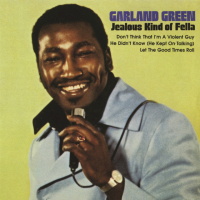
Garland Green

R&B
Soul
Contemporary R&B
 Viberate Rank: 194165
 Viberate Rank: 194165
 Monthly ListenersFollowers
 Subscribers
 Followers
 Followers
 FansTop Spotify Songs
| Track | 7-Day Streams | |
|---|---|---|
1 | 7.99K | |
2 | 599 | |
3 | 562 | |
4 | 478 | |
5 | 119 |
Top YouTube VideosMonthly ListenersFeatured in Playlists| Playlist | Followers | |
|---|---|---|
1 | Oldies but Goodies 🤘🏼JoseLuis 🤘🏼 | 51.08K |
2 |  East Side Story Volumes 1-12 Darius Chavez-Martinez | 40.09K |
3 |  Art Laboe Oldies (Numero Group) Numero Group Scenes & Decades | 35.90K |
4 | The Best Lowrider Oldies🎶 Moniique143 | 26.18K |
5 | Motown & Soul Classics amikhail4 | 25.28K |
Audience| City | Monthly Listeners | |
|---|---|---|
1 | | 1.89K |
2 | | 566 |
3 | | 564 |
4 | | 464 |
5 | | 462 |
See full performance history, audience data, playlist activity, rankings, comparisons, and more in Viberate music analytics. Start with a free trial, then continue with a paid plan.
Garland Green’s Spotify BioJune 14, 1942, is the date the vibrant, soulful, pleading voice of Garland Green was first showcased as a newborn. Green was the tenth of 11 children. Though born in Dunlieth, MS, he attended school in nearby Leyland, where he sang in the school's gospel group. In 1958 he moved to Chicago, IL, to complete his education at Englewood High. He worked after school and sang with groups or soloed on weekends. He met his first mentor when he was singing in a pool room. Argia B. Collins owned a string of barbecue joints and even manufactured his own sauce, called Mumbo. Impressed by Green's voice and not knowing what else to do, Collins paid for Green to attend the Chicago Conservatory of Music for two years. While in school studying piano and voice he performed at local clubs nightly.
Another break came his way when Mel Collins witnessed the full-throated singer at an amateur talent show at the Sutherland Lounge. Collins was the husband of Josephine "Joshie" Armstead, a noted songwriter who… earlier co-wrote tunes with Nicholas Ashford and Valerie Simpson like "Let's Go Get Stone," "Cry Like a Baby," and many others. Armstead loved his voice, detecting a quality the ladies would like. They recorded him in Detroit and released the effort on their Gamma Record label and it did so well locally that MCA Records plucked it for national distribution, placing it with their subsidiary, Revue Records. Revue would release three more singles on Green that did well enough to keep recording him. He was then moved to MCA's Uni label and scored his biggest hit ever, "Jealous Kind of Fella," which went to number five on the R&B chart and number 20 on the pop chart. "Jealous Kind of Fella" was written by Rudolph Browner, Garland Green, Maurice Dollison, and Joshie Armstead. Uni released an 11-track album to capitalize on the single's success. His next release didn't fare as well and Green left MCA and Joshie Armstead and headed for Atlantic Records' Cotillion label. Five singles were released on Green in two and a half years. His biggest on Cotillion was "Plain and Simple Girl" which obtained the 17th position on Billboard's R&B chart -- the others did nothing. Cotillion never issued an album on Green.
He then recorded for Spring Records; again five records were released in a short time span, 18 months. The singles charted but only in the 60s and 70s of the R&B chart. Though only minor successes, the recordings were good. Kent Records in the United Kingdom released an album in 1990 entitled Garland Green -- The Spring Sides. After Spring, a blues record was cut on a small label before he signed with RCA, who put out three singles and an album. Leon Haywood produced the sides in Los Angeles, CA. Sadly, RCA didn't promote the album well and nothing significant resulted from the association. After RCA he didn't record again for nearly seven years before he signed with Ocean Front Records and was produced by Lamont Dozier. An album resulted which also was produced by Dozier and on some tracks Arlene Schesel, who headed the label's A&R department. Schesel and Green made a love connection and got married. Recordings after Ocean Front were sporadic and mostly on the Green's own labels. He never did achieve the success of "Jealous Kind of Fella" again, but you can't say he didn't try. ~ Andrew Hamilton, Rovi
Viberate is a music analytics platform built for A&Rs, artist managers, labels, booking agents, marketers, and artists.
It helps music professionals track artist growth, analyze audience data, monitor playlist activity, compare artists, follow song performance, and identify opportunities across the music market.
Public artist pages provide a free preview of selected artist data. Paid plans provide access to deeper analytics, historical data, charts, comparisons, playlist tools, exports, alerts, reports, and additional professional features.
Yes. Public Viberate artist pages provide selected artist analytics and music data for free.
Viberate also offers a 7-day free trial of the full platform. A credit card is required to start the trial. The trial includes access to the complete product so users can test deeper artist analytics, historical views, playlist insights, comparisons, charts, exports, alerts, and reporting features before choosing a paid plan.
Viberate provides artist analytics across streaming, playlists, social media, video, radio airplay, songs, and audience markets.
Users can analyze Spotify performance, Spotify and Apple Music playlists, YouTube activity, TikTok and Instagram growth, radio spins, song performance, audience locations, demographics, rankings, and overall artist momentum.
Artist profiles also connect to music charts, similar artists, and comparison tools, helping users benchmark performance and evaluate artists in context.
Viberate updates key artist and track data daily.
For followed artists and tracks, selected data is refreshed multiple times per day. This helps teams monitor playlist changes, streaming movement, audience growth, releases, and campaign performance with more current data.
Update frequency can vary depending on the metric and data source.
Yes. Viberate lets users compare up to five artists side by side across streaming, social media, audience, and engagement metrics.
Users can compare fanbase growth, audience demographics, locations, Spotify performance, social metrics, and other artist data over selected time periods.
Artist comparison can be used for A&R scouting, benchmarking, booking decisions, campaign planning, and evaluating artists with similar audiences or market positions.