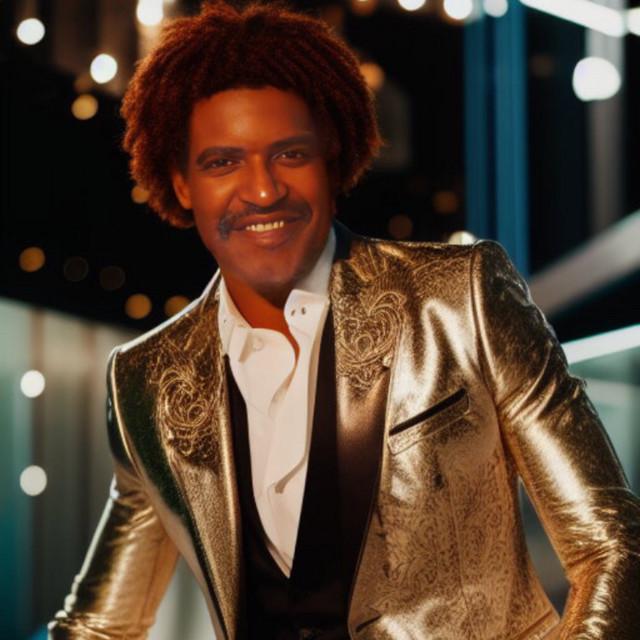
Eugene Record

R&B
Soul
 Viberate Rank: 260958
 Viberate Rank: 260958
 Monthly ListenersFollowers
 Subscribers
 Followers
 Followers
 FansTop Spotify Songs
| Track | 7-Day Streams | |
|---|---|---|
1 | 5.52K | |
2 | 1.04K | |
3 | 122 | |
4 | 82 | |
5 | 65 |
Top YouTube VideosMonthly ListenersFeatured in Playlists| Playlist | Followers | |
|---|---|---|
1 |  Crossover 105.1 Favorites Jason Suarez | 16.53K |
2 |  Morning Soul. Musical Metaphors | 13.54K |
3 |  Soul & Jazz Cafe 2026 RBsound Holland | 12.03K |
4 |  Free Soul 500 PlayStation® Japan | 8.86K |
5 | 70s P****Party kenbenobi | 8.27K |
Audience| City | Monthly Listeners | |
|---|---|---|
1 |  | 680 |
2 |  | 211 |
3 |  | 190 |
4 |  | 160 |
5 |  | 137 |
See full performance history, audience data, playlist activity, rankings, comparisons, and more in Viberate music analytics. Start with a free trial, then continue with a paid plan.
Eugene Record’s Spotify BioChicagoan Eugene Record became interested in music at an early age, first picking up the guitar. A big influence was his older sister, an accomplished pianist who practiced classical music everyday in the living room of his family home. Classic music motifs appear later in Record's original songs and record productions. At 13, he shared his visions of owning his own record company with fellow teen Gus Redmond. While attending Englewood High School, he formed the Chanteurs with Robert "Squirrel" Lester and Clarence Johnson. The group recorded a couple of singles ("You Did That to Me") for Leo Ostell's Renee Records in 1959. Teaming with Marshall Thompson and Creadel "Red" Jones of the Desideros, the quintet became the Hi-Lites and started recording for the Daran label owned by Thompson's cousin James Shelton. In 1964, the single "I'm So Jealous" was a moderate hit and was leased to Chicago-based Mercury Records. Johnson left the group that same year and later produced the 1972 gold hit… "Love Jones" by the Brighter Side of Darkness. Two more releases followed on Mercury's Blue Rock subsidiary while other singles were issued on Ja-Wes and Darin, including the Monk Higgins song "Go Go Gorilla." Their first big break came when Marshall Thompson ran into Otis Leavill while riding on a city bus. Leavill suggested that the group, now called the Chi-Lites, audition for producer Carl Davis, who had just opened his Dakar label. The Chi-Lites' first Dakar single was "Price of Love" in 1967. During that year, Davis met Nat Tarnapol, president of NY-based Brunswick Records at a DJ/record label convention. Producing Brunswick star Jackie Wilson's comeback hits "Whispers" and "(Your Love Keeps Lifting Me) Higher and Higher," Davis was hired by Tarnapol to head the Chicago branch of Brunswick. Opening offices at 1449 S. Michigan, Davis signed the Chi-Lites to Brunswick in late 1968, releasing their first national chart hit, "Give It Away," which went to number ten R&B in early 1969. The double-sided follow-up was "Let Me Be the Man My Daddy Was" backed with "The Twelfth of Never." Davis hired Record to write songs for his Jalynne publishing firm in the late '60s. Collaborating with fellow Brunswick signee Barbara Acklin, who had a 1968 Top Ten R&B/pop hit with "Love Makes a Woman," Record had a hit with Peaches and Herb's "Two Little Kids." Around this time, he and Acklin wrote the classic melancholy ballad "Have You Seen Her." While going through his catalog of songs for a new album, "Have You Seen Her" got his attention, but he deep sixed the idea of recording it because it was about five minutes long, which was well over the standard length of a three-minute 45 single record. With the success of Stax artist Isaac Hayes' Hot Buttered Soul album (with its ten-minute songs), Davis decided to include it on the group's (For God's Sake) Give More Power to The People LP. Recognizing a hit, Baltimore combo Frankie and the Spindles and seven other acts rush-released cover versions of "Have You Seen Her." Soul music radio stations and other stations broke the three-minute barrier and played the long album version of the tune. Brunswick released a single version that first went gold, holding the number one R&B spot for two weeks and hitting number three pop in 1971, giving the Chi-Lites their first pop hit. The hickory-flavored harmonica of Cy Touff rolled up into a healthy heaping of Chicago soul was responsible for giving the Chi-Lites their most successful single to date. Producer Carl Davis picked "Oh Girl" out of a seven-song tape of Eugene Record's original tunes. On the original recording session was Record on guitar and bass, drummer Quinton Joseph, pianist Tom-Tom Washington, Touff, and engineer Bruce Swedien, who went on to work with Michael Jackson, Quincy Jones, and others. Though a good portion of Brunswick's Chicago artists were recorded at Murray Allen's Universal Recording Studios, the Chi-Lites were engineered by Swedien at Brunswick's Chicago branch. A March 1972 appearance on Flip Wilson's top-rated NBC show was the springboard for the song, which went gold, hitting number one on the pop charts on May 27, 1972, and staying at number one R&B for two weeks. More hits followed, and "Stoned..." and "There Will Never..." were Record/Acklin compositions.
Record wrote and produced hits for Jackie Wilson ("You Got Me Walking," "Don't Burn No Bridges" by Jackie Wilson and the Chi-Lites) and other Brunswick signees. The songwriter wrote "Raindrops" -- not the 1961 Dee Clark hit -- for Barbara Acklin, which was her only post-Brunswick. During the early '70s, Record recorded demos for his songs on a tiny one-track tape recorder while playing all the parts himself on guitar and drums in his small basement apartment. This skill would prove to be useful as Record sometimes filled in for the rest of the group when they were unavailable for recording sessions. Later, Record became a "one-man band" on his solo LPs. In 1976, Record left the Chi-Lites and signed a solo deal with Warner Bros. The first of two Warner Bros. albums, The Eugene Record (February 1977) spawned the 1977 number 24 R&B hit "Laying Beside You"; the next LP, Trying to Get to You," was released a year later. Record kept busy writing songs and producing former Lost Generation member Lowell Simon aka Lowrell of "Mellow Mellow Right On" fame, among many others. Record occasionally joined the Chi-Lites on-stage and on record. Oakland, CA, rapper MC Hammer covered "Have You Seen Her" on his superstar-making second Capitol album Please Hammer, Don't Hurt 'Em. "Have You Seen Her" quickly went gold and peaked at number four on both the R&B and the pop charts during the summer of 1990, no doubt fattening the coffers of songwriters Acklin and Record. In 1988, Record became a born-again Christian, making a 1992 appearance on TV's The 700 Club. After much study and spiritual growth, the veteran artist released his first all-gospel album, Let Him In, on his own label, Evergreen Records. Veteran promoter Gus Redmond was tapped by his childhood friend for promotional duties.
In December of 2003, Record reunited with the Chi-Lites to film the PBS Special Superstars of Seventies Soul. The following year the hip hop generation knocked on his door once again as "Are You My Woman" was used as part of the Beyonce hit "Crazy in Love." The song used enough of his tune to garner a writing credit and earned Record his first Grammy Award. After a long battle with cancer Eugene Record passed away on July 22, 2005 at the age of 64. At the time of his death he was busy with ministry work and planning a re-release of his 1998 gospel album Let Him In. ~ Ed Hogan, Rovi
Viberate is a music analytics platform built for A&Rs, artist managers, labels, booking agents, marketers, and artists.
It helps music professionals track artist growth, analyze audience data, monitor playlist activity, compare artists, follow song performance, and identify opportunities across the music market.
Public artist pages provide a free preview of selected artist data. Paid plans provide access to deeper analytics, historical data, charts, comparisons, playlist tools, exports, alerts, reports, and additional professional features.
Yes. Public Viberate artist pages provide selected artist analytics and music data for free.
Viberate also offers a 7-day free trial of the full platform. A credit card is required to start the trial. The trial includes access to the complete product so users can test deeper artist analytics, historical views, playlist insights, comparisons, charts, exports, alerts, and reporting features before choosing a paid plan.
Viberate provides artist analytics across streaming, playlists, social media, video, radio airplay, songs, and audience markets.
Users can analyze Spotify performance, Spotify and Apple Music playlists, YouTube activity, TikTok and Instagram growth, radio spins, song performance, audience locations, demographics, rankings, and overall artist momentum.
Artist profiles also connect to music charts, similar artists, and comparison tools, helping users benchmark performance and evaluate artists in context.
Viberate updates key artist and track data daily.
For followed artists and tracks, selected data is refreshed multiple times per day. This helps teams monitor playlist changes, streaming movement, audience growth, releases, and campaign performance with more current data.
Update frequency can vary depending on the metric and data source.
Yes. Viberate lets users compare up to five artists side by side across streaming, social media, audience, and engagement metrics.
Users can compare fanbase growth, audience demographics, locations, Spotify performance, social metrics, and other artist data over selected time periods.
Artist comparison can be used for A&R scouting, benchmarking, booking decisions, campaign planning, and evaluating artists with similar audiences or market positions.