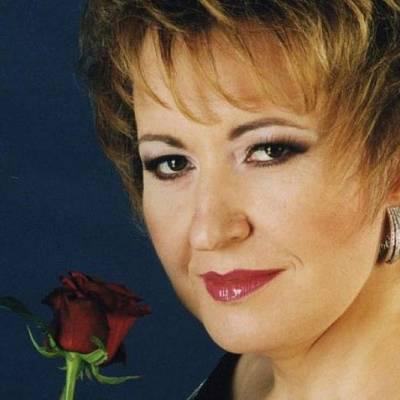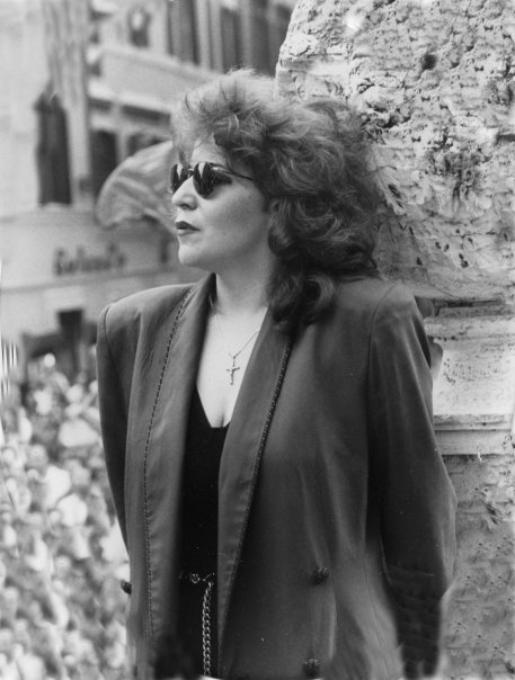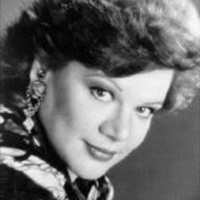
Dolora Zajick

Classical
Opera
 Viberate Rank: 487157
 Viberate Rank: 487157
 Monthly ListenersFollowers
 Subscribers
 Followers
 Followers
 FansTop Spotify SongsTop YouTube VideosMonthly ListenersFeatured in Playlists
| Playlist | Followers | |
|---|---|---|
1 |  This Is Verdi Spotify | 91.26K |
2 |  Grand Opera Sony Classical & Jazz Sweden | 5.61K |
3 |  Ancient Egyptian Instrumental kagannka | 3.47K |
4 |  The Best Opera Playlist Ever Emilio José Gómez Rodríguez | 2.10K |
5 | Klassiske perler Elisabet Grini Jacobsen | 2.03K |
Audience| City | Monthly Listeners | |
|---|---|---|
1 |  | 93 |
2 |  | 92 |
3 |  | 85 |
4 | | 80 |
5 | | 76 |
See full performance history, audience data, playlist activity, rankings, comparisons, and more in Viberate music analytics. Start with a free trial, then continue with a paid plan.
Dolora Zajick’s Spotify BioDolora Zajick (ZAH-chik) is among the world's leading dramatic mezzo-sopranos, unsurpassed in Verdi's mezzo roles. Birgit Nilsson in 1991 stated that "Zajick's voice is the only one existing today without any competition in the world."
She comes from a large family of Czech descent. As a pre-medical student at the University of Nevada, she took voice as an elective and was invited to sing alto in the Opera Nevada Chorus. At the time, she says, "I had no high notes, no low notes, and no coloratura. My voice was ugly and loud."
She was fortunate to encounter a great vocal technician in her teacher, Ted Puffer of the University of Nevada and also head of Opera Nevada. (He has gone on to teach at Manhattan School of Music.) She built her vocal technique painstakingly and analytically.
After graduating from the University of Nevada, she was accepted by the Manhattan School of Music. She had little money, and worked bussing tables and doing work in hospitals. For a period of more than a year… she often slept on benches in the School or even in Central Park, which she says was not as unsafe as it sounds "if you keep your feelers out."
Despite this poverty, she declined offers to sing professionally, recognizing that, she was not ready. In 1982, she received an opportunity to participate in the Seventh International Tchaikovsky Competition in Moscow. She realized that she was ready for it, but could not pay for the trip. Two weeks before time to leave, she mentioned her predicament to the director of the chorus of her church, First Presbyterian Church of New York. The next Sunday the choir members raised the needed as a collection from the congregation. In addition, the Board of Directors of the Manhattan School contributed an additional sum for clothes.
Zajick won a bronze medal. She was the only non-Soviet winner and the first American in twelve years to place in the competition. On her return, Manhattan School officials arranged a $15,000 loan for Dolora to live on while completing her final year.
Upon graduation, she received an offer from the Merola Opera of San Francisco, one of the United States' best young singers' training programs. She took a transcontinental bus trip, paid for with money borrowed from her father, to join it (and counts the time when she could pay him back as one of her proud moments). She made her debut in 1986 in Il Trovatore and "walked off with the show," in the words of Terence McEwen, the San Francisco Opera's general director at the time.
Soon it was clear that she was a rare vocal type, the true dramatic Verdi mezzo-soprano, with parts like Amneris, Eboli, and her signature role, Azucena, as her most famous parts. She is among the rare mezzos in history who can sing the low-lying part yet securely reach high C's, as written. Her vocal range is, in fact, exceptionally wide, reaching from a solid G below the staff to the top F above high C called for in the Queen of the Night's arias, which she sings in full voice, not falsetto. In addition to singing roles by other Italian and French singers, she took on the great Romantic-era Russian parts, such as Marfa in Khovanshchina, upon working on her Russian pronunciation.
She spends three months a year at her Nevada home, where she has built and designed her garden and pursues her interests and clear talents for photography, painting, and poetry, all of which can seen on her website at http://www.DoloraZajick.com, for she is very active on the Internet.
Viberate is a music analytics platform built for A&Rs, artist managers, labels, booking agents, marketers, and artists.
It helps music professionals track artist growth, analyze audience data, monitor playlist activity, compare artists, follow song performance, and identify opportunities across the music market.
Public artist pages provide a free preview of selected artist data. Paid plans provide access to deeper analytics, historical data, charts, comparisons, playlist tools, exports, alerts, reports, and additional professional features.
Yes. Public Viberate artist pages provide selected artist analytics and music data for free.
Viberate also offers a 7-day free trial of the full platform. A credit card is required to start the trial. The trial includes access to the complete product so users can test deeper artist analytics, historical views, playlist insights, comparisons, charts, exports, alerts, and reporting features before choosing a paid plan.
Viberate provides artist analytics across streaming, playlists, social media, video, radio airplay, songs, and audience markets.
Users can analyze Spotify performance, Spotify and Apple Music playlists, YouTube activity, TikTok and Instagram growth, radio spins, song performance, audience locations, demographics, rankings, and overall artist momentum.
Artist profiles also connect to music charts, similar artists, and comparison tools, helping users benchmark performance and evaluate artists in context.
Viberate updates key artist and track data daily.
For followed artists and tracks, selected data is refreshed multiple times per day. This helps teams monitor playlist changes, streaming movement, audience growth, releases, and campaign performance with more current data.
Update frequency can vary depending on the metric and data source.
Yes. Viberate lets users compare up to five artists side by side across streaming, social media, audience, and engagement metrics.
Users can compare fanbase growth, audience demographics, locations, Spotify performance, social metrics, and other artist data over selected time periods.
Artist comparison can be used for A&R scouting, benchmarking, booking decisions, campaign planning, and evaluating artists with similar audiences or market positions.