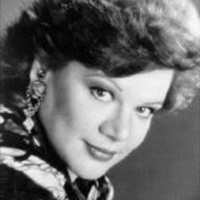
Ben Heppner

Classical
Opera
 Viberate Rank: 398666
 Viberate Rank: 398666
 Monthly ListenersFollowers
 Subscribers
 Followers
 Followers
 FansTop Spotify Songs
| Track | 7-Day Streams | |
|---|---|---|
1 | 458 | |
2 | 361 | |
3 | 270 | |
4 | 248 | |
5 | 243 |
Top YouTube VideosMonthly ListenersFeatured in Playlists| Playlist | Followers | |
|---|---|---|
1 |  This Is Wagner Spotify | 113.03K |
2 |  This Is Mahler Spotify | 62.23K |
3 |  Unbelievable Classical Voices EMITHA | 22.64K |
4 |  Choral: The 50 Greatest Tracks Udiscovermusic classical | 6.15K |
5 |  100 Carols for Choirs John Rutter | 2.73K |
Audience| City | Monthly Listeners | |
|---|---|---|
1 |  | 166 |
2 |  | 93 |
3 |  | 93 |
4 |  | 78 |
5 |  | 65 |
See full performance history, audience data, playlist activity, rankings, comparisons, and more in Viberate music analytics. Start with a free trial, then continue with a paid plan.
Ben Heppner’s Spotify BioWhile Heppner considers himself fundamentally a lyric tenor, he has become an eminent Wagnerian, and his Tristan has been hailed as a worthy successor to Lauritz Melchior's. Even after his "second debut" in Wagnerian roles, he still sang the title roles of Mozart's Idomeneo and La clemenza di Tito, complete with ornamentation, and added not only lieder, but popular parlor songs to his recital repertoire. His operatic repertoire also includes Verdi, Massenet, and Puccini, and he is a noted Peter Grimes. While his voice is not as large as that of some of the heldentenors, it has a very bright, focused sound that allows it to carry through even the heavier orchestral writing in Wagner, though it also has a slight tendency to crack, particularly in the longer operas that require high notes toward the end.
Like his compatriot Jon Vickers, also hailed as Grimes and in Wagner, he grew up as a farm boy in Canada (in a town named Dawson Creek, oddly enough). He studied at the University of… British Columbia School of Music, and upon graduation, began a career as a lyric tenor, winning the Canadian Broadcasting Competition award in 1979. In 1981, he made his opera debut as Rodrigo in Otello at the Vancouver Opera, and performed such light roles as Camille in The Merry Widow and Alfredo in Die Fledermaus with the Canadian Opera Company. However, in 1987, he returned to study, this time preparing for dramatic tenor roles, and won the first Birgit Nilsson Prize in 1988 in the Metropolitan Opera Auditions. He made his U.S. debut at Carnegie Hall that same year and his United States opera debut was at the Lyric Opera of Chicago in the small role of Walter von der Vogelweide in Tannhäuser in the fall season. As part of the Nilsson Prize, he made his Stockholm debut at the Royal Swedish Opera in 1989 in his first Lohengrin, later traveling with the same company to Moscow to perform the same role at the Bolshoi.
His La Scala debut was in 1990 as Walter von Stolzig in Der Meistersinger, and his Salzburg debut in 1992 as Tito in Mozart's La clemenza di Tito, and later that year he created the title role in William Bolcom's McTeague at the Lyric Opera of Chicago. In 1998, he sang his first Tristan in Seattle with Jane Eaglen as Isolde, to great critical acclaim.
His Walter on Solti's Die Meistersinger (Decca 452 606) is an excellent example of the lyricism that he brings to Wagner, and his recording of Richard Strauss arias on a CBC recording (SMCD 5142) makes some of the most difficult tenor scenes in the entire repertoire seem natural and fluid. His BMG recording of Italian arias (BMG 62504), while focusing on the spinto repertoire, does display his trills to advantage in the scene from Il trovatore.
Heppner sticks hard to his personal rule of taking every other summer off, not doing the usual festival performances, in order to spend more time with his wife and three children and to prepare for opera roles.
Viberate is a music analytics platform built for A&Rs, artist managers, labels, booking agents, marketers, and artists.
It helps music professionals track artist growth, analyze audience data, monitor playlist activity, compare artists, follow song performance, and identify opportunities across the music market.
Public artist pages provide a free preview of selected artist data. Paid plans provide access to deeper analytics, historical data, charts, comparisons, playlist tools, exports, alerts, reports, and additional professional features.
Yes. Public Viberate artist pages provide selected artist analytics and music data for free.
Viberate also offers a 7-day free trial of the full platform. A credit card is required to start the trial. The trial includes access to the complete product so users can test deeper artist analytics, historical views, playlist insights, comparisons, charts, exports, alerts, and reporting features before choosing a paid plan.
Viberate provides artist analytics across streaming, playlists, social media, video, radio airplay, songs, and audience markets.
Users can analyze Spotify performance, Spotify and Apple Music playlists, YouTube activity, TikTok and Instagram growth, radio spins, song performance, audience locations, demographics, rankings, and overall artist momentum.
Artist profiles also connect to music charts, similar artists, and comparison tools, helping users benchmark performance and evaluate artists in context.
Viberate updates key artist and track data daily.
For followed artists and tracks, selected data is refreshed multiple times per day. This helps teams monitor playlist changes, streaming movement, audience growth, releases, and campaign performance with more current data.
Update frequency can vary depending on the metric and data source.
Yes. Viberate lets users compare up to five artists side by side across streaming, social media, audience, and engagement metrics.
Users can compare fanbase growth, audience demographics, locations, Spotify performance, social metrics, and other artist data over selected time periods.
Artist comparison can be used for A&R scouting, benchmarking, booking decisions, campaign planning, and evaluating artists with similar audiences or market positions.