Arrigo Boito

Classical
Opera
 Viberate Rank: 345663
 Viberate Rank: 345663
 Monthly ListenersFollowers
 Subscribers
 Followers
 Followers
 FansTop Spotify SongsTop YouTube VideosMonthly ListenersFeatured in Playlists
| Playlist | Followers | |
|---|---|---|
1 |  maria callas - 50 most beautiful opera arias gio | 6.63K |
2 |  Deutsche Grammophon hagelsrum | 4.68K |
3 |  Dark Classical Squirrel Potatoes | 3.99K |
4 | Alex calderon | 3.69K |
5 |  V for Vendetta Jukebox Mitch | 3.64K |
Audience| City | Monthly Listeners | |
|---|---|---|
1 |  | 165 |
2 |  | 152 |
3 |  | 141 |
4 | | 130 |
5 |  | 101 |
See full performance history, audience data, playlist activity, rankings, comparisons, and more in Viberate music analytics. Start with a free trial, then continue with a paid plan.
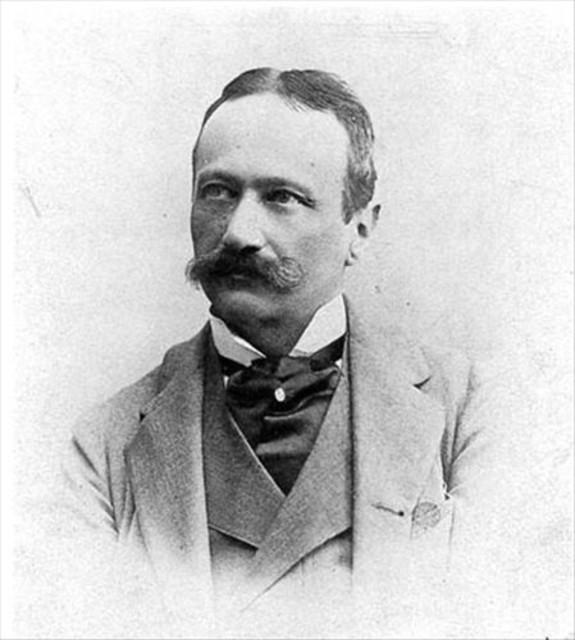
Arrigo Boito’s Spotify BioArrigo Boito was an Italian writer and composer who was best known for his opera libretti. He was not a prolific composer, but his two operas were notable for their original plots, grand scale, and rhythmic diversity.
Boito was born in 1842 in Padua, Italy, and he had an older brother, Camillo. His mother, Józefina Radolińska, was a Polish countess, and his father, Silvestro, was an artist who deserted the family when the boys were still young. As a single parent, Radolińska moved with her two sons to Venice, where Boito took music lessons from Antonio and Giovanni Buzzolla and Luigi Plet until he was ten years old. In 1853 he was enrolled at the Milan Conservatory, where he studied with Alberto Mazzucato, who was a composer and the principal conductor at La Scala. It was also around this time that Boito became acquainted with classmate Franco Faccio. They became great friends, and they collaborated on two cantatas while they were still students. The second of their collaborative works,… Le sorelle d'Italia, won a contest in 1861, which awarded both composers a grant to study music in Paris for one year. It was there in 1862 that Boito met Rossini and Berlioz, and he also wrote the libretto for Verdi's Inno delle nazioni, which premiered two months later in London. The following year, Boito offended Verdi when he recited his ode "All'arte italiana," which declared his unflattering opinions regarding Italian art.
For the following 15 years, Boito made a prosperous career from sharing his opinions as a music critic. His writings were printed in several publications, including Il Figaro, La Perseveranza, and the Giornale della Società del quartetto di Milano. However, his career was interrupted in 1866 when he fought in the Seven Weeks' War, under Giuseppe Garibaldi. Upon his return from battle, he composed the opera Mefistofele with his own libretto based on Goethe's Faust. This was the first time that an opera had been featured at La Scala where the score and libretto were both composed by the same person, and this captured the interest and curiosity of Milanese operagoers. Boito fueled the allure even further by distributing the libretto weeks in advance, but after a disagreement with the conductor he was left to conduct the work himself. Despite the large audience, the 1868 premiere was a disaster. The highly anticipated performance lasted over six hours, and the audience rioted with heated arguments regarding Boito's modernism and Wagnerism. The only part of the performance that was audible was the prologue. A second attempt to perform the opera was made with similar results, which led the police to ban it from further performances. This destroyed Boito's confidence as a composer, and then he shifted his focus to writing librettos and criticism mostly about opera. After a successful performance of the prologue to Mefistofele in 1871, he drastically edited the score, and it was performed in its entirety in 1875 at the Teatro Comunale in Bologna. This audience was much more receptive to the revised version, and it eventually received a revival at La Scala in 1881. Boito also mended his relationship with Verdi around this time and they collaborated on Simon Boccanegra, Otello, and Falstaff.
In the 1890s, he served on a government commission that oversaw music education in Italy, and he worked to improve the conditions for workers and performers at La Scala. After the death of his friend Verdi in 1901, Boito worked on Nerone, which he originally began in 1877 and was never able to finish. He became a senator in 1912 and passed away in 1918 in Milan after suffering from a heart condition. His unfinished Nerone was heavily edited by Arturo Toscanini, Vincenzo Tommasini, and Antonio Smareglia, and performed in 1924 at La Scala. ~ RJ Lambert, Rovi
Viberate is a music analytics platform built for A&Rs, artist managers, labels, booking agents, marketers, and artists.
It helps music professionals track artist growth, analyze audience data, monitor playlist activity, compare artists, follow song performance, and identify opportunities across the music market.
Public artist pages provide a free preview of selected artist data. Paid plans provide access to deeper analytics, historical data, charts, comparisons, playlist tools, exports, alerts, reports, and additional professional features.
Yes. Public Viberate artist pages provide selected artist analytics and music data for free.
Viberate also offers a 7-day free trial of the full platform. A credit card is required to start the trial. The trial includes access to the complete product so users can test deeper artist analytics, historical views, playlist insights, comparisons, charts, exports, alerts, and reporting features before choosing a paid plan.
Viberate provides artist analytics across streaming, playlists, social media, video, radio airplay, songs, and audience markets.
Users can analyze Spotify performance, Spotify and Apple Music playlists, YouTube activity, TikTok and Instagram growth, radio spins, song performance, audience locations, demographics, rankings, and overall artist momentum.
Artist profiles also connect to music charts, similar artists, and comparison tools, helping users benchmark performance and evaluate artists in context.
Viberate updates key artist and track data daily.
For followed artists and tracks, selected data is refreshed multiple times per day. This helps teams monitor playlist changes, streaming movement, audience growth, releases, and campaign performance with more current data.
Update frequency can vary depending on the metric and data source.
Yes. Viberate lets users compare up to five artists side by side across streaming, social media, audience, and engagement metrics.
Users can compare fanbase growth, audience demographics, locations, Spotify performance, social metrics, and other artist data over selected time periods.
Artist comparison can be used for A&R scouting, benchmarking, booking decisions, campaign planning, and evaluating artists with similar audiences or market positions.