Dethklok

Metal
Death Metal
 Viberate Rank: 17091
 Viberate Rank: 17091
 Monthly ListenersFollowers
 Subscribers
 Followers
 Followers
 FansTop Spotify Songs
| Track | 7-Day Streams | |
|---|---|---|
1 | 116.08K | |
2 | 93.14K | |
3 | 69.82K | |
4 | 47.54K | |
5 | 25.19K |
Top YouTube Videos| Video | 7-Day Views | |
|---|---|---|
1 | 24.36K | |
2 | 11.23K | |
3 | 9.59K | |
4 | 7.22K | |
5 | 6.53K |
Monthly ListenersFeatured in Playlists| Playlist | Followers | |
|---|---|---|
1 |  00s Metal Classics Spotify | 1.42M |
2 | Death Metal Dylan Bellusci | 67.91K |
3 | Stephen Holland | 62.97K |
4 |  Hellfest 2025 Spotify | 61.80K |
5 |  BATMETAL henrique | 53.84K |
Audience| City | Monthly Listeners | |
|---|---|---|
1 |  | 14.85K |
2 |  | 8.83K |
3 | | 8.36K |
4 | | 7.32K |
5 | | 6.92K |
See full performance history, audience data, playlist activity, rankings, comparisons, and more in Viberate music analytics. Start with a free trial, then continue with a paid plan.
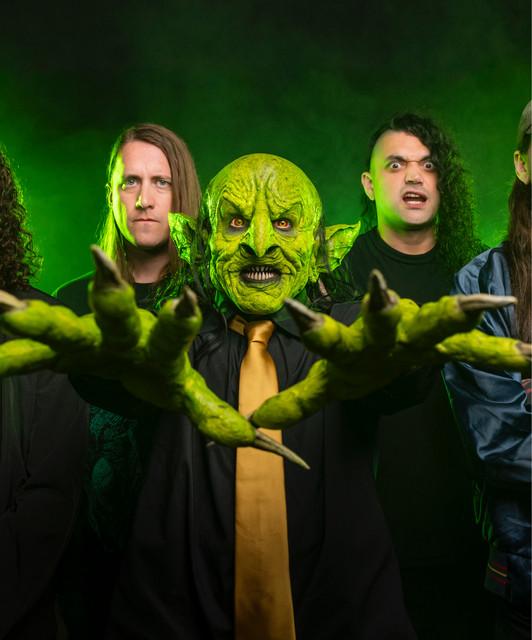
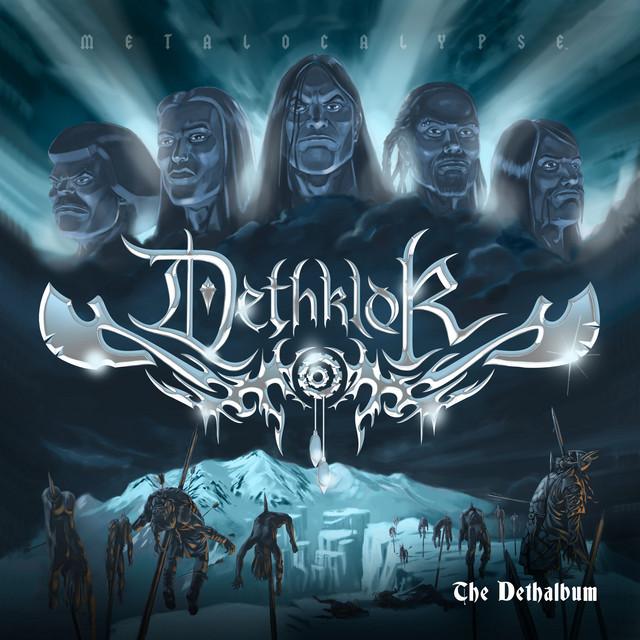
Dethklok’s Spotify BioDescribed as "the world's greatest cultural force," the virtual death metal band Dethklok star in the Adult Swim television show Metalocalypse. The Mordland-based quintet consists of vocalist Nathan Explosion, who uses a death metal growl even when he's not singing; lead guitarist Skwisgaar Skwigelf, the fastest string slinger alive; rhythm guitarist Toki Wartooth, the second-fastest guitar player alive; bassist and Civil War memorabilia collector William Murderface, and Pickles the Drummer. The fictional band's debut long-player, 2007's The Dethalbum, debuted at no. 21 on Billboard's Top 200, with subsequent efforts Dethalbum II (2009), III (2012), and IV (2023) reaching the upper echelons of the US rock charts.
Born and raised in Florida, Explosion didn't speak until the age of five and was a poor student, only showing skill in football and frog dissection, but these early experiences made him an expert on all things brutal and metal. Murderface had an even more harrowing childhood:… his father killed his mother, and then himself, with a chain saw when Murderface was still a baby, leaving the toddler to be raised by his grandparents, Thunderbolt and Stella. Murderface began playing music seriously at a fairly young age, earning his high school diploma by playing bass after threatening to cut out his principal's eyes. Along with his Dethklok duties, Murderface also helms the side project Planet Piss. Skwigelf's mother, Serveta, was Miss Sweden of 1956, and her promiscuous and neglectful ways left young Skwisgaar plenty of time for guitar practice (though, due to music dyslexia, he can't read a note of music). Before joining Dethklok, Skwigelf played in many Swedish bands, including Agnostic Priest, Sausage Assassin, and Financially Raped. His hands have been insured for ten billion dollars, and he has a vast collection of unique guitars, including the sword-shaped Gibson Excaliburtar, a Swiss Army-tar, and one allegedly made out of the True Cross. Pickles also had an established career in music prior to Dethklok. The Tomahawk, Wisconsin, native found fame with the L.A. hair metal act Snakes 'n' Barrels during the style's peak years. Wartooth is Dethklok's youngest member; born to Anja and the Reverend Aslaug Wartooth, he grew up in an abandoned village outside of Lilliehammer, Norway.
Like the rest of the band, Wartooth has extensive endorsement deals, including one with Willard Wonky Hard Candy Company. Deals such as Explosion Sauce, a mustardy North Carolina-style barbecue sauce hawked by Nathan Explosion, and "Pickles' Nickels" -- an endorsement deal the drummer has with the United States Treasury -- help make Dethklok the 12th largest economy in the world, surpassing Belgium. This financial security came in handy during the difficult process of recording The Dethalbum. Aside from the fact that a tribunal of global and corporate authority figures noticed a disturbing resemblance between the band and Sumerian artifacts with glyphs prophesying the apocalypse, the band scrapped early sessions due to Explosion's perfectionist tendencies. Instead, Dethklok recorded in a Russian nuclear submarine in the Mariana Trench with expert producer Dick "Magic Ears" Knubbler. Other setbacks, such as summoning a lake troll on a goodwill trip to Finland, a stint in band therapy with therapist Dr. John Twinkletits, shooting the film Blood Ocean, Pickles' reunion tour with Snakes 'n' Barrels, and a depression that the band overcame with the help of blues legend Mashed Potato Johnson, delayed the album, leaving fans suicidal with anticipation. With the help of Metalocalypse creator Brendon Small and Strapping Young Lad drummer Gene Hoglan, the sessions were finished, and The Dethalbum was finally released in fall 2007 on the Williams Street label. Dethalbum II arrived in 2009, and was followed by Dethalbum III in 2012. An intense year followed for the heavy metal masters as increasing tensions and rising violence led to the band deciding to break up. After the kidnapping of Toki Wartooth, the legendary band decided to continue working together, taking a step toward fulfilling their destiny as agents of prophecy with their 2013 album, The Doomstar Requiem: A Klok Opera. 2023 saw the arrival of Dethalbum IV, which was released in conjunction with the film Metalocalypse: Army of the Doomstar. In the finale of the Metalocalypse series, Dethklok attempts to save the world via their original composition, "Song of Salvation." ~ Heather Phares
Viberate is a music analytics platform built for A&Rs, artist managers, labels, booking agents, marketers, and artists.
It helps music professionals track artist growth, analyze audience data, monitor playlist activity, compare artists, follow song performance, and identify opportunities across the music market.
Public artist pages provide a free preview of selected artist data. Paid plans provide access to deeper analytics, historical data, charts, comparisons, playlist tools, exports, alerts, reports, and additional professional features.
Yes. Public Viberate artist pages provide selected artist analytics and music data for free.
Viberate also offers a 7-day free trial of the full platform. A credit card is required to start the trial. The trial includes access to the complete product so users can test deeper artist analytics, historical views, playlist insights, comparisons, charts, exports, alerts, and reporting features before choosing a paid plan.
Viberate provides artist analytics across streaming, playlists, social media, video, radio airplay, songs, and audience markets.
Users can analyze Spotify performance, Spotify and Apple Music playlists, YouTube activity, TikTok and Instagram growth, radio spins, song performance, audience locations, demographics, rankings, and overall artist momentum.
Artist profiles also connect to music charts, similar artists, and comparison tools, helping users benchmark performance and evaluate artists in context.
Viberate updates key artist and track data daily.
For followed artists and tracks, selected data is refreshed multiple times per day. This helps teams monitor playlist changes, streaming movement, audience growth, releases, and campaign performance with more current data.
Update frequency can vary depending on the metric and data source.
Yes. Viberate lets users compare up to five artists side by side across streaming, social media, audience, and engagement metrics.
Users can compare fanbase growth, audience demographics, locations, Spotify performance, social metrics, and other artist data over selected time periods.
Artist comparison can be used for A&R scouting, benchmarking, booking decisions, campaign planning, and evaluating artists with similar audiences or market positions.