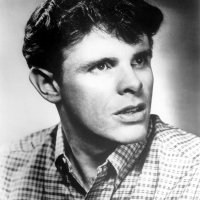
Del Shannon

Rock
Rockabilly
Pop Rock
 Viberate Rank: 30542
 Viberate Rank: 30542
 Monthly ListenersFollowers
 Subscribers
 Followers
 Followers
 FansTop Spotify Songs
| Track | 7-Day Streams | |
|---|---|---|
1 | 54.57K | |
2 | 12.00K | |
3 | 8.79K | |
4 | 8.08K | |
5 | 5.74K |
Top YouTube VideosMonthly ListenersFeatured in Playlists| Playlist | Followers | |
|---|---|---|
1 |  60s Party Spotify | 344.29K |
2 |  ELO Greatest Hits DJ Dijk | 118.61K |
3 |  Dirty Dancing Soundtrack KULTPOP! | 90.14K |
4 | Skylar00 | 77.50K |
5 | Mat Young | 67.68K |
Audience| City | Monthly Listeners | |
|---|---|---|
1 |  | 16.63K |
2 |  | 11.86K |
3 |  | 10.08K |
4 |  | 9.69K |
5 | | 9.15K |
See full performance history, audience data, playlist activity, rankings, comparisons, and more in Viberate music analytics. Start with a free trial, then continue with a paid plan.
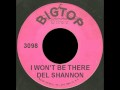
Del Shannon’s Spotify BioOne of the best and most original rockers of the early '60s, Del Shannon was also one of the least typical. Although classified at times as a teen idol, he favored brooding themes of abandonment, loss, and rejection. In some respects he looked forward to the British Invasion with his frequent use of minor chords and his ability to write most of his own material. In fact, after hitting number one with "Runaway" in 1961, Shannon continued to chart for a year or two into the British Invasion, and recorded original music into the late '80s.
Born Charles Westover, Shannon happened upon a gripping series of minor chords while playing with his band in Battle Creek, Michigan. The chords would form the basis for his 1961 debut single, "Runaway," one of the greatest hits of the early '60s, with its unforgettable riffs, Shannon's amazing vocal range (which often glided off into a powerful falsetto), and the creepy, futuristic organ solo in the middle. It made number one, and the similar follow-up,… "Hats Off to Larry," made the Top Five.
Shannon had intermittent minor hits over the next couple of years ("Little Town Flirt" was the biggest), but was even more successful in England. On one of his European tours in 1963, he played some shows with the Beatles, who had just scored their first big British hits. Shannon, impressed by what he heard, would become the first American artist to cover a Beatles song when he recorded "From Me to You" for a 1963 single (although it would give him only a minor hit). Shannon's melodic style had some similarities with the burgeoning pop/rock wing of the British Invasion, and in 1965, Peter & Gordon would cover a Shannon composition, "I Go to Pieces," for a Top Ten hit.
Del got into the Top Ten with a late 1964 single, "Keep Searchin'," that was one of his best and hardest-rocking outings. But after the similar "Stranger in Town" (number 30, 1965), he wouldn't enter the Top 40 again for nearly a couple of decades. A switch to a bigger label (Liberty) didn't bring the expected commercial results, although he was continuing to release quality singles. A brief association with producer Andrew Loog Oldham (also manager/producer of the Rolling Stones) found him continuing to evolve, developing a more Baroque, orchestrated pop/rock sound and employing British session musicians such as Nicky Hopkins. Much to Shannon's frustration, Liberty decided not to release the album that resulted from the collaboration (some of the material appeared on singles, and much of the rest of the sessions would eventually be issued for the collector market).
By the late '60s, Shannon was devoting much of his energy to producing other artists, most notably Smith and Brian Hyland. Shannon was a perennially popular artist on the oldies circuit (particularly in Europe, where he had an especially devoted audience), and was always up for a comeback attempt on record. Sessions with Jeff Lynne and Dave Edmunds in the '70s didn't amount to much, but an early-'80s album produced by Tom Petty (and featuring members of the Heartbreakers as backing musicians) got him into the Top 40 again with a cover of "Sea of Love." He was working on another comeback album with Jeff Lynne, and rumored to be a potential replacement for Roy Orbison in the Traveling Wilburys when he unexpectedly killed himself on February 8, 1990, while on anti-depressants. ~ Richie Unterberger, Rovi
Viberate is a music analytics platform built for A&Rs, artist managers, labels, booking agents, marketers, and artists.
It helps music professionals track artist growth, analyze audience data, monitor playlist activity, compare artists, follow song performance, and identify opportunities across the music market.
Public artist pages provide a free preview of selected artist data. Paid plans provide access to deeper analytics, historical data, charts, comparisons, playlist tools, exports, alerts, reports, and additional professional features.
Yes. Public Viberate artist pages provide selected artist analytics and music data for free.
Viberate also offers a 7-day free trial of the full platform. A credit card is required to start the trial. The trial includes access to the complete product so users can test deeper artist analytics, historical views, playlist insights, comparisons, charts, exports, alerts, and reporting features before choosing a paid plan.
Viberate provides artist analytics across streaming, playlists, social media, video, radio airplay, songs, and audience markets.
Users can analyze Spotify performance, Spotify and Apple Music playlists, YouTube activity, TikTok and Instagram growth, radio spins, song performance, audience locations, demographics, rankings, and overall artist momentum.
Artist profiles also connect to music charts, similar artists, and comparison tools, helping users benchmark performance and evaluate artists in context.
Viberate updates key artist and track data daily.
For followed artists and tracks, selected data is refreshed multiple times per day. This helps teams monitor playlist changes, streaming movement, audience growth, releases, and campaign performance with more current data.
Update frequency can vary depending on the metric and data source.
Yes. Viberate lets users compare up to five artists side by side across streaming, social media, audience, and engagement metrics.
Users can compare fanbase growth, audience demographics, locations, Spotify performance, social metrics, and other artist data over selected time periods.
Artist comparison can be used for A&R scouting, benchmarking, booking decisions, campaign planning, and evaluating artists with similar audiences or market positions.