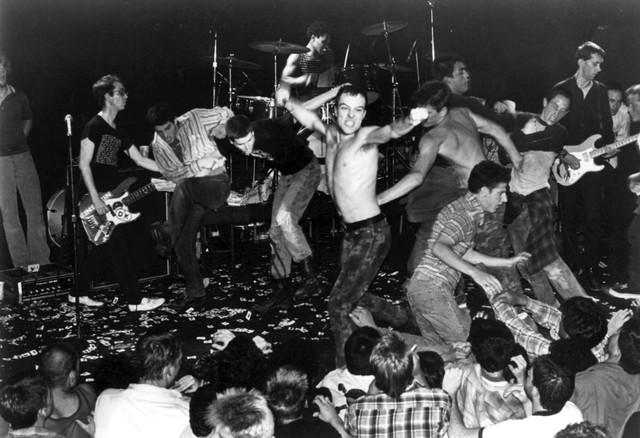
Dead Kennedys

Punk
Punk Rock
Hardcore Punk
 Viberate Rank: 10574
 Viberate Rank: 10574
 Monthly ListenersFollowers
 Subscribers
 Followers
 Followers
 FansTop Spotify Songs
| Track | 7-Day Streams | |
|---|---|---|
1 | 145.07K | |
2 | 131.36K | |
3 | 75.62K | |
4 | 48.16K | |
5 | 46.85K |
Top YouTube Videos| Video | 7-Day Views | |
|---|---|---|
1 | 16.69K | |
2 | 6.97K | |
3 | 5.67K | |
4 | 4.50K | |
5 | 4.49K |
Monthly ListenersFeatured in Playlists| Playlist | Followers | |
|---|---|---|
1 |  Classic Punk Spotify | 1.60M |
2 |  Indie Halloween Spotify | 142.37K |
3 |  Punk Rock - by 23punk 23punk | 87.77K |
4 | Tony Hawk Pro Skater ost / 1 - 4 sarahchu | 87.62K |
5 | GRUNGE zerubi | 80.90K |
Audience| City | Monthly Listeners | |
|---|---|---|
1 | | 22.23K |
2 |  | 21.72K |
3 |  | 16.65K |
4 | | 13.39K |
5 |  | 11.56K |
See full performance history, audience data, playlist activity, rankings, comparisons, and more in Viberate music analytics. Start with a free trial, then continue with a paid plan.
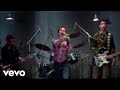
Dead Kennedys’ Spotify BioThe Dead Kennedys merged revolutionary politics with hardcore punk music and, in the process, became one of the defining hardcore bands. Often, they were more notable for their politics than their music, but that was part of their impact. The Kennedys were more inspired by British punk and the fiery, revolutionary inspired politics of the Sex Pistols than the artier tendencies of New York punk rockers. Under the direction of lead vocalist Jello Biafra, the Dead Kennedys became the most political and -- to the eyes of many observers, including Christians and right-wing politicians -- the most dangerous band in hardcore. By the mid-'80s, the band had become notorious enough to open themselves up to prosecution for obscenity (concerning a poster inserted into their 1985 Frankenchrist album), and the ensuing court battle sped the band toward a breakup, but they left behind a legacy that influenced countless punk bands that followed.
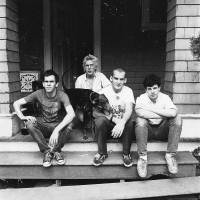
The Dead Kennedys formed in 1978 in San Francisco when Bia…fra (vocals) and bassist Klaus Flouride responded to a magazine ad placed by guitarist East Bay Ray. Drummer Ted (Bruce Slesinger) joined soon after and the band played locally for the first two years of their career, occasionally venturing outside the Bay Area. Within a year, the band released their first independent single, "California Über Alles," an attack on the then governor Jerry Brown. It was followed shortly afterward by their second single "Holiday in Cambodia." In 1979, Biafra ran for mayor of San Francisco; he finished fourth. By this time, the band had become quite popular in both the American and British underground. Finally, in 1980, they released their debut album, Fresh Fruit for Rotting Vegetables, on I.R.S. Records. After its release, Ted left the band; he was replaced by drummer Darren H. Peligro (aka D.H. Peligro).
Following the release of Fresh Fruit for Rotting Vegetables, the Dead Kennedys formed their own independent record label, Alternative Tentacles, in 1981. The first release on the label was the Kennedys' EP In God We Trust. That same year, the single "Too Drunk to Fuck" scraped the bottom of Britain's pop Top 40, despite being banned from airplay. In 1982, the Kennedys released their second full-length album, Plastic Surgery Disasters. After its release, they took a hiatus, during which bandmembers -- most notably Klaus Flouride -- performed with various side projects. During that time, Alternative Tentacles began to establish itself as a major force in the American underground.
The Dead Kennedys returned in 1985 with Frankenchrist, which was the record that earned them their greatest notoriety. Included with the album was a poster of the Swiss artist H.R. Giger's Landscape #XX, a garish illustration of penises and anuses. A year after its release, the Kennedys and Alternative Tentacles were prosecuted under revised California anti-obscenity laws for distributing pornography to minors (because of the poster). For the next two years, they were embroiled in a bitter legal battle, during which Biafra emerged as one of the most articulate advocates for free speech and vocal opponents of the PMRC. In the summer of 1987, the case ended with a hung jury and was dismissed.
Although the Dead Kennedys emerged victorious from the court battle, they didn't remain a band much longer. Just before they were prosecuted in 1986, the band released Bedtime for Democracy, which turned out to be their last official album. After the case was settled, the Kennedys split, releasing the posthumous compilation Give Me Convenience or Give Me Death in 1987. Biafra embarked on a solo career, releasing musical and spoken-word recordings sporadically over the next couple decades. Flouride returned to his fledgling solo career, releasing two albums in the late '80s and early '90s. The DVD DMPO's on Broadway, documenting the Dead Kennedys' June 1984 performance marking the closing of San Francisco's avant-garde theater and nightclub, was released in May 2000.
In 1997, an employee at Alternative Tentacles discovered Biafra's bandmates had been underpaid on royalties over the previous ten years, with the musicians owed $76,000. Biafra didn't let his fellow former Kennedys know about the shortfall, and when they learned they were owed money by AT, they attempted to negotiate with Biafra. When that failed, they filed a lawsuit against the label. A jury found Alternative Tentacles guilty of fraudulent conduct, and as a consequence control of the group's recorded catalog and publishing was declared to be shared equally among the four members. With East Bay Ray, Klaus Flouride, and D.H. Peligro voting as a block, they struck a new deal with Manifesto Records to distribute the DK's back catalog. Manifesto also released a pair of archival live albums, 2001's Mutiny on the Bay (taken from four shows in San Francisco, recorded between 1982 and 1986) and 2004's Live at the Deaf Club 1979 (capturing a show at the iconic SF punk venue the Deaf Club, which was located at a social hall for the severely hard of hearing). Meanwhile, in 2001, Ray, Flouride, and Peligro reunited the Dead Kennedys for an international concert tour; to the surprise of no one, Biafra refused to participate, and Brandon Cruz, a former child star who sang with the band Dr. Know, came aboard as their new lead singer. Cruz stayed in the lineup until 2003, when Jeff Penalty took over for him on the vocal mike, and Penalty was in turn replaced in 2008 by Ron "Skip" Greer, formerly of the Wynona Riders.
Manifesto continued to work the DK's catalog, issuing the "best-of" Milking the Sacred Cow in 2007, while Iguana Studios Rehearsal Tape: San Francisco 1978 came from a practice session from the era when Ted was still working with the group. 2019's DK 40 was a box set that featured three unreleased live concerts (Amsterdam, the Netherlands in 1982, Munich, Germany in 1982, and San Francisco in 1985). By the time it arrived, the group's touring activities slowed as Flouride and Peligro were dealing with health problems, with both occasionally sending understudies on the road. September 2022 brought the release of a new edition of Fresh Fruit for Rotting Vegetables, with the 40-year-old album boasting a new mix by Chris Lord-Alge. D.H. Peligro died in his home in Los Angeles on October 28, 2022 after suffering head trauma brought on by an accidental fall. He was 63 years of age. ~ Stephen Thomas Erlewine & Mark Deming, Rovi
Viberate is a music analytics platform built for A&Rs, artist managers, labels, booking agents, marketers, and artists.
It helps music professionals track artist growth, analyze audience data, monitor playlist activity, compare artists, follow song performance, and identify opportunities across the music market.
Public artist pages provide a free preview of selected artist data. Paid plans provide access to deeper analytics, historical data, charts, comparisons, playlist tools, exports, alerts, reports, and additional professional features.
Yes. Public Viberate artist pages provide selected artist analytics and music data for free.
Viberate also offers a 7-day free trial of the full platform. A credit card is required to start the trial. The trial includes access to the complete product so users can test deeper artist analytics, historical views, playlist insights, comparisons, charts, exports, alerts, and reporting features before choosing a paid plan.
Viberate provides artist analytics across streaming, playlists, social media, video, radio airplay, songs, and audience markets.
Users can analyze Spotify performance, Spotify and Apple Music playlists, YouTube activity, TikTok and Instagram growth, radio spins, song performance, audience locations, demographics, rankings, and overall artist momentum.
Artist profiles also connect to music charts, similar artists, and comparison tools, helping users benchmark performance and evaluate artists in context.
Viberate updates key artist and track data daily.
For followed artists and tracks, selected data is refreshed multiple times per day. This helps teams monitor playlist changes, streaming movement, audience growth, releases, and campaign performance with more current data.
Update frequency can vary depending on the metric and data source.
Yes. Viberate lets users compare up to five artists side by side across streaming, social media, audience, and engagement metrics.
Users can compare fanbase growth, audience demographics, locations, Spotify performance, social metrics, and other artist data over selected time periods.
Artist comparison can be used for A&R scouting, benchmarking, booking decisions, campaign planning, and evaluating artists with similar audiences or market positions.