Dave Berry

Pop
Mainstream Pop
Soul
 Viberate Rank: 132269
 Viberate Rank: 132269
 Monthly ListenersFollowers
 Subscribers
 Followers
 Followers
 FansTop Spotify Songs
| Track | 7-Day Streams | |
|---|---|---|
1 | 5.41K | |
2 | 3.71K | |
3 | 1.93K | |
4 | 609 | |
5 | 609 |
Top YouTube Videos| Video | 7-Day Views | |
|---|---|---|
1 | 847 | |
2 | 440 | |
3 | 122 | |
4 | 104 | |
5 | 72 |
Monthly ListenersFeatured in Playlists| Playlist | Followers | |
|---|---|---|
1 | Best of 80s, 70s, 60s, 90s, 00s, 2010s Arthur Cnudde | 25.72K |
2 | Unofficial Reverb Radio Jeff Ferruzzo | 21.82K |
3 |  NOW 100 Hits Forgotten 60s NOW That’s What I Call Music! | 18.56K |
4 | Goude oude jaren 60/70 tinymath | 18.04K |
5 | Jaren 60 en 70 teuntje60 | 17.65K |
Audience| City | Monthly Listeners | |
|---|---|---|
1 |  | 875 |
2 | | 620 |
3 |  | 353 |
4 | | 304 |
5 |  | 292 |
See full performance history, audience data, playlist activity, rankings, comparisons, and more in Viberate music analytics. Start with a free trial, then continue with a paid plan.
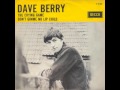
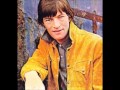
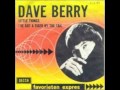
Dave Berry’s Spotify BioBriefly a big star in Britain in the mid-'60s, Dave Berry faced the same dilemma as several other British teen idols of the era: R&B was obviously nearest and dearest to his heart, but he needed to record blatantly pop material to make the hit parade. It was also obvious that Berry was in fact much more suited toward pop ballads than rough-and-tumble R&B, regardless of his personal preferences. At his peak, his output was divided between hard R&B/rockers and straight pop. Help from ace session players like Jimmy Page and John Paul Jones notwithstanding, his smooth voice was frankly ill-equipped to deliver the goods with anything close to the same panache as Mick Jagger or Eric Burdon on the bluesier items. He made a rather good go of it, on the other hand, with romantic pop/rock ballads, hitting the British Top Ten with "The Crying Game" (1964), Bobby Goldsboro's "Little Things" (1965), and the excruciatingly sentimental "Mama" (1966). "This Strange Effect," written by Ray Davies (thou…gh not released by the Kinks), was a huge European hit for him in 1965 as well.
Berry's voice was not exactly teeming with character and he never made the slightest impression on the U.S. market, but the best of his material is quite pleasant period fare. He remains well regarded in his homeland, where the Sex Pistols unexpectedly covered his toughest track, "Don't Gimme No Lip Child." Even more unexpectedly, "The Crying Game" brought Berry's voice to his biggest international audience ever in 1992, when it was used as the theme song for one of the year's most successful films. ~ Richie Unterberger, Rovi
Viberate is a music analytics platform built for A&Rs, artist managers, labels, booking agents, marketers, and artists.
It helps music professionals track artist growth, analyze audience data, monitor playlist activity, compare artists, follow song performance, and identify opportunities across the music market.
Public artist pages provide a free preview of selected artist data. Paid plans provide access to deeper analytics, historical data, charts, comparisons, playlist tools, exports, alerts, reports, and additional professional features.
Yes. Public Viberate artist pages provide selected artist analytics and music data for free.
Viberate also offers a 7-day free trial of the full platform. A credit card is required to start the trial. The trial includes access to the complete product so users can test deeper artist analytics, historical views, playlist insights, comparisons, charts, exports, alerts, and reporting features before choosing a paid plan.
Viberate provides artist analytics across streaming, playlists, social media, video, radio airplay, songs, and audience markets.
Users can analyze Spotify performance, Spotify and Apple Music playlists, YouTube activity, TikTok and Instagram growth, radio spins, song performance, audience locations, demographics, rankings, and overall artist momentum.
Artist profiles also connect to music charts, similar artists, and comparison tools, helping users benchmark performance and evaluate artists in context.
Viberate updates key artist and track data daily.
For followed artists and tracks, selected data is refreshed multiple times per day. This helps teams monitor playlist changes, streaming movement, audience growth, releases, and campaign performance with more current data.
Update frequency can vary depending on the metric and data source.
Yes. Viberate lets users compare up to five artists side by side across streaming, social media, audience, and engagement metrics.
Users can compare fanbase growth, audience demographics, locations, Spotify performance, social metrics, and other artist data over selected time periods.
Artist comparison can be used for A&R scouting, benchmarking, booking decisions, campaign planning, and evaluating artists with similar audiences or market positions.