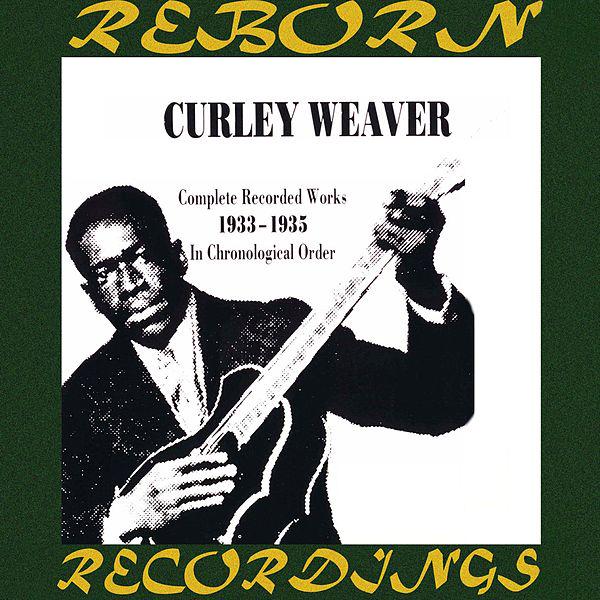
Curley Weaver

Blues
Classic Blues
Country Blues
 Viberate Rank: 328877
 Viberate Rank: 328877
 Monthly ListenersFollowers
 Subscribers
 Followers
 Followers
 FansTop Spotify Songs
| Track | 7-Day Streams | |
|---|---|---|
1 | 3.06K | |
2 | 67 | |
3 | 67 | |
4 | 67 | |
5 | 62 |
Top YouTube VideosMonthly ListenersFeatured in Playlists| Playlist | Followers | |
|---|---|---|
1 |  Old/Delta Blues (1920s-1960s) Graylon | 52.00K |
2 | Appalachian Folk Music mheld3 | 34.95K |
3 |  Delta/Slide/Acoustic Blues Coltrel | 15.06K |
4 |  Old Time Music & Blues & Folk & Americana & Bluegrass & Country and much more... Jean-Sébastien Clément | 4.21K |
5 |  Années 50s Timothée | 3.13K |
Audience| City | Monthly Listeners | |
|---|---|---|
1 |  | 47 |
2 | | 44 |
3 | | 39 |
4 |  | 38 |
5 |  | 31 |
See full performance history, audience data, playlist activity, rankings, comparisons, and more in Viberate music analytics. Start with a free trial, then continue with a paid plan.
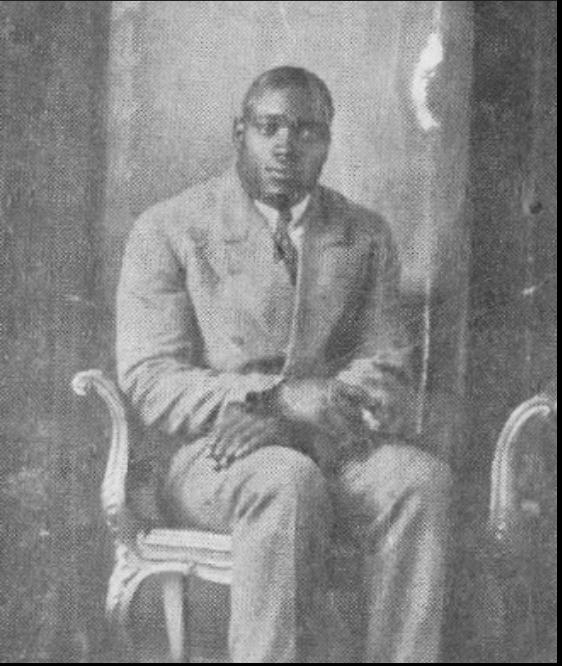
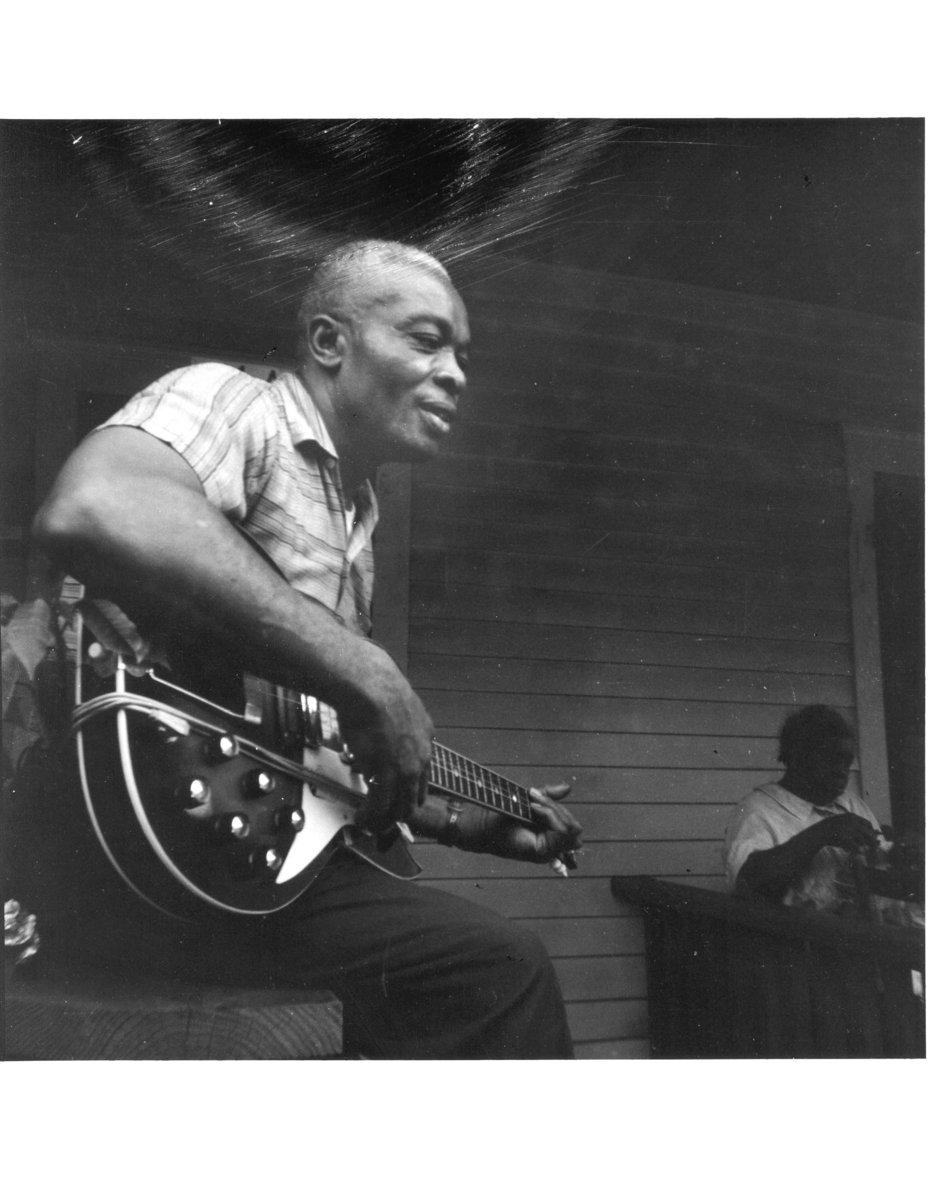
Curley Weaver’s Spotify BioIn the early 2000s, Curley Weaver, who was known for much of his life as "the Georgia Guitar Wizard," was only just beginning to be appreciated as one of the best players ever to pick up a six-string instrument. Although he recorded a fair number of sides on his own during the 1920s and '30s, Weaver was most commonly heard in performances and recordings in association with his better-known colleagues Blind Willie McTell (with whom he worked from the 1930s until the early '50s), Barbecue Bob, and Buddy Moss.
Weaver was born in Newton County, Georgia, in Covington, and was raised on a cotton farm. His mother, Savanah Shepard, encouraged him to sing from a very early age and also taught him to play the guitar when he was ten-years-old. Savanah Shepard was a renowned guitarist in her own right around Newton County, and also taught guitar legends Barbecue Bob and his brother, Charlie Lincoln, to play the instrument when they were children. Her musical interests lay in gospel but, as in the… case of Hicks and Lincoln, her son gravitated in the opposite direction, toward the blues. Weaver learned to play slide guitar from two legendary (and, alas, never recorded) local bluesmen, Nehemiah Smith and Blind Buddy Keith. He showed extraordinary aptitude and at age 19 teamed up with harmonica player Eddie Mapp and moved to Atlanta. There he hooked up with Barbecue Bob and Charlie Lincoln, who quickly showed their younger friend the ins and outs of life busking on Decatur Street, the heart of Atlanta's Black entertainment district, with its bars, restaurants, clubs, and theaters.
The association between the three guitarists was to prove providential. Barbecue Bob emerged as a local star first and, as a consequence, was also the first to go into the recording studio for the Columbia Records label in 1927 -- his first releases sold well, and he, in turn, arranged for his brother and Curley Weaver to make their debuts in the studio the following year. Weaver paid his first visit to the recording studio in Atlanta on October 26, 1928, laying down two tracks, "Sweet Petunia" and "No No Blues." Weaver's debut led to more recording work, both as a solo act and in the company of Eddie Mapp, as well as Barbecue Bob. It was also through the recording studio, appearing as the Georgia Cotton Pickers in association with Barbecue Bob, that Weaver first made the acquaintance of Buddy Moss, a 16-year-old harmonica player who learned guitar from Weaver and Bob, and later emerged as a major star on the instrument himself. The two were to work together throughout the decade.
Although many of Weaver's recording sessions in the 1930s were in New York, he kept his home base in Atlanta for his entire life, and it was while playing at clubs, parties, dances, picnics, and even on street corners in the early part of the decade that he struck up the most important professional relationship of his life, with Blind Willie McTell. A renowned 12-string guitarist, McTell had begun his recording career in 1927, and was a local legend around Atlanta. The two played and recorded together for 20 years or more, and comprised one of the most important and celebrated East Coast blues teams in history. Weaver's most renowned recordings were done in association either with McTell or Moss, the latter under the guise of the Georgia Browns, during the mid-'30s. His playing, either on its own or in association with either McTell or Moss, was nothing less than dazzling. It wasn't possible for Weaver to sustain his brilliance, though not for lack of his ability or trying. The mid-'30s were a trying period for most blues players. The boom years of the late teens and early '20s had seen lots of opportunities to perform and record. By the mid-'30s, the Great Depression had destroyed record sales and, for most bluesmen, recording dates dried up considerably, while most labels cut back on what they'd wax.
For Weaver, the decade was an even more bitter period. Barbecue Bob had died of pneumonia at the beginning of the 1930s. Eddie Mapp was killed, and Buddy Moss ended up in prison at age 21 on a five-year stretch that, essentially, halted his career permanently. Weaver continued playing with McTell across the South, but the onset of the Second World War saw even a lot of this activity dry up. He continued to play around Atlanta, and in 1950 cut an album's worth of material with McTell for the Regal label. He continued playing whenever he could, and was reunited with Buddy Moss in a trio that performed in northern Georgia but never recorded. Weaver's performing career was brought to a halt only by the failure of his eyesight. He passed away three years later, in 1962, remembered around Atlanta and by serious blues enthusiasts elsewhere, but largely unheralded during the blues revival that he'd just missed being a part of.
Curley Weaver was, by virtue of his virtuosity and the associations that he retained throughout his life and career, a guitarist's guitarist, a virtuoso among a small coterie of Atlanta-based guitar wizards. He never had the renown of Blind Willie McTell, but he was McTell's equal and match in just about every conceivable respect as a player and singer, his six-string being perfectly mated to Willie's 12-string. When he was playing or recording with McTell, Buddy Moss, or Barbecue Bob, the results were the blues equivalent of what rock people later would've called a "super session" except that, as a listen to the surviving records reveals, the results were more natural and overpowering -- these guys genuinely liked each other, and loved playing together, and it shows beyond the virtuosity of the music, in the warmth and elegance of the playing and the sound. ~ Bruce Eder, Rovi
Viberate is a music analytics platform built for A&Rs, artist managers, labels, booking agents, marketers, and artists.
It helps music professionals track artist growth, analyze audience data, monitor playlist activity, compare artists, follow song performance, and identify opportunities across the music market.
Public artist pages provide a free preview of selected artist data. Paid plans provide access to deeper analytics, historical data, charts, comparisons, playlist tools, exports, alerts, reports, and additional professional features.
Yes. Public Viberate artist pages provide selected artist analytics and music data for free.
Viberate also offers a 7-day free trial of the full platform. A credit card is required to start the trial. The trial includes access to the complete product so users can test deeper artist analytics, historical views, playlist insights, comparisons, charts, exports, alerts, and reporting features before choosing a paid plan.
Viberate provides artist analytics across streaming, playlists, social media, video, radio airplay, songs, and audience markets.
Users can analyze Spotify performance, Spotify and Apple Music playlists, YouTube activity, TikTok and Instagram growth, radio spins, song performance, audience locations, demographics, rankings, and overall artist momentum.
Artist profiles also connect to music charts, similar artists, and comparison tools, helping users benchmark performance and evaluate artists in context.
Viberate updates key artist and track data daily.
For followed artists and tracks, selected data is refreshed multiple times per day. This helps teams monitor playlist changes, streaming movement, audience growth, releases, and campaign performance with more current data.
Update frequency can vary depending on the metric and data source.
Yes. Viberate lets users compare up to five artists side by side across streaming, social media, audience, and engagement metrics.
Users can compare fanbase growth, audience demographics, locations, Spotify performance, social metrics, and other artist data over selected time periods.
Artist comparison can be used for A&R scouting, benchmarking, booking decisions, campaign planning, and evaluating artists with similar audiences or market positions.