Conrad Schnitzler

Electronic
Other Electronic Music
Progressive Rock
 Viberate Rank: 245204
 Viberate Rank: 245204
 Monthly ListenersFollowers
 Subscribers
 Followers
 Followers
 FansTop Spotify Songs
| Track | 7-Day Streams | |
|---|---|---|
1 | 455 | |
2 | 120 | |
3 | 76 | |
4 | 68 | |
5 | 61 |
Top YouTube VideosMonthly ListenersFeatured in Playlists| Playlist | Followers | |
|---|---|---|
1 |  Caribou - The Longest Mixtape: 1000+ Songs For You Caribou | 53.23K |
2 | 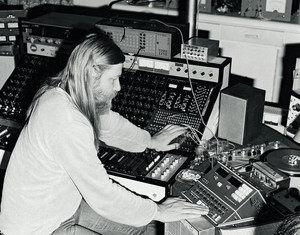 KRAUTROCK alison | 21.75K |
3 |  KRAUTROCK CLASSICS Nikolai Carrion | 14.49K |
4 | space rock & psychedelia Edson Alejandro Adame | 8.05K |
5 |  Late Night Tales: Digging In The Crates Late Night Tales | 7.94K |
Audience| City | Monthly Listeners | |
|---|---|---|
1 | | 118 |
2 |  | 83 |
3 |  | 60 |
4 | | 48 |
5 | | 46 |
See full performance history, audience data, playlist activity, rankings, comparisons, and more in Viberate music analytics. Start with a free trial, then continue with a paid plan.
Conrad Schnitzler’s Spotify BioConrad Schnitzler was a highly prolific, experimental electronic musician and a massively influential figure of the German avant-garde. An early member of Tangerine Dream and Kluster, he co-founded the Zodiak Free Arts Lab, a short-lived but groundbreaking venue for improvised music. Beginning with 1973's Rot (the first of several LPs containing stark, single-color covers), he frequently released challenging yet hypnotic records consisting of tape manipulations and expansive electronics, as well as countless homemade cassettes and later CD-Rs. Some of his work from the early '80s, including 1983's Con 3, resembled abstract synth pop. By the late '90s, he had begun releasing acoustic piano compositions on albums like The Piano Works, Vol. 1 (1997). He remained productive until his death in 2011, and numerous archival releases and reissues have appeared since, as well as the Con-Struct series, containing new works created from Schnitzler's massive sound archive by artists such as Schneid…er TM, Pole, and Baal & Mortimer.
Schnitzler was greatly inspired by influences in the visual artistic world as well as the musical; he studied sculpture with Joseph Beuys, and composition with Karlheinz Stockhausen, also looking to John Cage and Pierre Schaeffer for inspiration. In 1968, he founded the Zodiak Free Arts Lab in West Berlin, along with Hans-Joachim Roedelius and Boris Schaak. The venue featured two rooms filled with instruments, and artists were encouraged to experiment and created non-traditional forms music. The venue closed in 1969, but Schnitzler briefly joined one of the Lab's regulars, Tangerine Dream, with whom he recorded Electronic Meditation. The album became one of the most distinctive in TD's discography, and Schnitzler deserved much of the credit for its chance-taking approach.
Before the end of the decade, Schnitzler had begun appearing with another soon-to-be legend, Kluster. Formed with Dieter Moebius and Roedelius, the group recorded two albums in 1970, Klopfzeichen and Zwei Osterei. Live recording Eruption was recorded and released as the final Kluster album in 1971, although it was also reissued as a Schnitzler album titled Schwarz after he left for a solo career, and the group was renamed Cluster. With albums like 1973's Rot (containing a track titled "Krautrock," the media-created genre he was often lumped in with), Schnitzler began to progress from mostly acoustic music to a style based around electronics and tape-looped sound. Though he continued to record during the 1970s, not much of Schnitzler's work was released until the following decade. He emerged in 1978 with the album Con (recorded at Peter Baumann's Paragon Studios), supported by the French label Egg Records.
The beginning of a new decade resulted in much activity for Schnitzler, and he released nearly a dozen albums during 1980-1981 alone. The styles ranged from the harsh sequencer-driven minimal synth of Consequenz to the surprisingly pop-oriented project Con 3 (both were recorded with drum machines and vocals by Wolfgang Sequenza, formerly of Ton Steine Scherben). During the rest of the 1980s, Schnitzler recorded often, but released his work on increasingly obscure labels, or self-issued cassettes. 1987's Congratulacion was released by Spanish industrial group Esplendor Geométrico's label, and 1988's New Dramatic Electronic Music was an early joint effort with frequent collaborator Gen Ken Montgomery.
The 1990s brought more classical-influenced works like Con Brio (1993) and Con Repetizione (1994). Schnitzler began reissuing his early albums near the end of the decade, in addition to releasing contemporary recordings as limited CD-Rs. Japanese label Captain Trip released several compilations and box sets of Schnitzler's early work during the 2000s, and Important Records put out Trigger Trilogy (a reissue of three private releases) and solo piano album Klavierhelm in 2006. Schnitzler continued recording throughout the first decade of the new millennium and, in fact, released a recording, 00/830: Endtime, only days before he passed away. Conrad Schnitzler died from stomach cancer on August 4, 2011.
Since Schnitzler's death, many of his albums have been reissued by Bureau B, and both that label and M=Minimal have released several volumes of Con-Struct, a series of new albums created from Schnitzler's vast sonic archive by artists such as Pyrolator, Schneider TM, and Pole. Also, in early 2017, Bureau B issued Filmmusik 1 and 2, two volumes of previously unreleased material recorded in 1975 and intended to be used as film soundtracks. Paracon (The Paragon Session Outtakes 1978-1979) appeared on the label in 2021. The seventh Con-Struct release, by Baal & Mortimer, arrived in 2022. Slow Motion, a film soundtrack recorded in the '70s and previously issued in a limited edition, was given a wider release by Bureau B in 2024. ~ John Bush & Paul Simpson, Rovi
Viberate is a music analytics platform built for A&Rs, artist managers, labels, booking agents, marketers, and artists.
It helps music professionals track artist growth, analyze audience data, monitor playlist activity, compare artists, follow song performance, and identify opportunities across the music market.
Public artist pages provide a free preview of selected artist data. Paid plans provide access to deeper analytics, historical data, charts, comparisons, playlist tools, exports, alerts, reports, and additional professional features.
Yes. Public Viberate artist pages provide selected artist analytics and music data for free.
Viberate also offers a 7-day free trial of the full platform. A credit card is required to start the trial. The trial includes access to the complete product so users can test deeper artist analytics, historical views, playlist insights, comparisons, charts, exports, alerts, and reporting features before choosing a paid plan.
Viberate provides artist analytics across streaming, playlists, social media, video, radio airplay, songs, and audience markets.
Users can analyze Spotify performance, Spotify and Apple Music playlists, YouTube activity, TikTok and Instagram growth, radio spins, song performance, audience locations, demographics, rankings, and overall artist momentum.
Artist profiles also connect to music charts, similar artists, and comparison tools, helping users benchmark performance and evaluate artists in context.
Viberate updates key artist and track data daily.
For followed artists and tracks, selected data is refreshed multiple times per day. This helps teams monitor playlist changes, streaming movement, audience growth, releases, and campaign performance with more current data.
Update frequency can vary depending on the metric and data source.
Yes. Viberate lets users compare up to five artists side by side across streaming, social media, audience, and engagement metrics.
Users can compare fanbase growth, audience demographics, locations, Spotify performance, social metrics, and other artist data over selected time periods.
Artist comparison can be used for A&R scouting, benchmarking, booking decisions, campaign planning, and evaluating artists with similar audiences or market positions.