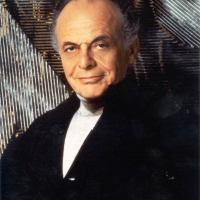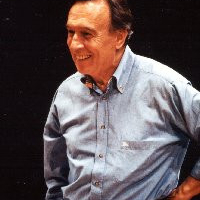
Claudio Abbado

Classical
Orchestral
Chamber Music
 Viberate Rank: 26104
 Viberate Rank: 26104
 Monthly ListenersFollowers
 Subscribers
 Followers
 Followers
 FansTop Spotify Songs
| Track | 7-Day Streams | |
|---|---|---|
1 | 258.60K | |
2 | 246.39K | |
3 | 99.51K | |
4 | 57.30K | |
5 | 49.19K |
Top YouTube VideosMonthly ListenersFeatured in Playlists| Playlist | Followers | |
|---|---|---|
1 |  Classical Essentials Spotify | 3.82M |
2 |  Dark Academia Classical Spotify | 1.00M |
3 |  Best Classical Music Peaceful Classics | 857.56K |
4 |  Epic Classical Spotify | 705.92K |
5 |  Opera Classics Spotify | 605.42K |
Audience| City | Monthly Listeners | |
|---|---|---|
1 |  | 38.66K |
2 |  | 35.10K |
3 |  | 29.76K |
4 |  | 26.36K |
5 |  | 25.71K |
See full performance history, audience data, playlist activity, rankings, comparisons, and more in Viberate music analytics. Start with a free trial, then continue with a paid plan.
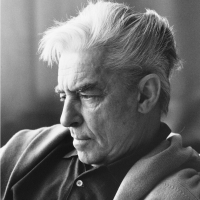
Claudio Abbado’s Spotify BioOne of the top conductors of the 20th century, Claudio Abbado left an enormous recording catalog covering a wide range of composers from the Classical era to the early modern period. He was chief conductor and artistic director of the Berlin Philharmonic Orchestra from 1989 to 2002.
Abbado was born in Milan, Italy, on June 26, 1933, into an old family that traced its roots to Moorish-era Spain. His father, Michelangelo Abbado, was a prominent violinist and a professor at the Giuseppe Verdi Conservatory, and his mother, Maria Carmela Savagnone, was a skilled pianist. Abbado and his brother Marcello, who also became a pianist and composer, had their first lessons from their father. Their careers were interrupted by the Nazi occupation of Milan during World War II; Abbado's mother was arrested for giving refuge to a Jewish child, and the young Claudio became a confirmed anti-fascist who scrawled "Viva Bartók" on a wall and triggered an unsuccessful manhunt. He enthusiastically attended… performances at Milan's La Scala opera house and, when he could, orchestral rehearsals led by the likes of Arturo Toscanini and Wilhelm Furtwängler.
Abbado went on to the Milan Conservatory, graduating in 1955 as a pianist. He also studied conducting with Antonio Votto. He then moved to Vienna, studying piano with Friedrich Gulda and conducting with Hans Swarowsky at the Vienna Academy of Music. He and his classmate Zubin Mehta joined the school's chorus so that they could observe the conducting technique of such legends as Bruno Walter and Herbert von Karajan. After more classes at the Chigiana Academy in Siena, Italy, he made his debut as a conductor in Trieste, leading a performance of Prokofiev's Love for Three Oranges. In the summer of 1958, Abbado had a major breakthrough when he won the Koussevitzky Conducting Competition at the Tanglewood Festival in Massachusetts. That led to various European conducting engagements and, in 1960, to a conducting debut at La Scala.
Advancement in the Western hemisphere came in 1963 when Abbado was awarded the Dmitri Mitropoulos Prize. That came with the chance to conduct the New York Philharmonic for five months. In 1965, Abbado conducted the Vienna Philharmonic Orchestra for the first time at Austria's Salzburg Festival. In the late '60s, he conducted several productions at La Scala, and in 1971, he was named the company's music director. He raised the opera orchestra's standards and formed it into an independent Orchestra della Scala, which often performed contemporary works. Abbado also became principal conductor of the Vienna Philharmonic in 1971, and he also began to appear frequently with the London Symphony Orchestra, becoming its principal conductor in 1979 and later its music director. His recording career stretched far back into the LP era; with the London Symphony, he made a notable early recording in 1972 of Rossini's opera La Cenerentola. Abbado also found time to conduct the European Community Youth Orchestra, the Chamber Orchestra of Europe, and the Gustav Mahler Youth Chamber Orchestra, and he mentored many young musicians.
Abbado served as principal guest conductor of the Chicago Symphony Orchestra from 1982 to 1986. He was then appointed music director of the Vienna State Opera, and he also held the post of general music director for the city of Vienna. In 1988, he established the Wien Modern music festival, which flourished and now encompasses other media in addition to music. In 1989, Abbado succeeded von Karajan as music director of the Berlin Philharmonic, remaining in that post until 2002. He gave up his Vienna State Opera post in 1991 but remained active in Vienna. Abbado made recordings with all the major orchestras with which he was associated, and he was prolific even by the standards of the 20th century classical recording golden age. After his death, reissues of his recordings continued to appear, and by the early 2020s, his catalog comprised well over 500 items. Deeply thoughtful in his approach, Abbado was an expert in a wide variety of music, from Mozart to Iannis Xenakis. He often conducted from memory. Abbado cut back his pace after a bout with cancer in 2000 but continued to perform and record, often leading youth orchestras. He died in Bologna, Italy, on January 20, 2014. ~ James Manheim, Rovi
Viberate is a music analytics platform built for A&Rs, artist managers, labels, booking agents, marketers, and artists.
It helps music professionals track artist growth, analyze audience data, monitor playlist activity, compare artists, follow song performance, and identify opportunities across the music market.
Public artist pages provide a free preview of selected artist data. Paid plans provide access to deeper analytics, historical data, charts, comparisons, playlist tools, exports, alerts, reports, and additional professional features.
Yes. Public Viberate artist pages provide selected artist analytics and music data for free.
Viberate also offers a 7-day free trial of the full platform. A credit card is required to start the trial. The trial includes access to the complete product so users can test deeper artist analytics, historical views, playlist insights, comparisons, charts, exports, alerts, and reporting features before choosing a paid plan.
Viberate provides artist analytics across streaming, playlists, social media, video, radio airplay, songs, and audience markets.
Users can analyze Spotify performance, Spotify and Apple Music playlists, YouTube activity, TikTok and Instagram growth, radio spins, song performance, audience locations, demographics, rankings, and overall artist momentum.
Artist profiles also connect to music charts, similar artists, and comparison tools, helping users benchmark performance and evaluate artists in context.
Viberate updates key artist and track data daily.
For followed artists and tracks, selected data is refreshed multiple times per day. This helps teams monitor playlist changes, streaming movement, audience growth, releases, and campaign performance with more current data.
Update frequency can vary depending on the metric and data source.
Yes. Viberate lets users compare up to five artists side by side across streaming, social media, audience, and engagement metrics.
Users can compare fanbase growth, audience demographics, locations, Spotify performance, social metrics, and other artist data over selected time periods.
Artist comparison can be used for A&R scouting, benchmarking, booking decisions, campaign planning, and evaluating artists with similar audiences or market positions.