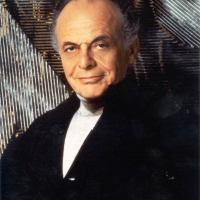
Lorin Maazel

Classical
Opera
Chamber Music
 Viberate Rank: 35669
 Viberate Rank: 35669
 Monthly ListenersFollowers
 Subscribers
 Followers
 Followers
 FansTop Spotify Songs
| Track | 7-Day Streams | |
|---|---|---|
1 | 164.19K | |
2 | 78.28K | |
3 | 70.17K | |
4 | 17.32K | |
5 | 12.65K |
Top YouTube VideosMonthly ListenersFeatured in Playlists| Playlist | Followers | |
|---|---|---|
1 |  Best Classical Music Peaceful Classics | 857.56K |
2 |  Opera Classics Spotify | 605.42K |
3 |  Dramatic Classical Spotify | 521.82K |
4 |  Classical Ballet Spotify | 354.76K |
5 |  This Is Pavarotti Spotify | 238.34K |
Audience| City | Monthly Listeners | |
|---|---|---|
1 |  | 12.62K |
2 |  | 11.99K |
3 |  | 9.37K |
4 |  | 9.18K |
5 |  | 9.11K |
See full performance history, audience data, playlist activity, rankings, comparisons, and more in Viberate music analytics. Start with a free trial, then continue with a paid plan.
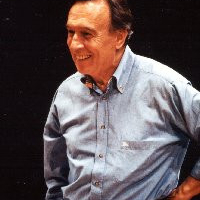
Lorin Maazel’s Spotify BioBorn to American parents in Neuilly, France, conductor Lorin Maazel displayed musical maturity at an early age. Educated in the United States, he studied conducting with Vladimir Bakaleinikov, as well as violin and piano in Pittsburgh. Maazel's conducting career was underway by the tender age of seven, when the legendary Arturo Toscanini invited him to lead the NBC Orchestra in New York. Subsequently, young Maazel directed a series of New York Philharmonic performances at Lewisohn Stadium. In 1939, he conducted the Interlochen Orchestra at the World's Fair in New York, and the Los Angeles Philharmonic at the Hollywood Bowl, sharing the podium with Leopold Stokowski. Maazel's Cleveland Orchestra debut was in 1943, beginning what would become a historic relationship. In 1946, he enrolled in the languages, mathematics, and philosophy departments at the University of Pittsburgh. Concurrently, Maazel was a member of the Pittsburgh Symphony's violin section. In 1951, Maazel traveled to Italy… as a Fulbright Scholar to the study music of the Baroque period, and enjoyed success conducting many leading European orchestras.
In 1972, the celebrated Cleveland Orchestra appointed Maazel its fifth music director. He remained in this capacity for a decade. Afterwrd, Maazel served as music director of several prestigious orchestras, including the Deutsch Oper Berlin, Berlin Radio Symphony, and Orchestre National de France, in addition to serving as principal guest conductor of the Philharmonia Orchestra in London. He was the conductor for the Pittsburgh Symphony, and the Bavarian Radio Symphony since 1988 (to 1996), and 1993 (to 2002) respectively. Between 2002 and 2009, he led the New York Philharmonic; the Orquestra de la Comunitat Valenciana from 2006-2011; and from 2004, Arturo Toscanini Philharmonic. His last appointment began in 2011 as chief conductor of the Munich Philharmonic. Maazel held the distinction of being not only the youngest to ever conduct at Bayreuth, but the first American. In fact, when he conducted Wagner's Ring at Bayreuth, Maazel became the first non-German to do so. The maestro conducted virtually all of the world's leading orchestras, including the Chicago Symphony, Boston Symphony, and more. He had vast and impressive experience directing opera, appearing at such prestigious houses as the Salzbug, Lucerne, Paris, and Metropolitan operas. He also conducted at La Scala and Covent Garden, as well as serving as artistic director (and general manager) of the Vienna State Opera from 1982-1984.
Maazel received numerous awards and distinctions, including the Comande's Cross of Merit of the Federal Republic (Germany), Legion of Honor (France), Commander of the Lion (Finland), and was made an honorary member of the Israel Philharmonic in 1985. He received the Grand Prix du Disque award ten times, and had been given numerous honorary degrees from various universities. His popularity and influence were undeniable when the United Nations named him Ambassador of Goodwill.
Maazel championed the use of television and film, himself writing film adaptations for such landmark works as Gustav Holst's Planets, and Vivaldi's Four Seasons. He also wrote operatic film music for Mozart's Don Giovanni and Bizet's Carmen, directed by Joseph Losey and Francisco Rossi, respectively. For these efforts, Maazel was awarded several international prizes.
Throughout his career, Maazel recorded extensively, continuously adding to a discography that is highlighted by recordings of the complete symphonic output of Beethoven, Mahler, Rachmaninov, and Sibelius. In addition to an ever-flourishing conducting career, Maazel maintained his dedication to composition. The 1996 recording of his concertos for cello, flute, and violin, with Rostropovich, Galway, and the composer as soloists respectively, is indicative of Lorin Maazel's timeless devotion to musical creativity.
Viberate is a music analytics platform built for A&Rs, artist managers, labels, booking agents, marketers, and artists.
It helps music professionals track artist growth, analyze audience data, monitor playlist activity, compare artists, follow song performance, and identify opportunities across the music market.
Public artist pages provide a free preview of selected artist data. Paid plans provide access to deeper analytics, historical data, charts, comparisons, playlist tools, exports, alerts, reports, and additional professional features.
Yes. Public Viberate artist pages provide selected artist analytics and music data for free.
Viberate also offers a 7-day free trial of the full platform. A credit card is required to start the trial. The trial includes access to the complete product so users can test deeper artist analytics, historical views, playlist insights, comparisons, charts, exports, alerts, and reporting features before choosing a paid plan.
Viberate provides artist analytics across streaming, playlists, social media, video, radio airplay, songs, and audience markets.
Users can analyze Spotify performance, Spotify and Apple Music playlists, YouTube activity, TikTok and Instagram growth, radio spins, song performance, audience locations, demographics, rankings, and overall artist momentum.
Artist profiles also connect to music charts, similar artists, and comparison tools, helping users benchmark performance and evaluate artists in context.
Viberate updates key artist and track data daily.
For followed artists and tracks, selected data is refreshed multiple times per day. This helps teams monitor playlist changes, streaming movement, audience growth, releases, and campaign performance with more current data.
Update frequency can vary depending on the metric and data source.
Yes. Viberate lets users compare up to five artists side by side across streaming, social media, audience, and engagement metrics.
Users can compare fanbase growth, audience demographics, locations, Spotify performance, social metrics, and other artist data over selected time periods.
Artist comparison can be used for A&R scouting, benchmarking, booking decisions, campaign planning, and evaluating artists with similar audiences or market positions.