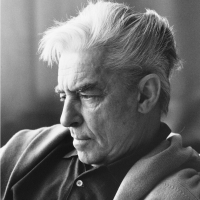
Herbert von Karajan

Classical
Orchestral
Chamber Music
 Viberate Rank: 9408
 Viberate Rank: 9408
 Monthly ListenersFollowers
 Subscribers
 Followers
 Followers
 FansTop Spotify Songs
| Track | 7-Day Streams | |
|---|---|---|
1 | 409.50K | |
2 | 200.51K | |
3 | 184.41K | |
4 | 100.86K | |
5 | 87.73K |
Top YouTube Videos| Video | 7-Day Views | |
|---|---|---|
1 | 2 |
Monthly ListenersFeatured in Playlists| Playlist | Followers | |
|---|---|---|
1 |  Classical Essentials Spotify | 3.82M |
2 |  Dark Academia Classical Spotify | 1.01M |
3 |  Best Classical Music Peaceful Classics | 857.63K |
4 |  This Is Beethoven Spotify | 787.34K |
5 |  Epic Classical Spotify | 705.99K |
Audience| City | Monthly Listeners | |
|---|---|---|
1 |  | 62.09K |
2 |  | 60.30K |
3 |  | 48.46K |
4 |  | 46.41K |
5 |  | 41.85K |
See full performance history, audience data, playlist activity, rankings, comparisons, and more in Viberate music analytics. Start with a free trial, then continue with a paid plan.
Herbert von Karajan’s Spotify BioHerbert von Karajan was among the most famous conductors of all time -- a man whose talent and autocratic bearing lifted him to a position of unprecedented dominance in European musical circles. He was born on April 5, 1908 in Salzburg, Austria, to a cultured Austrian family of Greek descent (their original name was Karajannis). His musical training began at the Mozarteum Conservatory in Salzburg where he studied piano with Franz Ledwenke, theory with Franz Zauer, and composition with Bernhard Paumgartner, who encouraged Karajan to pursue conducting. Karajan graduated from the conservatory in 1926, and continued his studies at the Vienna Academy of Music and Performing Arts, where he studied piano with Josef Hofman and conducting with Alexander Wunderer and Franz Schalk. Karajan's conducting debut came on January 22, 1929, with the Mozarteum Orchestra in Salzburg. Consequently, the young maestro directed a performance of Strauss' Salome at the Salzburg Festspielhaus, and was named… principal conductor of the Ulm Stadttheater, where he remained in that capacity until 1934.
The next fourteen years saw the young conductor's reputation grow rapidly. He was named music director of the Aachen Stadttheater (1934-1942), had his debut at the Vienna State Opera (1937), and accepted a position with the Deutsch Grammophon Gesellschaft (1938-1943). In 1939, Karajan was appointed conductor of the Berlin State Opera, and director of the Preussiche Staatskapelle Symphony concerts. In 1948, he was appointed for life, to the position of director of the Chorale Society at the Society of the Friends of Music, in Vienna.
In 1948, Herbert von Karajan also served at the Vienna Symphony Orchestra, the Philharmonia Orchestra, and La Scala, before succeeding Wilhelm Furtwängler as the music director of the Berlin Philharmonic Orchestra -- a union that would cement his reputation as one of the world's premier conductors. In 1955, Karajan brought that orchestra to the United States on the first of many international tours. The decade that followed saw Karajan accept several appointments, including those to the Salzburg Festival and the Vienna State Opera. In 1967, Karajan had his Metroplitan Opera debut, conducting a performance of Wagner's Die Walküre, and the same year, founded the Salzburg Easter Festival. In 1968, the Herbert von Karajan Foundation was founded to support the research of "conscious musical perception."
Herbert von Karajan was awarded the "Ring of the Province of Salzburg," Golden Grammophone, Arts Prize (Lucerne), Grand Prix International du Disque, Gold Medal of the Royal Philharmonic Society, German Golden Disc Prize, UNESCO International Music Prize, Olympia Prize of the Onassis Foundation, and multiple Grammophone awards, among others. He was elected to an honorary senate seat at the University of Salzburg. The maestro was also recognized with honorary degrees from a host of universities.
Karajan, along with Akio Morita and Norio Ohga (president and vice-president respectively, of Japanese Sony Group), unveiled and presented the Compact Disc Digital Audio System in 1981. In 1982, Karajan founded Telemondial S.A.M. with Uli Markle, in an effort to document the maestro's illustrious legacy on videotape and laser disc, and to help broaden the scope of "musical expression," through the use of modern technology. In 1984, Karajan recorded the complete Beethoven symphonies with film adaptation, made possible by his own Telemondial. In 1988, Deutsch Grammophone released a collection of one hundred "masterworks" recordings made by the conductor. Herbert von Karajan's discography is impressive to say the least, and will certainly endure in musical arenas, as some of the most valued interpretations of the repertoire available. Herbert von Karajan, often referred to as "general music director of Europe," died in Salzburg of heart failure July 16, 1989.
Viberate is a music analytics platform built for A&Rs, artist managers, labels, booking agents, marketers, and artists.
It helps music professionals track artist growth, analyze audience data, monitor playlist activity, compare artists, follow song performance, and identify opportunities across the music market.
Public artist pages provide a free preview of selected artist data. Paid plans provide access to deeper analytics, historical data, charts, comparisons, playlist tools, exports, alerts, reports, and additional professional features.
Yes. Public Viberate artist pages provide selected artist analytics and music data for free.
Viberate also offers a 7-day free trial of the full platform. A credit card is required to start the trial. The trial includes access to the complete product so users can test deeper artist analytics, historical views, playlist insights, comparisons, charts, exports, alerts, and reporting features before choosing a paid plan.
Viberate provides artist analytics across streaming, playlists, social media, video, radio airplay, songs, and audience markets.
Users can analyze Spotify performance, Spotify and Apple Music playlists, YouTube activity, TikTok and Instagram growth, radio spins, song performance, audience locations, demographics, rankings, and overall artist momentum.
Artist profiles also connect to music charts, similar artists, and comparison tools, helping users benchmark performance and evaluate artists in context.
Viberate updates key artist and track data daily.
For followed artists and tracks, selected data is refreshed multiple times per day. This helps teams monitor playlist changes, streaming movement, audience growth, releases, and campaign performance with more current data.
Update frequency can vary depending on the metric and data source.
Yes. Viberate lets users compare up to five artists side by side across streaming, social media, audience, and engagement metrics.
Users can compare fanbase growth, audience demographics, locations, Spotify performance, social metrics, and other artist data over selected time periods.
Artist comparison can be used for A&R scouting, benchmarking, booking decisions, campaign planning, and evaluating artists with similar audiences or market positions.