Ciro Monteiro

Latin
Other Latin Music
Samba
 Viberate Rank: 332457
 Viberate Rank: 332457
 Monthly ListenersFollowers
 Subscribers
 Followers
 Followers
 FansTop Spotify Songs
| Track | 7-Day Streams | |
|---|---|---|
1 | 1.44K | |
2 | 516 | |
3 | 458 | |
4 | 165 | |
5 | 145 |
Top YouTube VideosMonthly ListenersFeatured in Playlists| Playlist | Followers | |
|---|---|---|
1 |  Brasil Anos 50 Spotify | 89.72K |
2 | Brazilian Classics Felix van Gisbergen | 63.86K |
3 |  Elis Regina - As Melhores Silvia | 37.53K |
4 |  This Is Baden Powell Spotify | 9.54K |
5 | Vinícius de Moraes - As Melhores Mr. Tambourine Man | 7.47K |
Audience| City | Monthly Listeners | |
|---|---|---|
1 | | 757 |
2 | | 385 |
3 | | 233 |
4 | | 172 |
5 | | 171 |
See full performance history, audience data, playlist activity, rankings, comparisons, and more in Viberate music analytics. Start with a free trial, then continue with a paid plan.
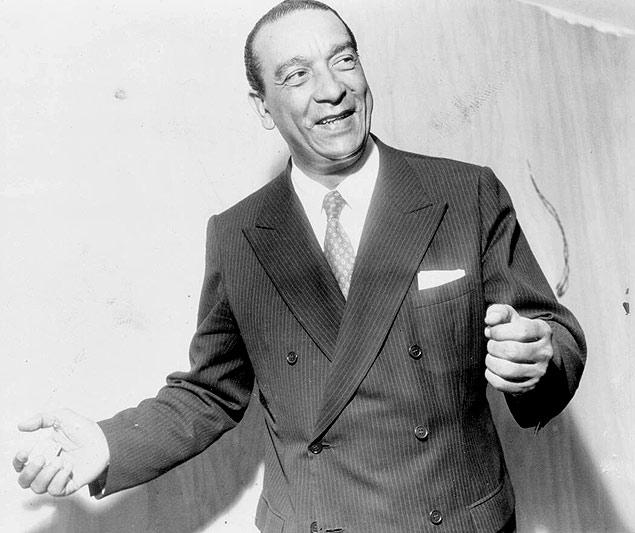
Ciro Monteiro’s Spotify BioCiro Monteiro was one of the top samba singers of all time. As an amateur singer, Monteiro was invited by Sílvio Caldas to replace Luís Barbosa in his duo in 1933. They performed at the Programa Casé. As Monteiro had to break his duo with his brother, the amateur Careno, he soon regretted the decision and asked Caldas to dismiss him. But in 1934, Monteiro returned to radio, this time to Mayrink Veiga. In 1936, he was promoted to the top cast of the house, together with Carmen Miranda, Francisco Alves, Noel Rosa, Aurora Miranda, Luís Barbosa, Patrício Teixeira, Mário Reis, and others. In 1937, Monteiro left Mayrink Veiga and became a free lancer, performing in all radio stations. He had his big hit then with "Se Acaso Você Chegasse" (Lupicínio Rodrigues/Felisberto Martins), soon recorded (Victor, 1938) with enormous success.
He returned to Mayrink Veiga and married Odete Amaral. In the same year, he became a successful composer, having Dias da Cruz as a regular partner. Their biggest hit… was "Madame Fulano de Tal." He had success in 1939 with "Mania da Falecida" (Ataulfo Alves/Wilson Batista), "Que Vida É Essa?" (Nássara/Roberto Martins); in 1940, with "Beijo Na Boca" (Ciro de Souza/Garcez), "Bonito Papel, Hem?" (Nássara/Dunga), "Tá Maluca?" (Wilson Batista/Germano Augusto); in 1941, with "O Bonde de São Januário" (Ataulfo Alves/Wilson Batista), which won the Carnival contest of that year, "Os Quindins de Laiá" (Ary Barroso), and "A Mulher Que Eu Gosto" (Wilson Batista/Ciro de Sousa); in 1942 with "Regra Do Bom Viver" (Estanislau Silva/Humberto Carvalho), "Fonte Do Amor" (Sinval Silva), "Botões De Laranjeira" (Pedro Caetano); and in 1944, "Falsa Baiana" (Geraldo Pereira), one of his biggest hits. He continued at Mayrink Veiga until 1949, when he departed for Rádio Nacional. In 1950, he returned to the previous radio station. In 1953, he had success with "Escurinho" (Geraldo Pereira). In 1956, he worked as an actor for the first and last time in his life, in the role of Apolo, the father in Orfeu da Conceição (Vinícius de Moraes), the play that would soon later be adapted to cinema, being filmed by Marcel Camus, enjoying international success. In 1961, he won all awards of the year with his LP Senhor Samba, in which he presented four originals. He returned to Mayrink Veiga and began to perform in television. He participated, among others, on Elizeth Cardoso's TV show Bossaudade, recorded and released as an LP by Copacabana. He recorded Senhor Samba, Vol. 2 and opened the show Telecoteco, Opus No. 1 with great success, having recorded its songs in a homonymous LP. In 1968, he recorded the LP Mudando de Conversa with Clementina de Jesus and Nora Ney, after the successful show with the same title. He recorded De Leve in 1971 with Jorge Veiga. His recordings with Toquinho and Vinícius de Moraes ("Que Martírio!," by Haroldo Lobo/Milton de Oliveira, and his "Você Errou") were released on the LP Toquinho, Vinícius e Amigos (1974). ~ Alvaro Neder, Rovi
Viberate is a music analytics platform built for A&Rs, artist managers, labels, booking agents, marketers, and artists.
It helps music professionals track artist growth, analyze audience data, monitor playlist activity, compare artists, follow song performance, and identify opportunities across the music market.
Public artist pages provide a free preview of selected artist data. Paid plans provide access to deeper analytics, historical data, charts, comparisons, playlist tools, exports, alerts, reports, and additional professional features.
Yes. Public Viberate artist pages provide selected artist analytics and music data for free.
Viberate also offers a 7-day free trial of the full platform. A credit card is required to start the trial. The trial includes access to the complete product so users can test deeper artist analytics, historical views, playlist insights, comparisons, charts, exports, alerts, and reporting features before choosing a paid plan.
Viberate provides artist analytics across streaming, playlists, social media, video, radio airplay, songs, and audience markets.
Users can analyze Spotify performance, Spotify and Apple Music playlists, YouTube activity, TikTok and Instagram growth, radio spins, song performance, audience locations, demographics, rankings, and overall artist momentum.
Artist profiles also connect to music charts, similar artists, and comparison tools, helping users benchmark performance and evaluate artists in context.
Viberate updates key artist and track data daily.
For followed artists and tracks, selected data is refreshed multiple times per day. This helps teams monitor playlist changes, streaming movement, audience growth, releases, and campaign performance with more current data.
Update frequency can vary depending on the metric and data source.
Yes. Viberate lets users compare up to five artists side by side across streaming, social media, audience, and engagement metrics.
Users can compare fanbase growth, audience demographics, locations, Spotify performance, social metrics, and other artist data over selected time periods.
Artist comparison can be used for A&R scouting, benchmarking, booking decisions, campaign planning, and evaluating artists with similar audiences or market positions.