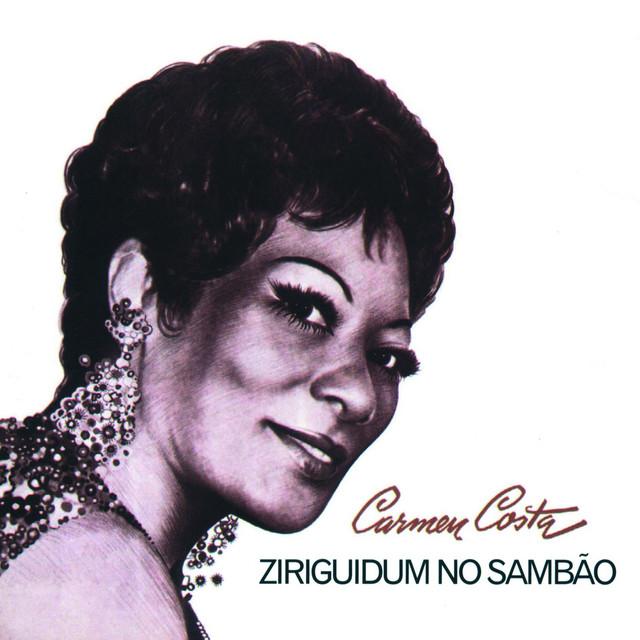
Carmen Costa

Rock
Pop Rock
Other Latin Music
 Viberate Rank: 250537
 Viberate Rank: 250537
 Monthly ListenersFollowers
 Subscribers
 Followers
 Followers
 FansTop Spotify Songs
| Track | 7-Day Streams | |
|---|---|---|
1 | 389 | |
2 | 342 | |
3 | 342 | |
4 | 327 | |
5 | 286 |
Top YouTube VideosMonthly ListenersFeatured in Playlists| Playlist | Followers | |
|---|---|---|
1 |  Brasil Anos 50 Spotify | 89.72K |
2 |  Seguindo o Bloquinho Spotify | 73.55K |
3 |  Clássicos do Carnaval Brasileiro Jaña Alves | 42.66K |
4 | Marchinhas de Carnaval "Fábrica das Festas SJC (12)3346-1468" lucycora | 13.88K |
5 | Marchas de carnaval nvitulano | 5.69K |
Audience| City | Monthly Listeners | |
|---|---|---|
1 |  | 367 |
2 | | 281 |
3 | | 137 |
4 | | 91 |
5 | | 75 |
See full performance history, audience data, playlist activity, rankings, comparisons, and more in Viberate music analytics. Start with a free trial, then continue with a paid plan.
Carmen Costa’s Spotify BioSuccessful interpreter of carnival marchinhas and other genres, Carmen Costa also participated in several films and in the Bossa Nova Festival in Carnegie Hall in 1962.
Around 1935 she moved to Rio de Janeiro where she started to participate in novice shows in several radio stations. In 1938 she formed a duo with the composer Henricão, recording the hits "Onde Está o Dinheiro" (Henricão), "Dance Mais Um Bocado" (Henricão/Príncipe Pretinho), and "Samba, Meu Nego" (Buci Moreira/Miguel Baúso) with him. Her first solo recording (in 1942) was the classic "Está Chegando a Hora" (version by Henricão and Rubens Campos for "Cielito Lindo"). She also had other hits in the next year with "Carmelito" (Henricão's version for "Caminito") and "Chamego" (Luiz Gonzaga/Miguel Lima). In 1945, she moved to the U.S. and performed two years later at the Triboro Theater in New York. Costa also performed in Venezuela and Colombia. Returning to Brazil, she had one of her biggest hits in 1952, the march "Cachaça… Não É Água" (Mirabeau/Héber Lobato/Lúcio de Castro). Other hits of that period were "Eu Sou a Outra," "Quase," "Obsessão," and "Jarro da Saudade." In 1964 she toured the U.S. with Sivuca. She continued to perform intensively in several genres, including sacred music (with arrangements by Paulo Moura) and samba. Costa also starred in the show Se Você Jurar with Ismael Silva in 1973. ~ Alvaro Neder, Rovi
Viberate is a music analytics platform built for A&Rs, artist managers, labels, booking agents, marketers, and artists.
It helps music professionals track artist growth, analyze audience data, monitor playlist activity, compare artists, follow song performance, and identify opportunities across the music market.
Public artist pages provide a free preview of selected artist data. Paid plans provide access to deeper analytics, historical data, charts, comparisons, playlist tools, exports, alerts, reports, and additional professional features.
Yes. Public Viberate artist pages provide selected artist analytics and music data for free.
Viberate also offers a 7-day free trial of the full platform. A credit card is required to start the trial. The trial includes access to the complete product so users can test deeper artist analytics, historical views, playlist insights, comparisons, charts, exports, alerts, and reporting features before choosing a paid plan.
Viberate provides artist analytics across streaming, playlists, social media, video, radio airplay, songs, and audience markets.
Users can analyze Spotify performance, Spotify and Apple Music playlists, YouTube activity, TikTok and Instagram growth, radio spins, song performance, audience locations, demographics, rankings, and overall artist momentum.
Artist profiles also connect to music charts, similar artists, and comparison tools, helping users benchmark performance and evaluate artists in context.
Viberate updates key artist and track data daily.
For followed artists and tracks, selected data is refreshed multiple times per day. This helps teams monitor playlist changes, streaming movement, audience growth, releases, and campaign performance with more current data.
Update frequency can vary depending on the metric and data source.
Yes. Viberate lets users compare up to five artists side by side across streaming, social media, audience, and engagement metrics.
Users can compare fanbase growth, audience demographics, locations, Spotify performance, social metrics, and other artist data over selected time periods.
Artist comparison can be used for A&R scouting, benchmarking, booking decisions, campaign planning, and evaluating artists with similar audiences or market positions.