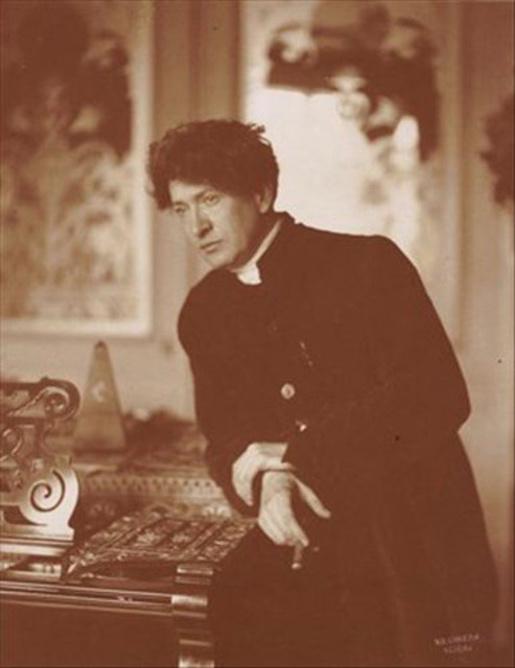
Ferruccio Busoni

Classical
Classical Crossover
 Viberate Rank: 171975
 Viberate Rank: 171975
 Monthly ListenersFollowers
 Subscribers
 Followers
 Followers
 FansTop Spotify Songs
| Track | 7-Day Streams | |
|---|---|---|
1 | 22.98K | |
2 | 13.14K | |
3 | 5.28K | |
4 | 5.19K | |
5 | 4.21K |
Top YouTube VideosMonthly ListenersFeatured in Playlists| Playlist | Followers | |
|---|---|---|
1 |  Classical Moments in Movies Spotify | 445.76K |
2 |  Classical Piano Spotify | 352.11K |
3 |  Piano Classics 🎹 relaxing piano music Sony Classical & Jazz Sweden | 331.93K |
4 |  Sad Classical Spotify | 278.03K |
5 |  Classical Study Music for Focus 🎻🎶 Prime Feelings | 191.75K |
Audience| City | Monthly Listeners | |
|---|---|---|
1 | | 1.66K |
2 |  | 1.47K |
3 |  | 1.20K |
4 |  | 1.19K |
5 |  | 1.17K |
See full performance history, audience data, playlist activity, rankings, comparisons, and more in Viberate music analytics. Start with a free trial, then continue with a paid plan.
Ferruccio Busoni’s Spotify BioItalo-German composer Ferruccio Busoni was a titanic piano virtuoso and an architect of European modernism. Best known for his transcriptions of J.S. Bach and for his Piano Concerto, Fantasia Contrappuntistica, and opera Doktor Faust, Busoni revolutionized piano technique and opened up new harmonic concepts within boundaries of functional harmony. His idea of junge klassizität ("renewed classicality") served as a building block for neo-classicism, and his book remains influential. Busoni led a Berlin-based master class, training composers and pianists alike.
Busoni was the son of an Italian clarinet virtuoso who was a harsh and demanding pedagogue. Under the thumb of his father, he developed a virtuoso keyboard technique that is, in itself, the stuff of legend. He began composing early, adding opus numbers to his works from the beginning. Reaching Opus 40 at age 17, Busoni decided go backward to number 31 and start over, causing no end of grief to scholars who attempted to edit his… works later. From an early age, he pursued a serious interest in the music of J.S. Bach, Mozart, Beethoven, and Liszt. Although Busoni's reputation as a virtuoso of the first rank was established in Europe by the end of the 1880s, he first made his mark as an editor of Bach's keyboard music. While today these editions are regarded as among the most intrusive and heavily marked Bach scores ever made, Busoni's marginal remarks about Bach's thought processes and the analytic value of these comments influenced Bach scholars and composers for generations.
In 1896, Busoni found his mature compositional voice in the Violin Sonata No. 2, Op. 36b, which takes a theme of Bach and submits it to a complex series of variations. In 1904, Busoni followed that with his huge Piano Concerto. Cast in five movements, it runs 90 minutes and contains parts for a chorus. In 1907, he published a series of writings as Sketch for a New Esthetic of Music, which proposes a wide variety of new compositional techniques then relatively uninvestigated in Western music, such as microtonal scales and electronics. By 1912, Busoni had composed his first entirely non-key-centered composition, the Sonatina seconda. The basis for his definitive style is to be found here; it is neither wholly tonal nor completely atonal, but is placed in a sort of harmonic netherworld in between. In the years left to him, Busoni composed four operas, Die Brautwahl (1912), Arlecchino (1915), Turandot (1917), and Doktor Faust (1924). His major keyboard work is the Fantasia Contrappuntistica (1911-1921), a piece that concludes with a massive fugue built out of the unfinished Contrapunctus XXIV of Bach's Die Kunst der Fuge.
Busoni also conducted master classes in composition and taught piano. Among his composition students, Kurt Weill made perhaps the most masterly use of Busoni's Apollonian approach to opera and his quirky sense of harmony. Another Busoni pupil, Otto Luening, helped pioneer the use of electronics in music. As a piano teacher, Busoni also started off an international school of super-virtuosos. Claudio Arrau and Egon Petri are good examples of what Busoni wrought in terms of pianists. As to Busoni's own playing, there are some phonograph records of him made in 1919 and an enormous number of piano rolls. The records only hint at what his playing might have sounded like, but some of the better rolls offer a more generous sample of his artistry at the keyboard. After his death, he was regarded as a great piano virtuoso whose own music was seemingly incomprehensible. Busoni's thinking would have a more decisive impact on later composers, such as John Cage and Morton Feldman, and in the early '80s, his music experienced a small-scale revival of interest. ~ Uncle Dave Lewis, Rovi
Viberate is a music analytics platform built for A&Rs, artist managers, labels, booking agents, marketers, and artists.
It helps music professionals track artist growth, analyze audience data, monitor playlist activity, compare artists, follow song performance, and identify opportunities across the music market.
Public artist pages provide a free preview of selected artist data. Paid plans provide access to deeper analytics, historical data, charts, comparisons, playlist tools, exports, alerts, reports, and additional professional features.
Yes. Public Viberate artist pages provide selected artist analytics and music data for free.
Viberate also offers a 7-day free trial of the full platform. A credit card is required to start the trial. The trial includes access to the complete product so users can test deeper artist analytics, historical views, playlist insights, comparisons, charts, exports, alerts, and reporting features before choosing a paid plan.
Viberate provides artist analytics across streaming, playlists, social media, video, radio airplay, songs, and audience markets.
Users can analyze Spotify performance, Spotify and Apple Music playlists, YouTube activity, TikTok and Instagram growth, radio spins, song performance, audience locations, demographics, rankings, and overall artist momentum.
Artist profiles also connect to music charts, similar artists, and comparison tools, helping users benchmark performance and evaluate artists in context.
Viberate updates key artist and track data daily.
For followed artists and tracks, selected data is refreshed multiple times per day. This helps teams monitor playlist changes, streaming movement, audience growth, releases, and campaign performance with more current data.
Update frequency can vary depending on the metric and data source.
Yes. Viberate lets users compare up to five artists side by side across streaming, social media, audience, and engagement metrics.
Users can compare fanbase growth, audience demographics, locations, Spotify performance, social metrics, and other artist data over selected time periods.
Artist comparison can be used for A&R scouting, benchmarking, booking decisions, campaign planning, and evaluating artists with similar audiences or market positions.