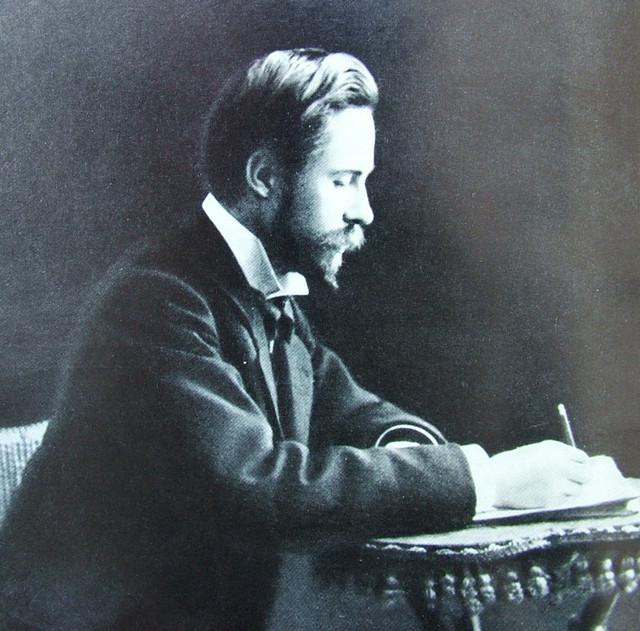
Alexander Scriabin

Classical
Orchestral
Chamber Music
 Viberate Rank: 53821
 Viberate Rank: 53821
 Monthly ListenersFollowers
 Subscribers
 Followers
 Followers
 FansTop Spotify Songs
| Track | 7-Day Streams | |
|---|---|---|
1 | 69.13K | |
2 | 51.86K | |
3 | 14.64K | |
4 | 12.63K | |
5 | 8.56K |
Top YouTube VideosMonthly ListenersFeatured in Playlists| Playlist | Followers | |
|---|---|---|
1 |  Calming Classical Spotify | 1.35M |
2 |  Classical Bangers 🎹🎻 Classical Bangers | 1.25M |
3 |  Best Classical Music Peaceful Classics | 857.62K |
4 |  Classical Piano Spotify | 352.16K |
5 |  Classical Music bangers 🔥🔥 Carlijn | 241.23K |
Audience| City | Monthly Listeners | |
|---|---|---|
1 |  | 9.67K |
2 |  | 6.43K |
3 |  | 5.02K |
4 | | 4.85K |
5 |  | 4.68K |
See full performance history, audience data, playlist activity, rankings, comparisons, and more in Viberate music analytics. Start with a free trial, then continue with a paid plan.
Alexander Scriabin’s Spotify BioMystic, visionary, virtuoso, and composer, Scriabin dedicated his life to creating musical works which would, as he believed, open the portals of the spiritual world. Scriabin took piano lessons as a child, joining, in 1884, Nikolay Zverov's class, where Rachmaninov was a fellow student. From 1888 to 1892, Scriabin studied at the Moscow Conservatory, where his teachers included Arensky, Taneyev, and Safonov. Although Scriabin's hand could not easily stretch beyond an octave, he developed into a prodigious pianist, launching an international concert career in 1894. Scriabin started composing during his Conservatory years. Mostly inspired by Chopin, his early works include nocturnes, mazurkas, preludes, and etudes for piano. Typical examples of Romantic music for the piano, these works nevertheless reveal the composer's strong individuality. Toward the end of the century, Scriabin started writing orchestral works, earning a solid reputation as a composer, and obtaining a professorship at… the Moscow Conservatory in 1898. In 1903, however, Scriabin abandoned his wife and their four children and embarked on a European journey with a young admirer, Tatyana Schloezer. During his sojourn in Western Europe, which lasted six years, Scriabin started developing an original, highly personal musical idiom, experimenting with new harmonic structures and searching for new sonorities. Among the works composed during this time was the Divine Poem.
In 1905, Scriabin discovered the theosophical teachings of Helena Petrovna Blavatsky, which became the intellectual foundation of his musical and philosophical efforts. In true Romantic tradition, he sought to situate his work as a composer in the wider spiritual and intellectual context of his age. Previously influenced by Nietzsche's ideas about the advent of a superhuman being, Scriabin embraced theosophy as an intellectual framework for his profound feelings about humankind's quest for God. Works from this period, exemplified by the Poem of Ecstasy (1908) and Prometheus (1910), reflect Scriabin's conception of music as a bridge to mystical ecstasy. While the ideas underlying his works may seem far-fetched, Scriabin's musical language included some fascinating, and very tangible, innovations, such as chords based on fourths and unexpected chromatic effects. Lacking an inner forward-moving force, Scriabin's later works nevertheless fascinate the listener by harmonic transformations which aim to reflect certain undefinable aspects of human consciousness. In addition, the composer, who strongly believed in the synaesthetic nature of art, experimented with sounds and colors, indicating, for example, lighting specification for the performance of particular works. Indeed, Scriabin's interest in color was hardly academic, considering that , as an orchestrator, he exploited the full potential of orchestral color. While Scriabin never quite crossed the threshold to atonality, his music nevertheless replaced the traditional concept of tonality by an intricate system of chords, some of which (e.g., the "mystic chord": C-F sharp-B flat-E-A-D) had an esoteric meaning. Scriabin's gradual move into realms beyond traditional tonality can be clearly heard in his ten piano sonatas; the last five, composed during 1912-1913, are without key signatures and certainly contain atonal moments. In 1915, Scriabin died in of septicemia caused by a carbuncle on his lip. Among his unfinished project was Mysterium, a grandiose religious synthesis of all arts which would herald the birth of a new world.
Viberate is a music analytics platform built for A&Rs, artist managers, labels, booking agents, marketers, and artists.
It helps music professionals track artist growth, analyze audience data, monitor playlist activity, compare artists, follow song performance, and identify opportunities across the music market.
Public artist pages provide a free preview of selected artist data. Paid plans provide access to deeper analytics, historical data, charts, comparisons, playlist tools, exports, alerts, reports, and additional professional features.
Yes. Public Viberate artist pages provide selected artist analytics and music data for free.
Viberate also offers a 7-day free trial of the full platform. A credit card is required to start the trial. The trial includes access to the complete product so users can test deeper artist analytics, historical views, playlist insights, comparisons, charts, exports, alerts, and reporting features before choosing a paid plan.
Viberate provides artist analytics across streaming, playlists, social media, video, radio airplay, songs, and audience markets.
Users can analyze Spotify performance, Spotify and Apple Music playlists, YouTube activity, TikTok and Instagram growth, radio spins, song performance, audience locations, demographics, rankings, and overall artist momentum.
Artist profiles also connect to music charts, similar artists, and comparison tools, helping users benchmark performance and evaluate artists in context.
Viberate updates key artist and track data daily.
For followed artists and tracks, selected data is refreshed multiple times per day. This helps teams monitor playlist changes, streaming movement, audience growth, releases, and campaign performance with more current data.
Update frequency can vary depending on the metric and data source.
Yes. Viberate lets users compare up to five artists side by side across streaming, social media, audience, and engagement metrics.
Users can compare fanbase growth, audience demographics, locations, Spotify performance, social metrics, and other artist data over selected time periods.
Artist comparison can be used for A&R scouting, benchmarking, booking decisions, campaign planning, and evaluating artists with similar audiences or market positions.