Charles McPherson

Jazz
Bebop
Free Jazz
 Viberate Rank: 197027
 Viberate Rank: 197027
 Monthly ListenersFollowers
 Subscribers
 Followers
 Followers
 FansTop Spotify Songs
| Track | 7-Day Streams | |
|---|---|---|
1 | 645 | |
2 | 348 | |
3 | 240 | |
4 | 193 | |
5 | 175 |
Top YouTube VideosMonthly ListenersFeatured in Playlists| Playlist | Followers | |
|---|---|---|
1 |  This Is Samara Joy Spotify | 32.19K |
2 |  Hard Bop Jazz Mark Noordzij | 20.45K |
3 |  Real Book - Jazz standards/classics Anders Garbom Bjørklund | 13.79K |
4 | Recommended performances from Ted Gioia's book 'The Jazz Standards' jhiggy58 | 8.57K |
5 |  Standards: The Great American Songbook Matt Entin | 7.35K |
Audience| City | Monthly Listeners | |
|---|---|---|
1 | | 81 |
2 | | 36 |
3 | | 27 |
4 | | 22 |
5 |  | 21 |
See full performance history, audience data, playlist activity, rankings, comparisons, and more in Viberate music analytics. Start with a free trial, then continue with a paid plan.
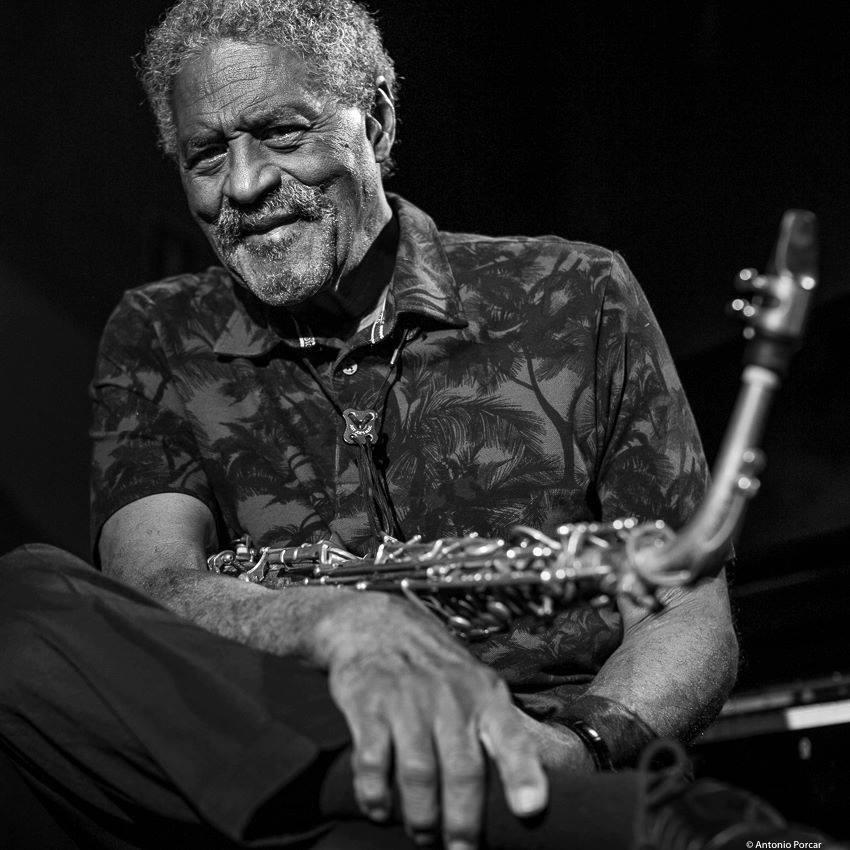
Charles McPherson’s Spotify BioAn esteemed alto saxophonist and torchbearer for the bebop tradition, Charles McPherson has built upon the work of Charlie Parker, carrying forth the modern jazz sound since the 1960s. He emerged from the vibrant Detroit scene of the '50s where he was mentored by pianist Barry Harris before moving to New York. There, he became an integral member of the Charles Mingus band, playing and recording with the bassist into the early '70s. As a leader, McPherson recorded a bevy of sessions from the '60s onward for Prestige, Mainstream, and Xanadu, including Bebop Revisited!, Today's Man, and New Horizons, all of which found him developing his deep, soulful, hard-swinging, and lyrical take on modern acoustic jazz. He eventually settled in San Diego and enjoyed a resurgence of interest in the '80s and '90s, buoyed in part by his contribution to the soundtrack of director Clint Eastwood's Charlie Parker biopic Bird, and with albums like Come Play with Me and Manhattan Nocturne. He has remained a… vital presence well into his eighties, releasing 2015's The Journey, 2020's Jazz Dance Suites, and 2024's Reverence.
Born in 1939 in Joplin, Missouri, McPherson moved with his family to Detroit when he was nine. It was there while in high school that he started playing music, first on trumpet and then alto saxophone, a choice he cemented after discovering Charlie Parker. While in Detroit he spent time studying with pianist and educator Barry Harris, a major influence who would continue to inspire McPherson throughout his career.
It was fellow Detroiter saxophonist Yusef Lateef who suggested McPherson to bassist Charles Mingus as a replacement for Eric Dolphy. McPherson made the move, and by the late '50s was playing with Mingus, whose band also featured another Detroit friend in trumpeter Lonnie Hillyer. While with Mingus, he garnered some critical plaudits for his work on albums like 1956's Pithecanthropus Erectus, 1960's Mysterious Blues, 1960's Mingus!, and 1961's Reincarnation of a Lovebird. Also during this period, he recorded with trumpeter Art Farmer, singer Eddie Jefferson, organist Don Patterson, and appeared on Eric Dolphy's Candid Dolphy.
As a leader, McPherson debuted in 1964 with Be-Bop Revisited!, followed by Con Alma, McPherson's Mood, and Horizons. All released on the Prestige label, the albums found him playing a mix of standards and originals, backed at various times by pianists Barry Harris and Cedar Walton, bassist Buster Williams, drummer Roy Brooks, guitarist Pat Martino, and others. He also held several day jobs during his New York years to help pay the bills, including working for the I.R.S. on tax returns.
He spent much of the '70s playing with Mingus while recording his own albums for Mainstream and Xanadu Records, including 1971's Charles McPherson with Barry Harris and Ron Carter, 1973's orchestral-tinged Today's Man with Harris and Billy Higgins, and 1978's New Horizons, a quartet date with Cecil McBee, Mickey Tucker, and Freddie Waits. There were also equally vital sessions with Charles Tolliver, Sam Jones, Red Rodney, and more.
In 1979, he moved to the West Coast, eventually settling in San Diego where he married and raised a family, including his daughter ballet dancer Camille McPherson. That same year, he released Free Bop!, featuring his son drummer Chuck McPherson, pianist Lou Levy, guitarist Peter Sprague, bassist Monty Budwig, and percussionist Kevin Jones.
Though somewhat overlooked until the late 80s, he deservedly made a comeback, headlining several successful European tours. He also played on part of the soundtrack to director Clint Eastwood's 1988 biopic of Charlie Parker, Bird. McPherson capitalized on this notoriety, releasing albums like 1984's The Prophet and 1988's Bluebird. He gained yet more acclaim in the '90s, releasing a string of well-received albums like 1994's First Flight Out, 1995's Come Play with Me, and 1998's Manhattan Nocturne.
His passion for Parker remained constant throughout his career, as evidenced by 2002's A Salute to Bird and 2005's A Tribute to Charlie Parker. In 2016, he was given the Don Redman Jazz Heritage award in recognition of his musicianship, humanity, and dignity. He returned to the studio for 2020's Charles McPherson's Jazz Dance Suites. In 2024, he made his Smoke Sessions debut with Reverence, which found him paying homage to his mentor, the late pianist Barry Harris. ~ Matt Collar, Rovi
Viberate is a music analytics platform built for A&Rs, artist managers, labels, booking agents, marketers, and artists.
It helps music professionals track artist growth, analyze audience data, monitor playlist activity, compare artists, follow song performance, and identify opportunities across the music market.
Public artist pages provide a free preview of selected artist data. Paid plans provide access to deeper analytics, historical data, charts, comparisons, playlist tools, exports, alerts, reports, and additional professional features.
Yes. Public Viberate artist pages provide selected artist analytics and music data for free.
Viberate also offers a 7-day free trial of the full platform. A credit card is required to start the trial. The trial includes access to the complete product so users can test deeper artist analytics, historical views, playlist insights, comparisons, charts, exports, alerts, and reporting features before choosing a paid plan.
Viberate provides artist analytics across streaming, playlists, social media, video, radio airplay, songs, and audience markets.
Users can analyze Spotify performance, Spotify and Apple Music playlists, YouTube activity, TikTok and Instagram growth, radio spins, song performance, audience locations, demographics, rankings, and overall artist momentum.
Artist profiles also connect to music charts, similar artists, and comparison tools, helping users benchmark performance and evaluate artists in context.
Viberate updates key artist and track data daily.
For followed artists and tracks, selected data is refreshed multiple times per day. This helps teams monitor playlist changes, streaming movement, audience growth, releases, and campaign performance with more current data.
Update frequency can vary depending on the metric and data source.
Yes. Viberate lets users compare up to five artists side by side across streaming, social media, audience, and engagement metrics.
Users can compare fanbase growth, audience demographics, locations, Spotify performance, social metrics, and other artist data over selected time periods.
Artist comparison can be used for A&R scouting, benchmarking, booking decisions, campaign planning, and evaluating artists with similar audiences or market positions.