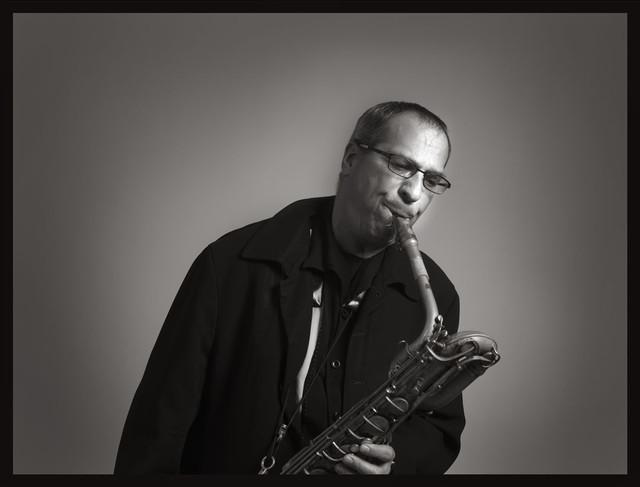
Gary Smulyan

Jazz
Free Jazz
Bebop
 Viberate Rank: 341525
 Viberate Rank: 341525
 Monthly ListenersFollowers
 Subscribers
 Followers
 Followers
 FansTop Spotify Songs
| Track | 7-Day Streams | |
|---|---|---|
1 | 302 | |
2 | 260 | |
3 | 203 | |
4 | 157 | |
5 | 84 |
Top YouTube VideosMonthly ListenersFeatured in Playlists| Playlist | Followers | |
|---|---|---|
1 |  BOSCH a fan made playlist with Harry Bosch Jazz inspired by the TV-Series and books. Jens Olsson | 19.74K |
2 | The Music of Harry Bosch harry.bosch | 16.03K |
3 |  Real Book - Jazz standards/classics Anders Garbom Bjørklund | 13.79K |
4 |  Complete Harry Bosch Jazz Playlist perrybucsdad | 10.17K |
5 | Radio Swiss Jazz michael8robinson | 8.70K |
Audience| City | Monthly Listeners | |
|---|---|---|
1 | | 47 |
2 |  | 25 |
3 | | 24 |
4 | | 23 |
5 |  | 20 |
See full performance history, audience data, playlist activity, rankings, comparisons, and more in Viberate music analytics. Start with a free trial, then continue with a paid plan.
Gary Smulyan’s Spotify BioBaritone saxophonist Gary Smulyan is an adept improviser with a big, warm sound and lithe, swinging style in the Pepper Adams tradition. Born in Bethpage, New York in 1956, Smulyan first started out on the alto saxophone as a teenager and gained early experience sitting in with such luminaries as saxophonist Lee Konitz, trumpeter Chet Baker, violinist Ray Nance, and others. After high school, he honed his skills studying at SUNY-Potsdam and Hofstra University before getting a call to join Woody Herman's Big Band playing the baritone sax chair. With no experience on the bari, Smulyan quickly purchased an instrument and hit the road. For much of the late '70s, he toured with Herman's band, playing alongside such luminaries as saxophonist Joe Lovano, bassist Marc Johnson, and drummer John Riley. Although he initially thought of himself as a die-hard altoist, during his years with Herman he developed a distinct sound on the baritone, and by the early '80s it had become his primary… instrument.
Moving to New York City in 1981, Smulyan quickly established himself as a reliable sideman, playing regularly with such ensembles as the Mel Lewis Jazz Orchestra, the Mingus Big Band, and the Smithsonian Jazz Masterworks Orchestra; associations that eventually led to his long-running membership in the Vanguard Jazz Orchestra. He has also played with a bevy of highly regarded solo performers including Dizzy Gillespie, Freddie Hubbard, Stan Getz, Chick Corea, Ray Charles, Tito Puente, B.B. King, and many more. Along with performing, Smulyan is a gifted educator -- a faculty member of Amherst College and the artistic director at the Berkshire Hills Music Academy in South Hadley, Massachusetts
As a leader, Smulyan made his debut in 1991 with The Lure of Beauty on Criss Cross, featuring pianist Mulgrew Miller and trombonist Jimmy Knepper. Another Criss Cross date, Homage, also appeared that year and featured pianist Tommy Flanagan. More well-received Criss Cross albums followed including 1993's Saxophone Mosaic with saxophonist Dick Oatts, 1996's With Strings, and 2000's Blue Suite, which showcased his brass ensemble featuring trumpeters Scott Wendholt and Greg Gisbert, French horn player John Clark, tubist Bob Stewart, and trombonist John Mosca. Also in 2000, he joined longtime associate Joe Lovano for 52nd Street Themes on Blue Note.
In 2003, Smulyan led the hard-swinging quintet date Real Deal with trumpeter Joe Magnarelli and pianist Mike LeDonne. Hidden Treasures, with bassist Christian McBride, followed in 2006. Three years later, he paid tribute to late vocalist Frankie Laine on High Noon: The Jazz Soul of Frankie Laine. He then paired again with LeDonne (this time on Hammond B-3), and guitarist Peter Bernstein for the soulful Smul's Paradise in 2012. The Italian-themed Bella Napoli with Sopranos-actor/singer Dominic Chianese appeared the following year. In 2017, Smulyan released the concert album Royalty at le Duc, which showcased his quartet live at Le Duc des Lombards in Paris. ~ Matt Collar, Rovi
Viberate is a music analytics platform built for A&Rs, artist managers, labels, booking agents, marketers, and artists.
It helps music professionals track artist growth, analyze audience data, monitor playlist activity, compare artists, follow song performance, and identify opportunities across the music market.
Public artist pages provide a free preview of selected artist data. Paid plans provide access to deeper analytics, historical data, charts, comparisons, playlist tools, exports, alerts, reports, and additional professional features.
Yes. Public Viberate artist pages provide selected artist analytics and music data for free.
Viberate also offers a 7-day free trial of the full platform. A credit card is required to start the trial. The trial includes access to the complete product so users can test deeper artist analytics, historical views, playlist insights, comparisons, charts, exports, alerts, and reporting features before choosing a paid plan.
Viberate provides artist analytics across streaming, playlists, social media, video, radio airplay, songs, and audience markets.
Users can analyze Spotify performance, Spotify and Apple Music playlists, YouTube activity, TikTok and Instagram growth, radio spins, song performance, audience locations, demographics, rankings, and overall artist momentum.
Artist profiles also connect to music charts, similar artists, and comparison tools, helping users benchmark performance and evaluate artists in context.
Viberate updates key artist and track data daily.
For followed artists and tracks, selected data is refreshed multiple times per day. This helps teams monitor playlist changes, streaming movement, audience growth, releases, and campaign performance with more current data.
Update frequency can vary depending on the metric and data source.
Yes. Viberate lets users compare up to five artists side by side across streaming, social media, audience, and engagement metrics.
Users can compare fanbase growth, audience demographics, locations, Spotify performance, social metrics, and other artist data over selected time periods.
Artist comparison can be used for A&R scouting, benchmarking, booking decisions, campaign planning, and evaluating artists with similar audiences or market positions.