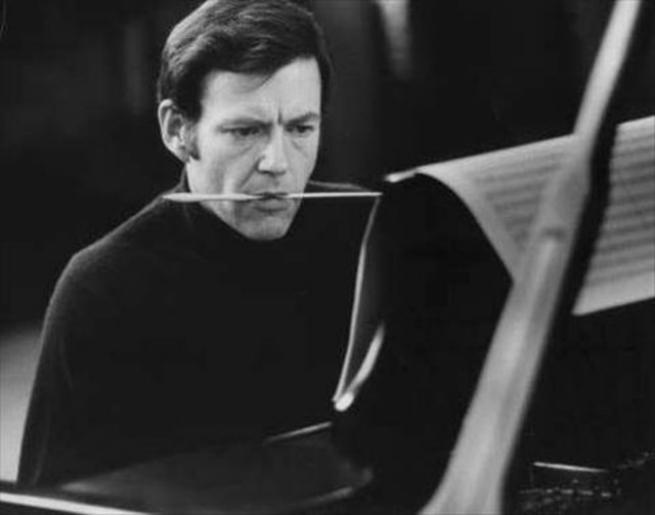
Carl Davis

Classical
Orchestral
Classical Crossover
 Viberate Rank: 75804
 Viberate Rank: 75804
 Monthly ListenersFollowers
 Subscribers
 Followers
 Followers
 FansTop Spotify Songs
| Track | 7-Day Streams | |
|---|---|---|
1 | 27.16K | |
2 | 13.03K | |
3 | 12.63K | |
4 | 11.32K | |
5 | 10.15K |
Top YouTube VideosMonthly ListenersFeatured in Playlists| Playlist | Followers | |
|---|---|---|
1 |  Energetic Classical Federico N. Aschieri | 55.39K |
2 | Orchestral Versions of Popular Songs JP Morin | 37.54K |
3 |  Filmmuziek Top 400 (2026) | NPO Klassiek NPO Klassiek | 32.38K |
4 |  Classical Movie Soundtracks Dan Debnam | 28.08K |
5 | RING MY BELL FREQUENCE vanilla_been | 26.43K |
Audience| City | Monthly Listeners | |
|---|---|---|
1 | | 7.20K |
2 |  | 2.79K |
3 | | 2.35K |
4 |  | 2.35K |
5 | | 2.30K |
See full performance history, audience data, playlist activity, rankings, comparisons, and more in Viberate music analytics. Start with a free trial, then continue with a paid plan.
Carl Davis’ Spotify BioAfter moving to England in the 1960s, American-born conductor/composer Carl Davis was a leading figure in both the concert hall and in film music, carving out a unique niche in each.
Born in New York City, Davis attended Bard College and later studied composition with Paul Nordoff, Hugo Kauder, and Per Nørgård. He served as a conductor with the New York City Opera and the Robert Shaw Chorale, and earned an award for his 1959 off-Broadway revue Diversions (written in collaboration with Steven Vinaver). He became active in England at the outset of the '60s with the Edinburgh Festival (where Diversions was performed in 1961) and this led to his being commissioned by producer Ned Sherrin to compose the score for the satiric television series That Was the Week That Was. His success led to further work on British television and, later, commissions from the Royal Shakespeare Company and the National Theatre. Davis first gained international recognition in 1973, when he was engaged to write the… score for Thames Television's landmark 26-hour documentary series The World at War, which was an immediate hit in the United States and was widely shown for decades after -- his grim, often-irony-laced scoring was among the most haunting ever heard in a television series.
As a film composer, Carl Davis worked on, most notably, The French Lieutenant's Woman, which won him a British Academy Award and an Ivor Novello Award. His most unusual film work, however, was the authorship of new scores for such renowned silent films as the European restoration of Abel Gance's Napoleon , Ben-Hur: A Story of the Christ, Phantom of the Opera, and The Thief of Bagdad. Davis scored more than 50 silent films, earning him the sobriquet "Mr. Silent Movie," and by 2005 Davis had scored all 12 of Charlie Chaplin's Mutual films, key early Chaplin shorts that Chaplin had not scored himself. Davis' score for Napoleon earned him the Chevalier des Arts et des Lettres from the French Ministry of Culture in 1983, and he had the privilege of returning to Napoleon when a new five-and-a-half hour-long restoration was unveiled in 2005. The U.S. premiere of the restored version was held in 2012, with Davis conducting the Oakland East Bay Symphony.
Beginning in the '70s, Davis was an active recording artist, principally as a conductor, most notably for EMI with a collection of film music by Sir William Walton and on the Royal Philharmonic Orchestra's imprint with a compilation of his own film music. In 1991, Davis assisted Paul McCartney in the composition of his Liverpool Oratorio, and subsequently led the Royal Liverpool Philharmonic's Summer Pops Concert series from 1993 to 2001. Davis also wrote concert works, including a symphony; a clarinet concerto; a fantasy for flute, strings, and harpsichord; and a programmatic work entitled A Circle of Stones. Ballet was a form in which Davis was particularly productive and his ballets include A Christmas Carol, A Simple Man, Alice in Wonderland, and The Picture of Dorian Gray. Davis' ballet of Cyrano de Bergerac appeared in the spring of 2007, followed by The Lady of the Camellias in 2008. Though American born, Davis was awarded an honorary CBE from the British government in 2006 for his contributions to music. He was 86 when he died on August 3, 2023. ~ TiVo Staff, Rovi
Viberate is a music analytics platform built for A&Rs, artist managers, labels, booking agents, marketers, and artists.
It helps music professionals track artist growth, analyze audience data, monitor playlist activity, compare artists, follow song performance, and identify opportunities across the music market.
Public artist pages provide a free preview of selected artist data. Paid plans provide access to deeper analytics, historical data, charts, comparisons, playlist tools, exports, alerts, reports, and additional professional features.
Yes. Public Viberate artist pages provide selected artist analytics and music data for free.
Viberate also offers a 7-day free trial of the full platform. A credit card is required to start the trial. The trial includes access to the complete product so users can test deeper artist analytics, historical views, playlist insights, comparisons, charts, exports, alerts, and reporting features before choosing a paid plan.
Viberate provides artist analytics across streaming, playlists, social media, video, radio airplay, songs, and audience markets.
Users can analyze Spotify performance, Spotify and Apple Music playlists, YouTube activity, TikTok and Instagram growth, radio spins, song performance, audience locations, demographics, rankings, and overall artist momentum.
Artist profiles also connect to music charts, similar artists, and comparison tools, helping users benchmark performance and evaluate artists in context.
Viberate updates key artist and track data daily.
For followed artists and tracks, selected data is refreshed multiple times per day. This helps teams monitor playlist changes, streaming movement, audience growth, releases, and campaign performance with more current data.
Update frequency can vary depending on the metric and data source.
Yes. Viberate lets users compare up to five artists side by side across streaming, social media, audience, and engagement metrics.
Users can compare fanbase growth, audience demographics, locations, Spotify performance, social metrics, and other artist data over selected time periods.
Artist comparison can be used for A&R scouting, benchmarking, booking decisions, campaign planning, and evaluating artists with similar audiences or market positions.