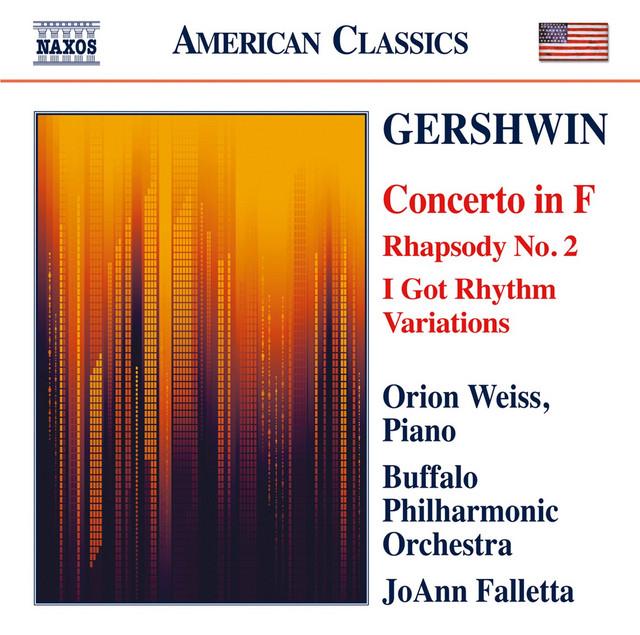
Buffalo Philharmonic Orchestra

Classical
Orchestral
 Viberate Rank: 161894
 Viberate Rank: 161894
 Monthly ListenersFollowers
 Subscribers
 Followers
 Followers
 FansTop Spotify SongsTop YouTube Videos
| Video | 7-Day Views | |
|---|---|---|
1 | 174 | |
2 | 57 | |
3 | 55 | |
4 | 45 | |
5 | 38 |
Monthly ListenersFeatured in Playlists| Playlist | Followers | |
|---|---|---|
1 |  This is Gershwin Spotify | 96.72K |
2 |  FOCUS BOOST unCLASSIFIED | 44.18K |
3 |  Year of Wonder : Classical Music for Every Day - Clemency Burton-Hill lilham | 16.11K |
4 |  NPR Classical NPR Music | 14.43K |
5 |  Classical for Productivity unCLASSIFIED | 10.17K |
Audience| City | Monthly Listeners | |
|---|---|---|
1 | | 462 |
2 |  | 446 |
3 | | 327 |
4 | | 324 |
5 |  | 275 |
See full performance history, audience data, playlist activity, rankings, comparisons, and more in Viberate music analytics. Start with a free trial, then continue with a paid plan.
Buffalo Philharmonic Orchestra’s Spotify BioThe Buffalo Philharmonic Orchestra's reputation has steadily grown since the 1960s, with a number of distinguished conductors at the helm. Including the appointment as music director of JoAnn Falletta, one of the first women to lead a major American orchestra, the group has had an unusually progressive profile, both in concert and on its many recordings.
The Buffalo Philharmonic was founded in late 1934 and gave its first concerts in a 1935-1936 season that also included youth events. The first conductor, Lajos Shuk, came to Buffalo from the New York Civic Symphony; he was succeeded in 1936 by Franco Autori, who remained in his post until 1945. Autori oversaw the opening in 1940 of the new Kleinhans Hall, a striking modern structure thought to have some of the best acoustics among American concert halls. William Steinberg, who went on to lead the Boston Symphony and the Pittsburgh Symphony, was music director from 1945 to 1952, and he was succeeded by Izler Solomon and Josef Krips (1954…-1963). Under Krips, the orchestra grew; it now numbers some 80 musicians.
The orchestra began to gain a national profile with the appointment in 1963 as music director of Lukas Foss, who was a contemporary composer as well as a conductor. Foss frequently programmed contemporary music in concert (the orchestra made four appearances at New York's Carnegie Hall during this period) and also made many recordings featuring new music. Foss was succeeded in 1971 by Michael Tilson Thomas, who also had a contemporary orientation; Julius Rudel (1978-1985) was an opera specialist. Since 1985, the orchestra has had only three conductors: Semyon Bychkov (1985-1989), Maximiano Valdés (1989-1998), and, since 1998, JoAnn Falletta. Falletta's tenure has been progressive not only because of her still-unusual status as a female conductor but also in her dedication to American repertory, evident in her many recordings with the orchestra. Those appeared on the Naxos label and also on the new label she established, Beau Fleuve, referring to Buffalo's scenic Niagara River. A Beau Fleuve Music & Arts Celebration was established in 2017. Under Falletta, the orchestra has appeared in New York, Florida, and Warsaw, Poland, and has attracted top-notch soloists, including cellist Yo-Yo Ma and violinists Joshua Bell and Midori. Falletta and the orchestra released the album Kodály: Háry János Suite; Summer Evening; Symphony in C major on Naxos in 2023. ~ James Manheim, Rovi
Viberate is a music analytics platform built for A&Rs, artist managers, labels, booking agents, marketers, and artists.
It helps music professionals track artist growth, analyze audience data, monitor playlist activity, compare artists, follow song performance, and identify opportunities across the music market.
Public artist pages provide a free preview of selected artist data. Paid plans provide access to deeper analytics, historical data, charts, comparisons, playlist tools, exports, alerts, reports, and additional professional features.
Yes. Public Viberate artist pages provide selected artist analytics and music data for free.
Viberate also offers a 7-day free trial of the full platform. A credit card is required to start the trial. The trial includes access to the complete product so users can test deeper artist analytics, historical views, playlist insights, comparisons, charts, exports, alerts, and reporting features before choosing a paid plan.
Viberate provides artist analytics across streaming, playlists, social media, video, radio airplay, songs, and audience markets.
Users can analyze Spotify performance, Spotify and Apple Music playlists, YouTube activity, TikTok and Instagram growth, radio spins, song performance, audience locations, demographics, rankings, and overall artist momentum.
Artist profiles also connect to music charts, similar artists, and comparison tools, helping users benchmark performance and evaluate artists in context.
Viberate updates key artist and track data daily.
For followed artists and tracks, selected data is refreshed multiple times per day. This helps teams monitor playlist changes, streaming movement, audience growth, releases, and campaign performance with more current data.
Update frequency can vary depending on the metric and data source.
Yes. Viberate lets users compare up to five artists side by side across streaming, social media, audience, and engagement metrics.
Users can compare fanbase growth, audience demographics, locations, Spotify performance, social metrics, and other artist data over selected time periods.
Artist comparison can be used for A&R scouting, benchmarking, booking decisions, campaign planning, and evaluating artists with similar audiences or market positions.