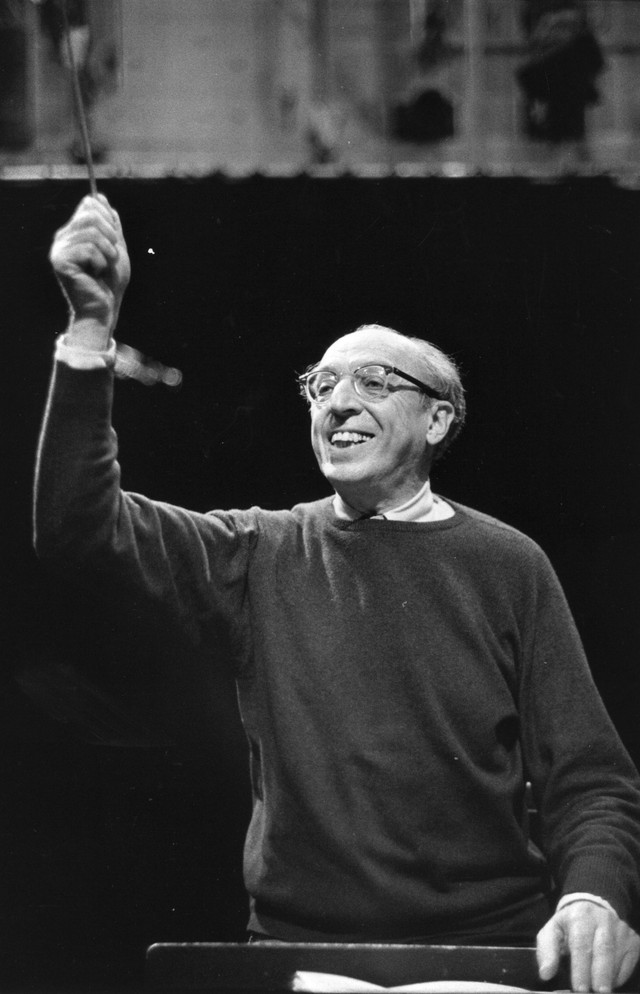
Aaron Copland

Classical
Classical Crossover
Chamber Music
 Viberate Rank: 74073
 Viberate Rank: 74073
 Monthly ListenersFollowers
 Subscribers
 Followers
 Followers
 FansTop Spotify Songs
| Track | 7-Day Streams | |
|---|---|---|
1 | 10.50K | |
2 | 8.04K | |
3 | 7.14K | |
4 | 5.75K | |
5 | 3.98K |
Top YouTube VideosMonthly ListenersFeatured in Playlists| Playlist | Followers | |
|---|---|---|
1 |  Classical Reading Spotify | 634.39K |
2 |  Classical Moments in Movies Spotify | 445.81K |
3 |  Classical Piano Essentials Pianoramix | 138.31K |
4 |  Focus Music - Work | Studying | Concentration Kroschi | 112.12K |
5 |  As Músicas Clássicas mais Conhecidas cris.flessak | 104.86K |
Audience| City | Monthly Listeners | |
|---|---|---|
1 |  | 5.76K |
2 |  | 4.15K |
3 | | 4.06K |
4 |  | 3.92K |
5 |  | 3.85K |
See full performance history, audience data, playlist activity, rankings, comparisons, and more in Viberate music analytics. Start with a free trial, then continue with a paid plan.
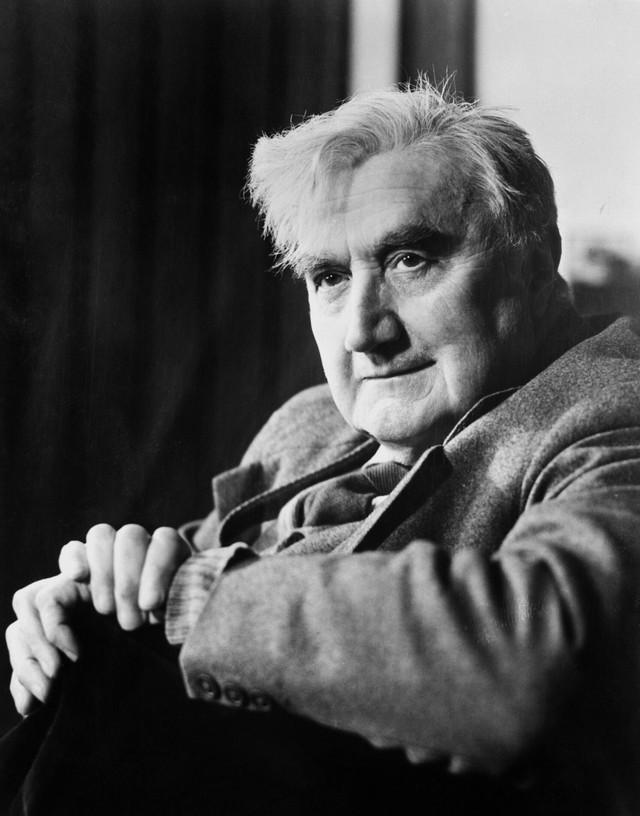
Aaron Copland’s Spotify BioFew figures in American music loom as large as Aaron Copland. As one of the first wave of literary and musical expatriates in Paris during the 1920s, Copland returned to the United States with the means to assume, for the next half-century, a central role in American music as composer, promoter, and educator. His sheer popularity and iconic status are such that his music has transcended the concert hall and entered the popular consciousness; it both accompanies solemn and joyous celebrations the world over (Fanfare for the Common Man) and punctuated the familiar words "Beef: It's What's for Dinner!" (Rodeo) for millions of television viewers.
Copland was the youngest of five children born to Harris and Sarah Copland, Lithuanian Jewish immigrants who owned a department store in Brooklyn. He did not take formal piano lessons until he was 13, by which time he had also begun writing small pieces. Instead of attending college, Copland studied theory and composition with Rubin Goldmark and… piano with Victor Wittgenstein and Clarence Adler, and attended as many concerts, operas, and ballets as possible. In 1921, he went to Fontainebleau, France, taking conducting and composition classes at the American Conservatory. Copland went on to study in Paris with Ricardo Viñes and Nadia Boulanger and spent the next three years soaking up all the European culture, both new and old, that he could. He learned to admire not only composers like Stravinsky, Milhaud, Fauré, and Mahler, but others such as author André Gide. Boulanger's performance of Copland's 1924 Organ Symphony with Koussevitzky was the beginning of a friendship between the conductor and composer that led to Copland teaching at the Berkshire Music Center (Tanglewood) from 1940 until 1965.
After his return to America, Copland drifted toward an incisive, austere style that captured something of the sobriety of Depression-torn America. The most representative work of this period -- the Piano Variations (1930) -- remains one of the composer's seminal efforts. He tried to avoid taking a university position, instead writing for journals and newspapers, organizing concerts, and taking on administrative duties for composers' organizations, trying to promote American music. By the mid-'30s, taking the direct engagement of and communication with audiences as one of his central tenets, Copland's compositions developed (in parallel with other composers like Virgil Thomson and Roy Harris) an "American" style marked by folk influences, a new melodic and harmonic simplicity, and an appealing directness free from intellectual pretension. This is nowhere more in evidence than in Copland's ballets of this period, and it finally earned him the respect of the general public.
While Copland gradually became less prolific from the mid-'50s on, he continued to experiment and explore "fresh" means of musical expression, including a highly individual adoption of 12-tone principles in works like the Piano Fantasy and Connotations for orchestra. Still, the fundamentally lyrical nature of Copland's language remained intact and occasionally emerged -- with an often surprising retrospective air -- in works like the Duo for flute and piano (1971). He continued to teach and write and received numerous awards both in America and abroad. In 1958, he began conducting orchestras around the world, performing works by 80 other composers as well as his own over the next 20 years. By the mid-'70s, Copland had for all intents and purposes ceased composing. One of the last of his creative accomplishments was the completion of his two-volume autobiography (with musicologist Vivian Perlis), an essential document in understanding the growth of American music in the 20th century. ~ TiVo Staff, Rovi
Viberate is a music analytics platform built for A&Rs, artist managers, labels, booking agents, marketers, and artists.
It helps music professionals track artist growth, analyze audience data, monitor playlist activity, compare artists, follow song performance, and identify opportunities across the music market.
Public artist pages provide a free preview of selected artist data. Paid plans provide access to deeper analytics, historical data, charts, comparisons, playlist tools, exports, alerts, reports, and additional professional features.
Yes. Public Viberate artist pages provide selected artist analytics and music data for free.
Viberate also offers a 7-day free trial of the full platform. A credit card is required to start the trial. The trial includes access to the complete product so users can test deeper artist analytics, historical views, playlist insights, comparisons, charts, exports, alerts, and reporting features before choosing a paid plan.
Viberate provides artist analytics across streaming, playlists, social media, video, radio airplay, songs, and audience markets.
Users can analyze Spotify performance, Spotify and Apple Music playlists, YouTube activity, TikTok and Instagram growth, radio spins, song performance, audience locations, demographics, rankings, and overall artist momentum.
Artist profiles also connect to music charts, similar artists, and comparison tools, helping users benchmark performance and evaluate artists in context.
Viberate updates key artist and track data daily.
For followed artists and tracks, selected data is refreshed multiple times per day. This helps teams monitor playlist changes, streaming movement, audience growth, releases, and campaign performance with more current data.
Update frequency can vary depending on the metric and data source.
Yes. Viberate lets users compare up to five artists side by side across streaming, social media, audience, and engagement metrics.
Users can compare fanbase growth, audience demographics, locations, Spotify performance, social metrics, and other artist data over selected time periods.
Artist comparison can be used for A&R scouting, benchmarking, booking decisions, campaign planning, and evaluating artists with similar audiences or market positions.