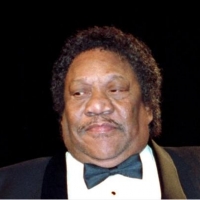
Bobby "Blue" Bland

Blues
Classic Blues
Contemporary Blues
Soul Blues
 Viberate Rank: 35983
 Viberate Rank: 35983
 Monthly ListenersFollowers
 Subscribers
 Followers
 Followers
 FansTop Spotify SongsTop YouTube VideosMonthly ListenersFeatured in Playlists
| Playlist | Followers | |
|---|---|---|
1 |  Funk & Soul Classics Spotify | 1.91M |
2 |  70s Soul Classics Spotify | 1.88M |
3 |  Sweet Soul Chillout Spotify | 1.42M |
4 |  The Black Power Mixtape 1967–1975 Spotify | 834.24K |
5 |  Blues Masters Filtr Legacy Sweden | 226.80K |
Audience| City | Monthly Listeners | |
|---|---|---|
1 |  | 15.06K |
2 |  | 11.02K |
3 | | 9.19K |
4 | | 8.68K |
5 |  | 8.62K |
See full performance history, audience data, playlist activity, rankings, comparisons, and more in Viberate music analytics. Start with a free trial, then continue with a paid plan.
Bobby "Blue" Bland’s Spotify BioBobby Bland earned his enduring blues superstar status the hard way: without a guitar, harmonica, or any other instrument to fall back upon. All Bland had to offer was his magnificent voice, a tremendously powerful instrument in his early heyday, injected with charisma and melisma to spare. Just ask his legion of female fans, who deemed him a sex symbol late into his career.
For all his promise, Bland's musical career ignited slowly. He was a founding member of the Beale Streeters, the fabled Memphis aggregation that also included B.B. King and Johnny Ace. Singles for Chess in 1951 (produced by Sam Phillips) and Modern the next year bombed, but that didn't stop local DJ David Mattis from cutting Bland on a couple of 1952 singles for his fledgling Duke logo.
Bland's tormented crying style was still pretty rough around the edges before he entered the Army in late 1952. But his progress upon his 1955 return was remarkable; with saxist Bill Harvey's band (featuring guitarist Roy Gaines and… trumpeter Joe Scott) providing sizzling support, Bland's assured vocal on the swaggering "It's My Life Baby" sounds like the work of a new man. By now, Duke was headed by hard-boiled Houston entrepreneur Don Robey, who provided top-flight bands for his artists. Scott soon became Bland's mentor, patiently teaching him the intricacies of phrasing when singing sophisticated fare (by 1962, Bland was credibly crooning "Blue Moon," a long way from Beale Street).
Most of Bland's savage Texas blues sides during the mid- to late '50s featured the slashing guitar of Clarence Hollimon, notably "I Smell Trouble," "I Don't Believe," "Don't Want No Woman," "You Got Me (Where You Want Me)," and the torrid "Loan a Helping Hand" and "Teach Me (How to Love You)." But the insistent guitar riffs guiding Bland's first national hit, 1957's driving "Farther Up the Road," were contributed by Pat Hare, another vicious picker who would eventually die in prison after murdering his girlfriend and a cop. Later, Wayne Bennett took over on guitar, his elegant fretwork prominent on Bland's Duke waxings throughout much of the '60s.
The gospel underpinnings inherent to Bland's powerhouse delivery were never more apparent than on the 1958 outing "Little Boy Blue," a vocal tour de force that wrings every ounce of emotion out of the grinding ballad. Scott steered his charge into smoother material as the decade turned: the seminal mixtures of blues, R&B, and primordial soul on "I Pity the Fool," the Brook Benton-penned "I'll Take Care of You," and "Two Steps From the Blues" were tremendously influential to a legion of up-and-coming Southern soulsters. Collected on the 1961 LP Two Steps from the Blues, they produced one of the classic full-lengths of modern blues.
Scott's blazing brass arrangements upped the excitement ante on Bland's frantic rockers "Turn on Your Love Light" in 1961 and "Yield Not to Temptation" the next year. But the vocalist was learning his lessons so well that he sounded just as conversant on soulful R&B rhumbas (1963's "Call on Me") and polished ballads ("That's the Way Love Is," "Share Your Love With Me") as with an after-hours blues revival of T-Bone Walker's "Stormy Monday Blues" that proved a most unlikely pop hit for him in 1962. With "Ain't Nothing You Can Do," "Ain't Doing Too Bad," and "Poverty," Bland rolled through the mid-'60s, his superstar status diminishing not a whit.
In 1973, Robey sold his labels to ABC Records, and Bland was part of the deal. Without Scott and his familiar surroundings to lean on, Bland's releases grew less consistent artistically, though His California Album in 1973 and Dreamer the next year boasted some nice moments (there was even an album's worth of country standards). The singer re-teamed with his old pal B.B. King for a couple of mid-'70s albums that broke no new ground but further heightened Bland's profile, while his solo work for MCA teetered closer and closer to MOR (Bland has often expressed his admiration for ultra-mellow pop singer Perry Como).
Bland began recording for Jackson, Mississippi's Malaco Records in the mid-'80s. His pipes undeniably reflected the ravages of time, but he endured as a blues superstar of the loftiest order, resurfacing in 1998 with Memphis Monday Morning, and five years later with Blues in Memphis. Bland died in Memphis in June 2013 at the age of 83. ~ Bill Dahl, Rovi
Viberate is a music analytics platform built for A&Rs, artist managers, labels, booking agents, marketers, and artists.
It helps music professionals track artist growth, analyze audience data, monitor playlist activity, compare artists, follow song performance, and identify opportunities across the music market.
Public artist pages provide a free preview of selected artist data. Paid plans provide access to deeper analytics, historical data, charts, comparisons, playlist tools, exports, alerts, reports, and additional professional features.
Yes. Public Viberate artist pages provide selected artist analytics and music data for free.
Viberate also offers a 7-day free trial of the full platform. A credit card is required to start the trial. The trial includes access to the complete product so users can test deeper artist analytics, historical views, playlist insights, comparisons, charts, exports, alerts, and reporting features before choosing a paid plan.
Viberate provides artist analytics across streaming, playlists, social media, video, radio airplay, songs, and audience markets.
Users can analyze Spotify performance, Spotify and Apple Music playlists, YouTube activity, TikTok and Instagram growth, radio spins, song performance, audience locations, demographics, rankings, and overall artist momentum.
Artist profiles also connect to music charts, similar artists, and comparison tools, helping users benchmark performance and evaluate artists in context.
Viberate updates key artist and track data daily.
For followed artists and tracks, selected data is refreshed multiple times per day. This helps teams monitor playlist changes, streaming movement, audience growth, releases, and campaign performance with more current data.
Update frequency can vary depending on the metric and data source.
Yes. Viberate lets users compare up to five artists side by side across streaming, social media, audience, and engagement metrics.
Users can compare fanbase growth, audience demographics, locations, Spotify performance, social metrics, and other artist data over selected time periods.
Artist comparison can be used for A&R scouting, benchmarking, booking decisions, campaign planning, and evaluating artists with similar audiences or market positions.