James Brown

R&B
Funk
Soul
Contemporary Blues
 Viberate Rank: 2175
 Viberate Rank: 2175
 Monthly ListenersFollowers
 Subscribers
 Followers
 Followers
 FansTop Spotify Songs
| Track | 7-Day Streams | |
|---|---|---|
1 | 866.56K | |
2 | 610.78K | |
3 | 536.01K | |
4 | 397.52K | |
5 | 316.47K |
Top YouTube VideosMonthly ListenersFeatured in Playlists| Playlist | Followers | |
|---|---|---|
1 |  Feelin' Good Spotify | 3.58M |
2 |  Funk & Soul Classics Spotify | 1.91M |
3 |  Funk Outta Here Spotify | 1.30M |
4 |  This Is 2Pac Spotify | 1.24M |
5 |  Club Hits 2026 Spotify | 1.14M |
Audience| City | Monthly Listeners | |
|---|---|---|
1 |  | 88.75K |
2 |  | 63.23K |
3 | | 61.74K |
4 |  | 55.11K |
5 |  | 53.09K |
See full performance history, audience data, playlist activity, rankings, comparisons, and more in Viberate music analytics. Start with a free trial, then continue with a paid plan.
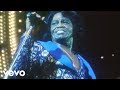
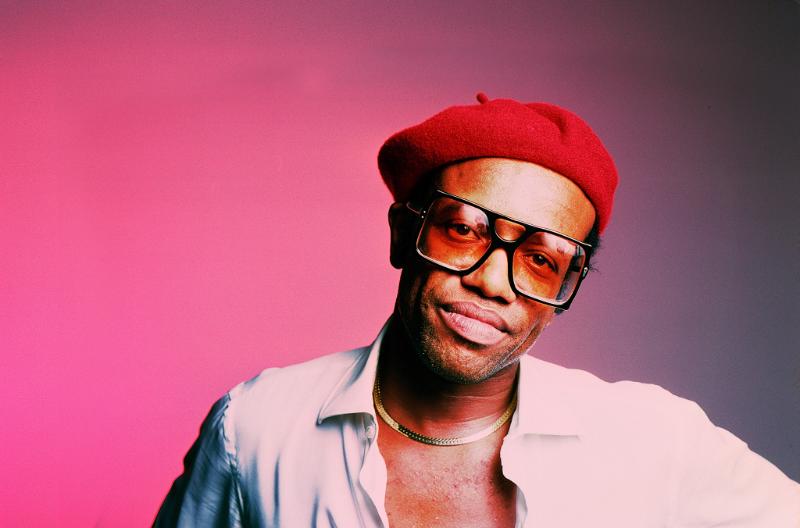
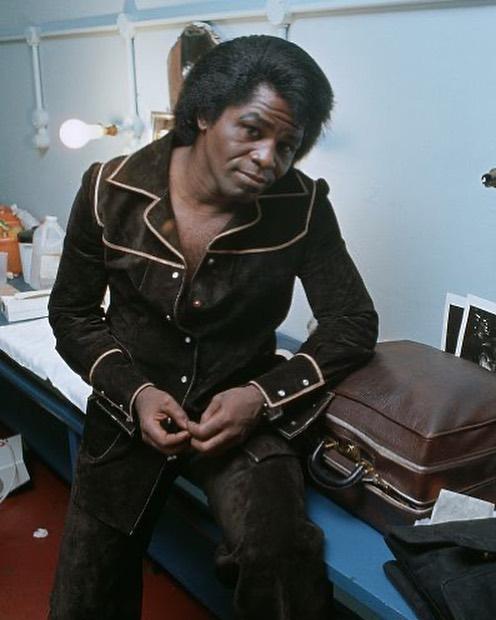
James Brown’s Spotify Bio"Soul Brother Number One," "The Godfather of Soul," "The Hardest Working Man in Show Business," "Mr. Dynamite" -- those are mighty titles, but no one can question that James Brown earned them more than any other performer. Other singers were more popular, others were equally skilled, but few other musicians were so influential over the course of popular music. And no other musician put on a more exciting, exhilarating stage show: Brown's performances were marvels of athletic stamina and split-second timing. Through the gospel-impassioned fury of his vocals and the complex polyrhythms of his beats, Brown was a crucial midwife in not just one, but two revolutions in American music; he was one of the figures most responsible for turning R&B into soul and he was, most would agree, the one figure most responsible for transforming soul music into funk. Fittingly, his music became even more influential as it aged, since his voice and rhythms were sampled on innumerable hip-hop recordings, and… critics belatedly hailed his innovations as among the most important in all of rock or R&B.
Brown's rags-to-riches-to-rags story has heroic and tragic dimensions of mythic resonance. Born into poverty in the South, he ran afoul of the law by the late '40s on an armed robbery conviction. With the help of singer Bobby Byrd's family, Brown gained parole and started a gospel group with Byrd, changing their focus to R&B as the rock revolution gained steam. The Flames, as the Georgian group was known in the mid-'50s, signed to Federal/King and had a huge R&B hit right off the bat with the wrenching, churchy ballad "Please, Please, Please." By that point, the Flames had become James Brown & the Famous Flames; the charisma, energy, and talent of Brown made him the natural star attraction.
All of Brown's singles over the next two years flopped, as he sought to establish his own style, recording material that was obviously derivative of heroes like Roy Brown, Hank Ballard, Little Richard, and Ray Charles. In retrospect, it can be seen that Brown was in the same position as dozens of other R&B one-shots: talented singers in need of better songs, or not fully on the road to a truly original sound. What made Brown succeed where hundreds of others failed was his superhuman determination, working the chitlin circuit to death, sharpening his band, and keeping an eye on new trends. He was on the verge of being dropped by King in late 1958 when his perseverance finally paid off, as "Try Me" became a number one R&B (and small pop) hit, and several follow-ups established him as a regular visitor to the R&B charts.
Brown's style of R&B got harder as the '60s began; he added more complex, Latin- and jazz-influenced rhythms on hits like "Good Good Lovin'," "I'll Go Crazy," "Think," and "Night Train," alternating these with torturous ballads that featured some of the most frayed screaming to be heard outside of the church. Black audiences already knew that Brown had the most exciting live act around, but he truly started to become a phenomenon with the release of Live at the Apollo in 1963. Capturing a Brown concert with all its whirling-dervish energy and calculated spontaneity, the album reached number two on the album charts, an unprecedented feat for a hardcore R&B LP.
Live at the Apollo was recorded and released against the wishes of the King label. It was this kind of artistic standoff that led Brown to seek better opportunities elsewhere. In 1964, he ignored his King contract to record "Out of Sight" for Smash, igniting a lengthy legal battle that prevented him from issuing vocal recordings for about a year. When he finally resumed recording for King in 1965, he had a new contract that granted him far more artistic control over his releases.
Brown's new era had truly begun, however, with "Out of Sight," which topped the R&B charts and made the pop Top 40. For some time, Brown had been moving toward more elemental lyrics that threw in as many chants and screams as they did words, and more intricate beats and horn charts that took some of their cues from the ensemble work of jazz outfits. "Out of Sight" wasn't called funk when it came out, but it had most of the essential ingredients. These were amplified and perfected on 1965's "Papa's Got a Brand New Bag," a monster that finally broke Brown to a white audience, reaching the Top Ten. The even more adventurous follow-up, "I Got You (I Feel Good)," did even better, making number three.
These hits kicked off Brown's period of greatest commercial success and public visibility. From 1965 to the end of the decade, he was rarely off the R&B charts, often on the pop listings, and all over the concert circuit and national television, even meeting with Vice President Hubert Humphrey and other important politicians as a representative of the Black community. His music became even bolder and funkier, as melody was dispensed with almost altogether in favor of chunky rhythms and magnetic interplay between his vocals, horns, drums, and scratching electric guitar (heard to best advantage on hits like "Cold Sweat," "I Got the Feelin'," and "There Was a Time"). The lyrics were not so much words as chanted, stream-of-consciousness slogans, often aligning themselves with Black pride as well as good old-fashioned (or new-fashioned) sex. Much of the credit for the sound he devised belonged to (and has now been belatedly attributed to) his top-notch supporting musicians such as saxophonists Maceo Parker, St. Clair Pinckney, and Pee Wee Ellis; guitarist Jimmy Nolen; backup singer and longtime loyal associate Bobby Byrd; and drummer Clyde Stubblefield.
Brown was both a brilliant bandleader and a stern taskmaster, the latter leading his band to walk out on him in late 1969. Amazingly, he turned the crisis to his advantage by recruiting a young Cincinnati outfit called the Pacemakers featuring guitarist Catfish Collins and bassist Bootsy Collins. Although they only stayed with him for about a year, they were crucial to Brown's evolution into even harder funk, emphasizing the rhythm and the bottom even more. The Collins brothers, for their part, put their apprenticeship to good use, helping define '70s funk as members of the Parliament-Funkadelic axis.
In the early '70s, many of the most important members of Brown's late-'60s band returned to the fold, to be billed as the J.B.'s (they also made records on their own). Brown continued to score heavily on the R&B charts throughout the first half of the '70s, the music becoming more and more elemental and beat-driven. At the same time, he was retreating from the white audience he had cultivated during the mid- to late '60s; records like "Make It Funky," "Hot Pants," "Get on the Good Foot," and "The Payback" were huge soul sellers, but only modest pop ones. Critics charged, with some justification, that the Godfather was starting to repeat and recycle himself too many times. It must be remembered, though, that these songs were made for the singles radio jukebox market and not meant to be played one after the other on CD compilations (as they are today).
By the mid-'70s, Brown was beginning to burn out artistically. He seemed shorn of new ideas, was being out-gunned on the charts by disco, and was running into problems with the IRS and his financial empire. There were sporadic hits, and he could always count on enthusiastic live audiences, but by the '80s, he didn't have a label. With the explosion of rap, however, which frequently sampled vintage J.B.'s records, Brown became hipper than ever. He collaborated with Afrika Bambaataa on the critical smash single "Unity" and reentered the Top Ten in 1986 with "Living in America." Rock critics, who had always ranked Brown considerably below Otis Redding and Aretha Franklin in the soul canon, began to reevaluate his output, particularly the material from his funk years, sometimes anointing him not just "Soul Brother Number One," but the most important Black musician of the rock era.
In 1988, Brown's personal life came crashing down in a well-publicized incident in which he was accused by his wife of assault and battery. After a year skirting hazy legal and personal troubles, he led the police on an interstate car chase after allegedly threatening people with a handgun. The episode ended in a six-year prison sentence that many felt was excessive; he was paroled after serving two years.
Throughout the '90s, Brown continued to perform and release new material like Love Over-Due (1991), Universal James (1992), and I'm Back (1998). While none of these recordings could be considered as important as his earlier work and did little to increase his popularity, his classic catalog became more popular in the American mainstream during this time than it had been since the '70s, and not just among young rappers and samplers. One of the main reasons for this was a proper presentation of his recorded legacy. For a long time, his cumbersome, byzantine discography was mostly out of print, with pieces available only on skimpy greatest-hits collections. A series of exceptionally well-packaged reissues on PolyGram changed that situation; the Star Time box set is the best overview, with other superb compilations devoted to specific phases of his lengthy career, from '50s R&B to '70s funk.
In 2004, Brown was diagnosed with prostate cancer but successfully fought the disease. By 2006, it was in remission and Brown, then 73, began a global tour dubbed the Seven Decades of Funk World Tour. Late in the year while at a routine dentist appointment, the singer was diagnosed with pneumonia. He was admitted to the hospital for treatment but died of heart failure a few days later, in the early morning hours of Christmas Day. A public viewing was held at Apollo Theater in Harlem, followed by a private ceremony in his hometown of Augusta, Georgia.
Just prior to his death, Universal's Hip-O division launched an extensive James Brown reissue series called The Singles, which contained both sides of every 45 he released between 1956 and 1981. The first volume appeared in September 2006, the last in 2011. R.J. Smith published the biography The One: The Life and Music of James Brown in 2012 to widespread acclaim. Two years later, Brown was the subject of the biopic Get On Up, featuring Chadwick Boseman as Brown, as well as the Alex Gibney documentary Mr. Dynamite: The Rise of James Brown, which was produced by Mick Jagger. Universal released two live archival projects -- Live at the Apollo, Vol. IV: September 13-14, 1972 and Live at Home with His Bad Self -- during the second half of the 2010s. ~ Richie Unterberger, Rovi
Viberate is a music analytics platform built for A&Rs, artist managers, labels, booking agents, marketers, and artists.
It helps music professionals track artist growth, analyze audience data, monitor playlist activity, compare artists, follow song performance, and identify opportunities across the music market.
Public artist pages provide a free preview of selected artist data. Paid plans provide access to deeper analytics, historical data, charts, comparisons, playlist tools, exports, alerts, reports, and additional professional features.
Yes. Public Viberate artist pages provide selected artist analytics and music data for free.
Viberate also offers a 7-day free trial of the full platform. A credit card is required to start the trial. The trial includes access to the complete product so users can test deeper artist analytics, historical views, playlist insights, comparisons, charts, exports, alerts, and reporting features before choosing a paid plan.
Viberate provides artist analytics across streaming, playlists, social media, video, radio airplay, songs, and audience markets.
Users can analyze Spotify performance, Spotify and Apple Music playlists, YouTube activity, TikTok and Instagram growth, radio spins, song performance, audience locations, demographics, rankings, and overall artist momentum.
Artist profiles also connect to music charts, similar artists, and comparison tools, helping users benchmark performance and evaluate artists in context.
Viberate updates key artist and track data daily.
For followed artists and tracks, selected data is refreshed multiple times per day. This helps teams monitor playlist changes, streaming movement, audience growth, releases, and campaign performance with more current data.
Update frequency can vary depending on the metric and data source.
Yes. Viberate lets users compare up to five artists side by side across streaming, social media, audience, and engagement metrics.
Users can compare fanbase growth, audience demographics, locations, Spotify performance, social metrics, and other artist data over selected time periods.
Artist comparison can be used for A&R scouting, benchmarking, booking decisions, campaign planning, and evaluating artists with similar audiences or market positions.