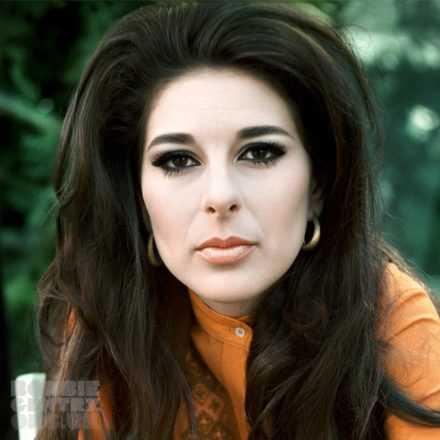
Bobbie Gentry

Country
Contemporary Country
Mainstream Pop
 Viberate Rank: 55100
 Viberate Rank: 55100
 Monthly ListenersFollowers
 Subscribers
 Followers
 Followers
 FansTop Spotify Songs
| Track | 7-Day Streams | |
|---|---|---|
1 | 57.61K | |
2 | 12.63K | |
3 | 11.42K | |
4 | 7.38K | |
5 | 6.53K |
Top YouTube VideosMonthly ListenersFeatured in Playlists| Playlist | Followers | |
|---|---|---|
1 |  60s Country Spotify | 388.01K |
2 | Classic Rock Greatest Hits Scott Pruden | 341.38K |
3 |  500 Greatest Songs Of All Time kieron | 112.44K |
4 |  | fresh picks | massive. | 75.13K |
5 |  This Is Glen Campbell Spotify | 67.64K |
Audience| City | Monthly Listeners | |
|---|---|---|
1 |  | 6.37K |
2 |  | 4.91K |
3 | | 4.56K |
4 |  | 4.39K |
5 | | 3.53K |
See full performance history, audience data, playlist activity, rankings, comparisons, and more in Viberate music analytics. Start with a free trial, then continue with a paid plan.
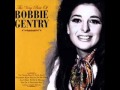
Bobbie Gentry’s Spotify BioBobbie Gentry is one of the great legends of 1960s popular music, an artist who debuted with an enigmatic, enduring smash hit who then cultivated an idiosyncratic country-pop crossover sound for a few years before retreating from the spotlight, never to be heard from again. That hit was "Ode to Billie Joe," a spare, elastic bit of storytelling that rocketed to number one after its release in 1967. So powerful and popular was "Ode to Billie Joe" that it spun off a film adaptation about a decade after its release, by which time Gentry's career was effectively over. She didn't manage a big pop hit after "Ode to Billie Joe," instead transitioning over to the country charts after her trippy psychedelic-Americana album The Delta Sweete failed to generate hits on either chart. Glen Campbell chose her as a duet partner for a spell in the late '60s -- they had hit covers of the Everly Brothers' "Let It Be Me" and "All I Have to Do Is Dream" -- and as a solo act, she pioneered a splashy fusion… of show biz pop and country-funk, a sound that reached its apex on 1969's "Fancy." Reba McEntire later turned "Fancy" into a standard, signaling how deep and pervasive Gentry's influence was: she set the stage for generations of pop-savvy singers who blurred the lines between country and pop.
Of Portuguese descent, Gentry was born Roberta Streeter in Chickasaw County, Mississippi, on July 27, 1942; her parents divorced shortly after her birth and she was raised in poverty on her grandparents' farm. After her grandmother traded one of the family's milk cows for a neighbor's piano, seven-year-old Gentry composed her first song, "My Dog Sergeant Is a Good Dog," years later self-deprecatingly reprised in her nightclub act; at 13, she moved to Arcadia, California, to live with her mother, and soon began her performing career in local country clubs. The 1952 film Ruby Gentry lent the singer her stage surname.
After graduating high school, Gentry settled in Las Vegas, where she appeared in the Les Folies Bergère nightclub revue; she soon returned to California, studying philosophy at U.C.L.A. before transferring to the Los Angeles Conservatory of Music. In 1964, she made her recorded debut, cutting a pair of duets -- "Ode to Love" and "Stranger in the Mirror" -- with rockabilly singer Jody Reynolds. Gentry continued performing in clubs in the years to follow before an early 1967 recording demo found its way to Capitol Records' producer Kelly Gordon; upon signing to the label, she issued her debut single, "Mississippi Delta." However, disc jockeys began spinning the B-side, the self-penned "Ode to Billie Joe" -- with its eerily spare production and enigmatic narrative detailing the suicide of Billie Joe McAllister, who flings himself off the Tallahatchie Bridge, the single struck a chord on country and pop radio alike, topping the pop charts for four weeks in August 1967 and selling three million copies. Although the follow-up, "I Saw an Angel Die," failed to chart, Gentry nevertheless won three Grammy awards, including Best New Artist and Best Female Vocal. She was also named the Academy of Country Music's Best New Female Vocalist.
With her second album, 1968's The Delta Sweete, Gentry returned to the country charts with the minor hit "Okolona River Bottom Band." Although her recordings were typically credited to Capitol staff producers, she later maintained she helmed the sessions herself and also wrote much of her own material, drawing on her Mississippi roots to compose revealing vignettes that typically explored the lifestyles, values, and even hypocrisies of Southern culture. Favoring more soulful and rootsy arrangements over the lavish countrypolitan style in vogue in Nashville at the time, Gentry's records sound quite unlike anything on either the country or pop charts at the time and her smoky, sensuous voice adapted easily to a variety of musical contexts. But to many listeners, she remained a one-hit wonder and her excellent third album, 1968's Local Gentry, received little notice. That same year, Gentry issued a duet album with Glen Campbell, returning to the country Top 20 with "Let It Be Me"; the duo regularly collaborated throughout the '70s, scoring their biggest hit with a reading of "All I Really Want to Do."
In 1969, Gentry reached her creative zenith with Touch 'Em with Love; though cut in Nashville, the record owed far more to the gritty R&B sounds emanating across the state in Memphis and generated her first U.K. number one, a smoldering rendition of the Burt Bacharach/Hal David perennial "I'll Never Fall in Love Again." The single's success also earned Gentry her own short-lived BBC television variety series. However, as her star diminished stateside, she became a fixture on the Las Vegas circuit, mounting an elaborate nightclub revue that she not only headlined but also wrote and produced, even overseeing the choreography and costuming. In 1970 she returned to the county and pop Top 40 with the title cut from her fifth album Fancy. In 1971, she issued her final Capitol effort, Patchwork, primarily confining her performing to her nightclub act for the next several years. A CBS summer replacement series, The Bobbie Gentry Happiness Hour, aired for four episodes in 1974; Gentry next surfaced on the big screen, credited as co-writer for a 1976 film adaptation of Ode to Billie Joe. Gentry gradually receded from public view, retiring from performing and eventually settling in Los Angeles. ~ Jason Ankeny, Rovi
Viberate is a music analytics platform built for A&Rs, artist managers, labels, booking agents, marketers, and artists.
It helps music professionals track artist growth, analyze audience data, monitor playlist activity, compare artists, follow song performance, and identify opportunities across the music market.
Public artist pages provide a free preview of selected artist data. Paid plans provide access to deeper analytics, historical data, charts, comparisons, playlist tools, exports, alerts, reports, and additional professional features.
Yes. Public Viberate artist pages provide selected artist analytics and music data for free.
Viberate also offers a 7-day free trial of the full platform. A credit card is required to start the trial. The trial includes access to the complete product so users can test deeper artist analytics, historical views, playlist insights, comparisons, charts, exports, alerts, and reporting features before choosing a paid plan.
Viberate provides artist analytics across streaming, playlists, social media, video, radio airplay, songs, and audience markets.
Users can analyze Spotify performance, Spotify and Apple Music playlists, YouTube activity, TikTok and Instagram growth, radio spins, song performance, audience locations, demographics, rankings, and overall artist momentum.
Artist profiles also connect to music charts, similar artists, and comparison tools, helping users benchmark performance and evaluate artists in context.
Viberate updates key artist and track data daily.
For followed artists and tracks, selected data is refreshed multiple times per day. This helps teams monitor playlist changes, streaming movement, audience growth, releases, and campaign performance with more current data.
Update frequency can vary depending on the metric and data source.
Yes. Viberate lets users compare up to five artists side by side across streaming, social media, audience, and engagement metrics.
Users can compare fanbase growth, audience demographics, locations, Spotify performance, social metrics, and other artist data over selected time periods.
Artist comparison can be used for A&R scouting, benchmarking, booking decisions, campaign planning, and evaluating artists with similar audiences or market positions.