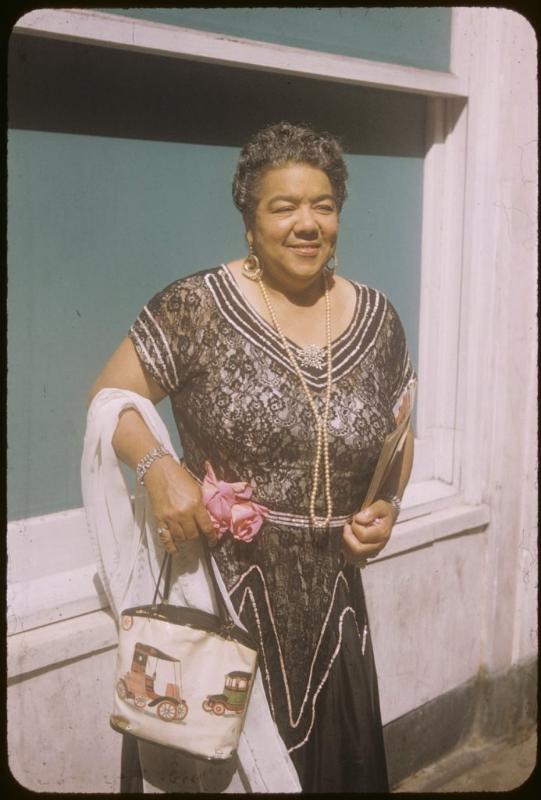
Blanche Calloway

Jazz
Big band Jazz
Smooth Jazz
 Viberate Rank: 482722
 Viberate Rank: 482722
 Monthly ListenersFollowers
 Subscribers
 Followers
 Followers
 FansTop Spotify SongsTop YouTube VideosMonthly ListenersFeatured in Playlists
| Playlist | Followers | |
|---|---|---|
1 |  Dinner Jazz/Soul DeWayne Schaaf | 15.41K |
2 | woman of jazz anabelachan | 6.19K |
3 |  Hot Jazz ('20s & '30s) R. Connor Montgomery | 5.75K |
4 |  The Jazz Age: Prohibition and the Roaring '20s (1920s & 1930s) R. Connor Montgomery | 4.61K |
5 |  1930s: The Great Depression Era Nathalie.L | 3.81K |
Audience| City | Monthly Listeners | |
|---|---|---|
1 |  | 37 |
2 | | 31 |
3 |  | 22 |
4 |  | 21 |
5 | | 20 |
See full performance history, audience data, playlist activity, rankings, comparisons, and more in Viberate music analytics. Start with a free trial, then continue with a paid plan.
Blanche Calloway’s Spotify BioAlthough she was hardly the model for the song character of Minnie the Moocher, Blanche Calloway was the sister of both famous jive bandleader Cab Calloway and the lesser-known performer Elmer Calloway. Her first high-profile gigs were at the lively Ciro Club in New York City in the mid-'20s, leading to widespread touring with various revues and territorial bands. Some of these groups would establish residencies at Chicago clubs, giving the singer something of a foothold in the Windy City jazz scene. Of even more importance was a long stint at the Pearl Theatre in Philadelphia in 1931, where she was the front-line singer for the Andy Kirk band.
The next challenge was leading a group on her own, a process which continued through the fall of
1938. Although there were periods of success, the final chapter in her story as a bandleader would have to be numbered 11, literally. Official records from the year indicate that she filed for bankruptcy under her married name of Blanche Calloway… Pinder, a move that made the dismantling of her musical group a necessity. In the '40s and '50s she continued working as a solo artist, and in the '60s she became the programming director of a radio station in Florida. She returned to her native Baltimore and retired the following decade. ~ Eugene Chadbourne, Rovi
Viberate is a music analytics platform built for A&Rs, artist managers, labels, booking agents, marketers, and artists.
It helps music professionals track artist growth, analyze audience data, monitor playlist activity, compare artists, follow song performance, and identify opportunities across the music market.
Public artist pages provide a free preview of selected artist data. Paid plans provide access to deeper analytics, historical data, charts, comparisons, playlist tools, exports, alerts, reports, and additional professional features.
Yes. Public Viberate artist pages provide selected artist analytics and music data for free.
Viberate also offers a 7-day free trial of the full platform. A credit card is required to start the trial. The trial includes access to the complete product so users can test deeper artist analytics, historical views, playlist insights, comparisons, charts, exports, alerts, and reporting features before choosing a paid plan.
Viberate provides artist analytics across streaming, playlists, social media, video, radio airplay, songs, and audience markets.
Users can analyze Spotify performance, Spotify and Apple Music playlists, YouTube activity, TikTok and Instagram growth, radio spins, song performance, audience locations, demographics, rankings, and overall artist momentum.
Artist profiles also connect to music charts, similar artists, and comparison tools, helping users benchmark performance and evaluate artists in context.
Viberate updates key artist and track data daily.
For followed artists and tracks, selected data is refreshed multiple times per day. This helps teams monitor playlist changes, streaming movement, audience growth, releases, and campaign performance with more current data.
Update frequency can vary depending on the metric and data source.
Yes. Viberate lets users compare up to five artists side by side across streaming, social media, audience, and engagement metrics.
Users can compare fanbase growth, audience demographics, locations, Spotify performance, social metrics, and other artist data over selected time periods.
Artist comparison can be used for A&R scouting, benchmarking, booking decisions, campaign planning, and evaluating artists with similar audiences or market positions.