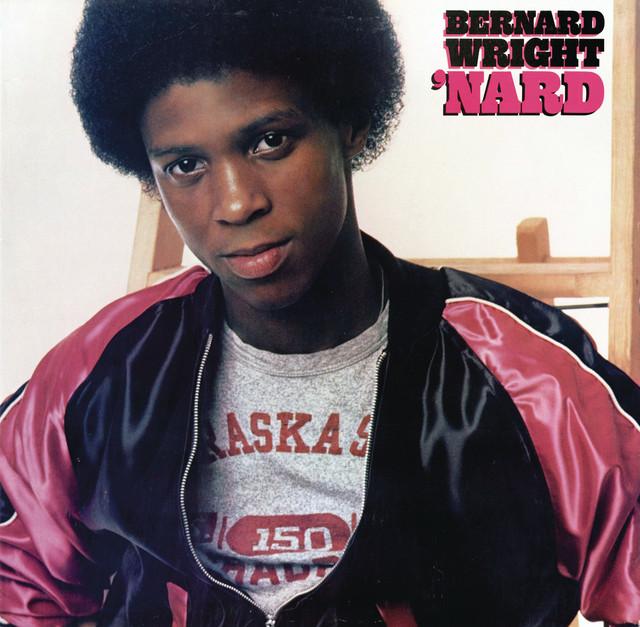
Bernard Wright

R&B
Soul
Disco
 Viberate Rank: 111625
 Viberate Rank: 111625
 Monthly ListenersFollowers
 Subscribers
 Followers
 Followers
 FansTop Spotify Songs
| Track | 7-Day Streams | |
|---|---|---|
1 | 24.06K | |
2 | 7.69K | |
3 | 2.01K | |
4 | 1.91K | |
5 | 1.89K |
Top YouTube VideosMonthly ListenersFeatured in Playlists| Playlist | Followers | |
|---|---|---|
1 | The Best of R&B: 80's, 90's, & 00's Mike Salinas | 84.63K |
2 |  Funky Jazz, Blues & Soul The New Funky | 74.07K |
3 | BLACK SUMMER COOKOUT King Retro 1 | 66.97K |
4 |  Old School Lowrider Funk Rick Plant | 64.17K |
5 | GTA V Songs Leroy Witkamp | 54.39K |
Audience| City | Monthly Listeners | |
|---|---|---|
1 | | 2.41K |
2 |  | 2.38K |
3 | | 1.97K |
4 | | 1.73K |
5 | | 1.72K |
See full performance history, audience data, playlist activity, rankings, comparisons, and more in Viberate music analytics. Start with a free trial, then continue with a paid plan.
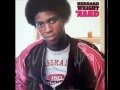
Bernard Wright’s Spotify BioBernard Wright bridged and blurred numerous genres throughout a career that encompassed jazz, R&B, hip-hop, contemporary gospel, and reggae, but he was known most for jazz-funk, what he viewed as a hybrid of two equally valid art forms. Taken under the wings of fellow Jamaica, Queens natives Weldon Irvine, Don Blackman, and Lenny White, Wright was a seasoned touring keyboardist and session musician -- and had played on Tom Browne's number one R&B smash "Funkin' for Jamaica (N.Y.)" -- by the time he debuted as a teenaged leader with 'Nard (1981). After his second album, Funky Beat (1983), Wright reached his commercial peak with Mr. Wright (1985), home to the Top Ten R&B single "Who Do You Love." After that trio of LPs, Wright cut three gospel albums and as a sideman moved fluidly across styles, collaborating with the likes of Marcus Miller, Miles Davis, Cameo, and his godmother, Roberta Flack. In and around his adoptive home of Dallas, he became known as a mentor for bands such as Snark…y Puppy.
Born and bred in Jamaica, Queens, Bernard Wright was five years old when he discovered his natural talent for playing keyboards. Before he turned ten, he was dedicated to his instrument, performing with the Junior Firebolts, who opened for the elder Firebolts at assorted local gigs. Quickly a valued member of Jamaica's communal music scene, he was mentored by Weldon Irvine and Don Blackman -- two proponents of mixing jazz and funk -- and at the age of 12 was touring with Lenny White. Wright picked up his first session credits in 1979 with Taana Gardner's self-titled disco-funk album, and also with Browne Sugar, the GRP label debut of Tom Browne, a trumpeter discovered by Blackman. Sticking with much of the same neighborhood-sourced lineup, including Marcus Miller and Omar Hakim, Browne quickly followed up in 1980 with Love Approach, featuring the party-starting "Funkin' for Jamaica (N.Y.)," a number one R&B hit with Wright the supplier of its synthesized bassline and electric piano. Also that year, Wright was heard on albums by Charles Earland and Crown Heights Affair.
Having secured a GRP deal of his own, Wright debuted in 1981 with 'Nard, a set based in jazz-funk with a touch of hip-hop and diversions into R&B, fusion, and straightahead jazz. In addition to many of the Jamaica associates, the cast of the eclectic session included Roy Haynes and Buster Williams (on a version of Miles Davis' "Solar"), Patti Austin and Luther Vandross (Wright's backing vocalists on "Music Is the Key"), and GRP co-founder Dave Grusin (essentially the date's second keyboardist). 'Nard entered Billboard's R&B chart in March 1981 and peaked at number 23. "Just Chillin' Out," an energetic cut in the same spirit as "Funkin' for Jamaica (N.Y.)," and "Haboglabotribin'," the freakier and even more playful follow-up, both hit the R&B singles chart, respectively reaching numbers 33 and 78. Wright's more mechanized second album, Funky Beat, was issued in 1983. It led with three songs produced by Wright and Marcus Miller, such as the charting jazz-electro hybrid title song (number 39 R&B). Grusin and fellow GRP founder Larry Rosen took it from there. The highlight of that remainder was "Won't You Let Me Love You," a lilting ballad (number 88 R&B) written by Wright and Weldon Irvine that would have been suitable for DeBarge -- or Don Blackman's self-titled 1982 album for GRP.
Wright moved from GRP to Capitol subsidiary Manhattan, and experienced his greatest commercial success in 1985 with "Who Do You Love." The sweet mid-tempo jam debuted on the R&B chart that October and topped out at number six, and was followed by the tougher "After You," a number 23 R&B hit. The album Mr. Wright, almost strictly a funk-forward R&B affair in the realm of Prince and Cameo, contained both singles and six additional originals produced by Lenny White and Marcus Miller. It would be Wright's last secular solo LP, but by the end of the '80s, he was a busy sideman and featured artist. Most notably, he played on Miles Davis' Tutu ("Tomaas" and "Don't Lose Your Mind"). He duetted with La La on the "Who Do You Love"-referencing "We'll Keep Striving," and added White and Miller's Jamaica Boys project, David Sandborn, Chaka Khan, and Cameo, along with Doug E. Fresh, Michał Urbaniak, and Sly & Robbie, among other names, to the list of artists who sought his talent as a stylistically flexible keyboardist and producer.
At the dawn of the '90s, Wright concentrated on recording contemporary gospel. During the first three years of the decade, he doubled his number of solo albums with Fresh Hymns, Brand New Gospel Format, and Fresh Hymns II, all released on the Frontline label. His session efforts throughout the decade extended to contemporary jazz stars such as Stanley Jordan and Alex Bugnon, gospel luminaries Commissioned and Vickie Winans, and additionally his godmother, Roberta Flack, for whom he also worked as musical director. Wright was featured on Sadao Watanabe's Go Straight Ahead 'n Make a Left, a 1997 date for Verve that kept the Jamaica connection intact with the involvement of Steven Teele, Charley Drayton, and Mike Flythe. He moved to his wife's native Dallas during the decade, and while he continued to record and/or perform through the 2000s and 2010s with the likes of Too Bad, the Freddie Jones Jazz Group, Roy Hargrove's RH Factor, Marcus Miller, and Brandon Williams, he also mentored local musicians, most proudly Snarky Puppy before the band's breakthrough. Wright died on May 19, 2022, after he was involved in a traffic accident. ~ Andy Kellman, Rovi
Viberate is a music analytics platform built for A&Rs, artist managers, labels, booking agents, marketers, and artists.
It helps music professionals track artist growth, analyze audience data, monitor playlist activity, compare artists, follow song performance, and identify opportunities across the music market.
Public artist pages provide a free preview of selected artist data. Paid plans provide access to deeper analytics, historical data, charts, comparisons, playlist tools, exports, alerts, reports, and additional professional features.
Yes. Public Viberate artist pages provide selected artist analytics and music data for free.
Viberate also offers a 7-day free trial of the full platform. A credit card is required to start the trial. The trial includes access to the complete product so users can test deeper artist analytics, historical views, playlist insights, comparisons, charts, exports, alerts, and reporting features before choosing a paid plan.
Viberate provides artist analytics across streaming, playlists, social media, video, radio airplay, songs, and audience markets.
Users can analyze Spotify performance, Spotify and Apple Music playlists, YouTube activity, TikTok and Instagram growth, radio spins, song performance, audience locations, demographics, rankings, and overall artist momentum.
Artist profiles also connect to music charts, similar artists, and comparison tools, helping users benchmark performance and evaluate artists in context.
Viberate updates key artist and track data daily.
For followed artists and tracks, selected data is refreshed multiple times per day. This helps teams monitor playlist changes, streaming movement, audience growth, releases, and campaign performance with more current data.
Update frequency can vary depending on the metric and data source.
Yes. Viberate lets users compare up to five artists side by side across streaming, social media, audience, and engagement metrics.
Users can compare fanbase growth, audience demographics, locations, Spotify performance, social metrics, and other artist data over selected time periods.
Artist comparison can be used for A&R scouting, benchmarking, booking decisions, campaign planning, and evaluating artists with similar audiences or market positions.