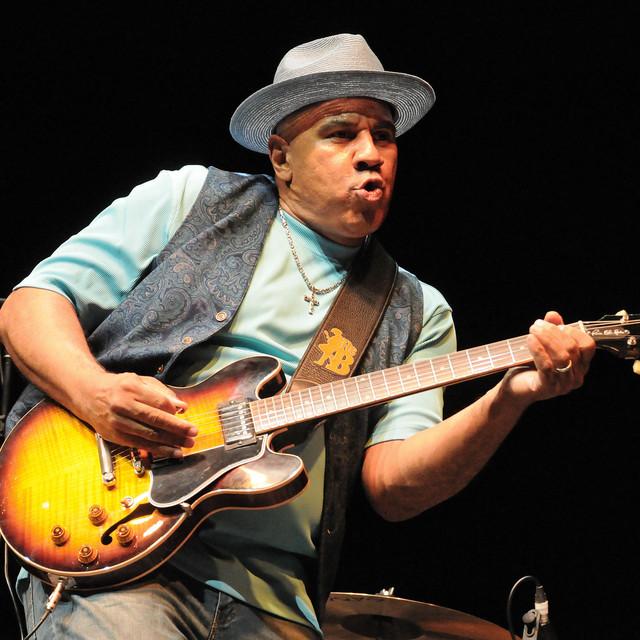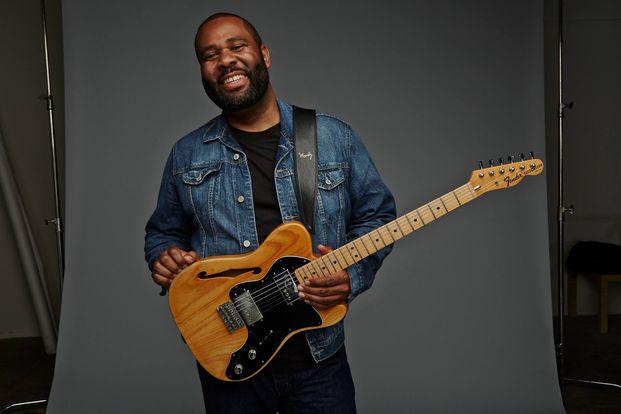
Bernard Allison

Blues
Blues Rock
Contemporary Blues
 Viberate Rank: 103323
 Viberate Rank: 103323
 Monthly ListenersFollowers
 Subscribers
 Followers
 Followers
 FansTop Spotify Songs
| Track | 7-Day Streams | |
|---|---|---|
1 | 7.78K | |
2 | 5.71K | |
3 | 5.71K | |
4 | 5.30K | |
5 | 5.00K |
Top YouTube VideosMonthly ListenersFeatured in Playlists| Playlist | Followers | |
|---|---|---|
1 |  Acoustic Blues Spotify | 873.88K |
2 |  Funky Heavy Bluesy Spotify | 820.62K |
3 |  Blues Live & Loud Spotify | 208.43K |
4 |  Got Blues Spotify | 161.34K |
5 |  Funky Blues Spotify | 67.72K |
Audience| City | Monthly Listeners | |
|---|---|---|
1 |  | 1.16K |
2 |  | 991 |
3 | | 947 |
4 |  | 836 |
5 | | 800 |
See full performance history, audience data, playlist activity, rankings, comparisons, and more in Viberate music analytics. Start with a free trial, then continue with a paid plan.
Bernard Allison’s Spotify BioBernard Allison is the guitar-slinging, singer/songwriter son of legendary blues guitarist Luther Allison. Like his father, the Paris-based Allison is an energetic showman, a prolific recording artist, and a road warrior who sometimes performs 250 dates a year. His playing style incorporates vintage and modern Chicago and Texas blues, along with R&B and roots rock. His debut album, The Next Generation, appeared in 1990. Between 1995's Funkifino, and 2006's Energized: Live in Europe, he issued nine albums on Ruf Records and was a featured performer on several others. He also issued one-offs for Tone Cool (Across the Water, 2000) and Cooking Vinyl (Storms of Life, 2002). He cut 2007's Chills & Thrills and 2013's Express -- the latter with Cedric Burnside for Jazzhaus. He returned to Ruf for 2018's Let It Go. Following a touring hiatus due to the COVID-19 pandemic, he recorded 2022's Highs & Lows. In January 2024, Ruf released Allison's handpicked double-length compilation Luther's Blues,… chosen from versions of 20 of his father's compositions he'd recorded across his own career. The thoroughly remastered compilation appeared in January 2024.
Allison was born in Chicago in 1965 and moved with his dad between the Windy City and Florida. He accompanied his father to blues festivals while still in grade school, where he met Muddy Waters, Hound Dog Taylor, and Albert King. Luther was more than a casual record collector; Bernard benefitted from his father's and brothers' collections of classic blues and gospel. He taught himself to play guitar in Florida during the '70s while his father was touring internationally. At 12, he played for Luther for the first time. Impressed, the elder Allison brought his son a Fender Stratocaster but required him to remain in school. After turning 18, Luther allowed Bernard to join him on-stage at the 1983 Chicago Blues Festival. During that era, he furthered his skills under the tutelage of Johnny Winter (whom he'd known since he was a child), and Stevie Ray Vaughan.
A week after graduating high school, he auditioned for and was invited to join Koko Taylor's touring band. He stayed with Taylor's band until 1985, and left to hustle his own gigs as Bernard Allison & Back Talk. He spent much time playing in Canada with his first band and later rejoined Taylor and her Blues Machine for another two years in the late '80s.
After accompanying Luther to Europe for a live recording, Bernard was asked to join his father's touring band as his European music director and bandleader. Luther tutored his son on the bandstand in the finer points of showmanship for several years. At Christmastime in 1989, while both were sharing an apartment in Paris, the elder Allison arranged for his son the most precious gift a budding musician could receive: studio time to cut his first album. Bernard's debut, Next Generation, was recorded for Mondo Records using musicians from his dad's band. He issued No Mercy for In-Akustik in 1994, and signed a longterm, non-exclusive deal with Germany's Ruf Records. They issued Funkifino in 1995.
In December 1996, Bernard Allison was contacted by Cannonball Records founder Ron Levy. Allison was home in Chicago visiting family at Christmas and hadn't brought any of his guitars or other equipment with him. Levy wanted traditional electric blues with a few guitar scorchers for newer fans of the idiom. Allison released his stunning U.S. debut, Keepin' the Blues Alive, in early 1997, receiving a great deal of critical acclaim. On his successful tour of clubs around the U.S. in the latter half of 1997, he was joined by drummer Ray "Killer" Allison (no relation) and Buddy Guy bassist Greg Rzab, among others. He returned to Ruf for Times Are Changing a year later. In mid-2000, Allison released Across the Water on the Minnesota-based Tone Cool label.
Based in Paris full-time, Allison had the comfort and security that the multitude of blues clubs and festivals around Europe could provide. He maintained a prolific touring and recording schedule, gigging steadily in Europe, the U.K., Scandinavia, and the United States. In 2002 he released Hang On! for Ruf and the globally acclaimed Storms of Life on Cooking Vinyl. He issued Kentucky Fried Blues: Live in 2003. His final studio album for Ruf during his first turn with the label was 2004's Higher Power. Allison issued the collaborative Triple Fret with guitarists Larry McCray, Carl Weathersby, and Lucky Peterson for JSP in 2005. Chills & Thrills appeared on Jazzhaus in 2007, and The Otherside on CC Entertainment in 2010. Allison seldom left the road during these years; in addition to playing prime slots at international blues festivals, he toured the States, Europe, and Japan.
In 2013, Allison and guitarist Cedric Burnside teamed up to release Express on Jazzhaus. The pair toured the globe together. Allison returned to the road alone in 2016. In February 2018, the guitarist issued Let It Go, marking his return to Ruf Records, followed by an international tour that introduced him to fellow blues musicians Vanja Sky and Mike Zito, resulting in the audio/video package Blues Caravan 2018 on Ruf. In February 2020, a month before the COVID-19 pandemic put most of the world in quarantine, Allison issued the Songs from the Road, sourced from a German concert. In March 2022, the guitarist issued Highs & Lows, marking his return to studio recording for Ruf. The 11-song set crisscrossed modern blues, funk, and R&B, and included guest spots by Bobby Rush and Colin James. It featured Allison playing Hammond B-3 organ as well as lead guitar. In celebration of Ruf Records' 30th anniversary, the label asked Allison to come up with something special. In response, Bernard handpicked 20 of his father's compositions recorded throughout his own career, sequenced them, then handed them off to esteemed audiophile company Pauler Acoustics (Stockfisch Records) for a painstaking remaster. Titled Luther's Blues (after the legendary album by his father), it appeared in January 2024. ~ Richard Skelly & Thom Jurek, Rovi
Viberate is a music analytics platform built for A&Rs, artist managers, labels, booking agents, marketers, and artists.
It helps music professionals track artist growth, analyze audience data, monitor playlist activity, compare artists, follow song performance, and identify opportunities across the music market.
Public artist pages provide a free preview of selected artist data. Paid plans provide access to deeper analytics, historical data, charts, comparisons, playlist tools, exports, alerts, reports, and additional professional features.
Yes. Public Viberate artist pages provide selected artist analytics and music data for free.
Viberate also offers a 7-day free trial of the full platform. A credit card is required to start the trial. The trial includes access to the complete product so users can test deeper artist analytics, historical views, playlist insights, comparisons, charts, exports, alerts, and reporting features before choosing a paid plan.
Viberate provides artist analytics across streaming, playlists, social media, video, radio airplay, songs, and audience markets.
Users can analyze Spotify performance, Spotify and Apple Music playlists, YouTube activity, TikTok and Instagram growth, radio spins, song performance, audience locations, demographics, rankings, and overall artist momentum.
Artist profiles also connect to music charts, similar artists, and comparison tools, helping users benchmark performance and evaluate artists in context.
Viberate updates key artist and track data daily.
For followed artists and tracks, selected data is refreshed multiple times per day. This helps teams monitor playlist changes, streaming movement, audience growth, releases, and campaign performance with more current data.
Update frequency can vary depending on the metric and data source.
Yes. Viberate lets users compare up to five artists side by side across streaming, social media, audience, and engagement metrics.
Users can compare fanbase growth, audience demographics, locations, Spotify performance, social metrics, and other artist data over selected time periods.
Artist comparison can be used for A&R scouting, benchmarking, booking decisions, campaign planning, and evaluating artists with similar audiences or market positions.