Alec Dankworth

Jazz
Smooth Jazz
Swing
Bebop
 Viberate Rank: 620313
 Viberate Rank: 620313
 Monthly ListenersFollowers
 Subscribers
 Followers
 Followers
 FansTop Spotify Songs
| Track | 7-Day Streams | |
|---|---|---|
1 | 374 | |
2 | 155 | |
3 | 40 | |
4 | 25 | |
5 | 24 |
Top YouTube VideosMonthly ListenersFeatured in Playlists| Playlist | Followers | |
|---|---|---|
1 |  Best of Crossover 105.1 spongepola | 20.71K |
2 | BEST AUDIOPHILE VOICES I-VII 𝖀𝖊𝖇𝖊𝖗𝖒𝖊𝖓𝖘𝖈𝖍 | 10.65K |
3 | 105.1 Crossover Hits Cezar Abellera | 4.79K |
4 |  Best Audiophile Voices II Charlie | 3.82K |
5 |  HiFi for Audiophiles Fabz | 3.70K |
Audience| City | Monthly Listeners | |
|---|---|---|
1 |  | 4 |
2 | | 3 |
3 |  | 3 |
See full performance history, audience data, playlist activity, rankings, comparisons, and more in Viberate music analytics. Start with a free trial, then continue with a paid plan.
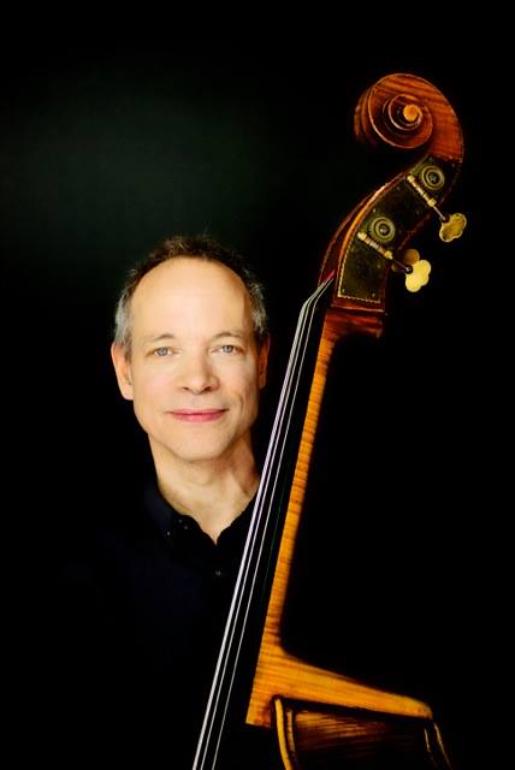
Alec Dankworth’s Spotify Biob. Alexander William Tamba Dankworth, 14 May 1960, London, England. The son of John Dankworth and Cleo Laine, Alec’s background was inevitably steeped in music. Taking up the bass he studied at the Guildhall School of Music in London in 1978 before going to the Berklee College Of Music in Boston, Massachusetts, USA. On his return to England, he played in several groups, including that led by his parents, performing with them on and off throughout the 80s. He also played with Clark Tracey (1987’s Stiperstones). With his parents he toured the USA, Australia and Europe and with his sister, singer Jacqui Dankworth, he toured the Middle East, the Far East and Hawaii. In 1995, Dankworth became a member of Van Morrison’s group, touring Europe and the USA. In 1995, and again in 1997, he was voted Best Bass Player at the British Jazz Awards. In the late summer of 1997, he relocated to New York City where he performed with the ongoing Duke Ellington Orchestra, including a residency at Birdland,… before, in late 1998 he joined Dave Brubeck’s quartet. With Brubeck he toured the USA, appearing at the New Orleans Jazz Festival, Carnegie Hall, Birdland, and he also made a European tour. The association with Brubeck continued until May 2001 when he returned to London. During that time he appeared on record with Brubeck including The 40th Anniversary Tour Of The UK (1999) and The Crossing (2001). In the meantime he had continued to appear with Morrison appearing on three albums including The Healing Game (1997).
Dankworth’s many recordings include sessions with jazz musicians such as Mose Allison, Guy Barker, Alan Barnes, Tommy Chase, Eddie Daniels, Buddy De Franco, Billy Eckstine, Georgie Fame, Stéphane Grappelli, Johnny Griffin, Abdullah Ibrahim, Julian Joseph, Pete King, Bill Le Sage, Marian McPartland, David Murray, David Newton, Anita O’Day, Dave O’Higgins, Courtney Pine, George Shearing, Tommy Smith, Clark Terry, Lew Tabakin, Stan Tracey, Mel Tormé and Tommy Whittle. He has also worked with Nigel Kennedy, touring the UK performing ‘Four Seasons’ by Antonio Vivaldi, and they also made a duet recording of Duke Ellington’s ‘Black, Brown And Beige’. Dankworth has also worked with classical musicians, including playing with the London Symphony Orchestra and with the Royal Ballet. Among prestigious venues at which he has appeared are Carnegie Hall, the Hollywood Bowl, the Sydney Opera House and the Royal Albert Hall.
In 2002, he formed the Alec Dankworth Trio, with Phil Robson (guitar) and Julian Argüelles (saxophones). In the early 00s, Dankworth has again worked with his parents and became co-leader of the Dankworth Generation Band. In addition to his packed playing schedule, Dankworth also teaches bass, at the Guildhall School and at his parents’ establishment at Wavendon.
Viberate is a music analytics platform built for A&Rs, artist managers, labels, booking agents, marketers, and artists.
It helps music professionals track artist growth, analyze audience data, monitor playlist activity, compare artists, follow song performance, and identify opportunities across the music market.
Public artist pages provide a free preview of selected artist data. Paid plans provide access to deeper analytics, historical data, charts, comparisons, playlist tools, exports, alerts, reports, and additional professional features.
Yes. Public Viberate artist pages provide selected artist analytics and music data for free.
Viberate also offers a 7-day free trial of the full platform. A credit card is required to start the trial. The trial includes access to the complete product so users can test deeper artist analytics, historical views, playlist insights, comparisons, charts, exports, alerts, and reporting features before choosing a paid plan.
Viberate provides artist analytics across streaming, playlists, social media, video, radio airplay, songs, and audience markets.
Users can analyze Spotify performance, Spotify and Apple Music playlists, YouTube activity, TikTok and Instagram growth, radio spins, song performance, audience locations, demographics, rankings, and overall artist momentum.
Artist profiles also connect to music charts, similar artists, and comparison tools, helping users benchmark performance and evaluate artists in context.
Viberate updates key artist and track data daily.
For followed artists and tracks, selected data is refreshed multiple times per day. This helps teams monitor playlist changes, streaming movement, audience growth, releases, and campaign performance with more current data.
Update frequency can vary depending on the metric and data source.
Yes. Viberate lets users compare up to five artists side by side across streaming, social media, audience, and engagement metrics.
Users can compare fanbase growth, audience demographics, locations, Spotify performance, social metrics, and other artist data over selected time periods.
Artist comparison can be used for A&R scouting, benchmarking, booking decisions, campaign planning, and evaluating artists with similar audiences or market positions.