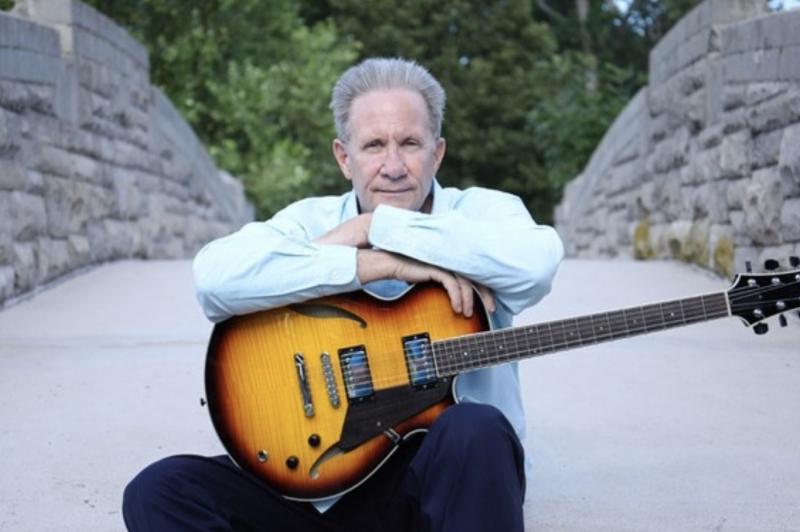
Vic Juris

Jazz
Free Jazz
Smooth Jazz
 Viberate Rank: 408889
 Viberate Rank: 408889
 Monthly ListenersFollowers
 Subscribers
 Followers
 Followers
 FansTop Spotify Songs
| Track | 7-Day Streams | |
|---|---|---|
1 | 618 | |
2 | 127 | |
3 | 86 | |
4 | 63 | |
5 | 60 |
Top YouTube VideosMonthly ListenersFeatured in Playlists| Playlist | Followers | |
|---|---|---|
1 |  Jazz Meets Classical Spotify | 321.61K |
2 |  Real Book - Jazz standards/classics Anders Garbom Bjørklund | 13.79K |
3 |  Old Money Jazz Vincent | 12.43K |
4 |  Light Jazz Mike Bike Hike | 11.29K |
5 |  Japanese Jazz Fusion KeifromSD | 7.66K |
Audience| City | Monthly Listeners | |
|---|---|---|
1 | | 34 |
2 | | 32 |
3 |  | 31 |
4 |  | 30 |
5 | | 29 |
See full performance history, audience data, playlist activity, rankings, comparisons, and more in Viberate music analytics. Start with a free trial, then continue with a paid plan.
Vic Juris’ Spotify BioVic Juris, was one of the world's greatest jazz guitarist's. He started playing at age 11 , and listening to records of guitarists Django Reinhardt, Jim Hall, Barney Kessel, Jimmy Raney, and Johnny Smith. In his teens he played the rock music of the 1960s. When he was 19, he made his first recording on Kloss's album Bodies' Warmth (Muse, 1975). Around the same time, he met guitarist Pat Martino, who became a friend and mentor.
Juris recorded with Richie Cole during 1976–78 and released his debut album as a leader, Road Song, in 1979. In the early 1980s, he turned to acoustic guitar in duos with Larry Coryell and Biréli Lagrène, and in the late 1980s he worked with Gary Peacock's band. Since 1991 he spent much of his career with saxophonist Dave Liebman. Dave Liebman had a profound impact on Vic's playing. Vic considered him a mentor. He has performed with Dizzy Gillespie, Nancy Wilson, Mel Torme, Michel Legrand, Eddie Jefferson and 20 year duo w/ Kate Baker and they released his… final CD Return to Shore . This musical collaboration toured US and Europe bringing out the other side of Vic .
During the 1990s, Juris worked with Lee Konitz , Benny Waters , Gary Peacock (since , and Joe Locke , Barry Miles, Duo with Phil Woods he recorded 2 albums, to name a few. Vic recorded for Alkadia Music, SC, Mel Bay Music. His trio with Adam Nussbaum and Jay Anderson was world renown.
Vic was a master musician, an artist, world class guitarist. vicjurisjazz.com
Viberate is a music analytics platform built for A&Rs, artist managers, labels, booking agents, marketers, and artists.
It helps music professionals track artist growth, analyze audience data, monitor playlist activity, compare artists, follow song performance, and identify opportunities across the music market.
Public artist pages provide a free preview of selected artist data. Paid plans provide access to deeper analytics, historical data, charts, comparisons, playlist tools, exports, alerts, reports, and additional professional features.
Yes. Public Viberate artist pages provide selected artist analytics and music data for free.
Viberate also offers a 7-day free trial of the full platform. A credit card is required to start the trial. The trial includes access to the complete product so users can test deeper artist analytics, historical views, playlist insights, comparisons, charts, exports, alerts, and reporting features before choosing a paid plan.
Viberate provides artist analytics across streaming, playlists, social media, video, radio airplay, songs, and audience markets.
Users can analyze Spotify performance, Spotify and Apple Music playlists, YouTube activity, TikTok and Instagram growth, radio spins, song performance, audience locations, demographics, rankings, and overall artist momentum.
Artist profiles also connect to music charts, similar artists, and comparison tools, helping users benchmark performance and evaluate artists in context.
Viberate updates key artist and track data daily.
For followed artists and tracks, selected data is refreshed multiple times per day. This helps teams monitor playlist changes, streaming movement, audience growth, releases, and campaign performance with more current data.
Update frequency can vary depending on the metric and data source.
Yes. Viberate lets users compare up to five artists side by side across streaming, social media, audience, and engagement metrics.
Users can compare fanbase growth, audience demographics, locations, Spotify performance, social metrics, and other artist data over selected time periods.
Artist comparison can be used for A&R scouting, benchmarking, booking decisions, campaign planning, and evaluating artists with similar audiences or market positions.